A shed that fits in one yard can become a different job when moved to a new property. Road travel or limited access can add more planning. Before comparing estimates, gather its dimensions, condition, starting point, destination, and route obstacles.
For anyone asking how much does it cost to move a storage shed, there is no dependable one-size-fits-all price. The estimate depends on the building, distance, access, condition, and any permits or special equipment required. A mover needs details about both locations to provide a useful, site-specific quote.
Call Legacy Structures at 518-544-2889 to discuss new shed options.
That means the first useful distinction is whether the shed only needs to be repositioned on the same property or transported to a new address. Understanding the scope helps you ask for an estimate that accounts for the actual work, rather than relying on a number that may not fit your move.
How Much Does It Cost to Move a Storage Shed?
There is no responsible universal price for moving a storage shed. A reliable estimate depends on the shed, the route, access at both locations, and what the mover agrees to handle. Without a site-specific quote from a provider who can assess the job, any price range may be a poor guide to your situation.
An on-property move and a road move are different jobs. Shifting a shed to another spot on the same property may involve maneuvering around landscaping, fences, slopes, or limited access. Taking it to another property adds a transport route and may require loading, suitable equipment, and attention to road or permit requirements. A mover should confirm which services are included rather than treating either type of move as a simple, interchangeable estimate.
When requesting a quote, share the shed's outside dimensions, construction and current condition, its exact starting location, and the intended destination. Describe the route between them, including narrow gates, overhead obstructions, uneven ground, and any access limits. Include clear photos if the provider requests them, and ask whether an inspection is needed before the price can be confirmed.
Ask for the estimate in writing, with transport, labor, equipment, preparation, permits, and any dismantling or reassembly listed separately or clearly identified as included. Confirm what the quote excludes, what could change the final charge, and who is responsible for preparing the destination. This gives you a useful basis for comparing proposals without relying on a generic online figure.
What Changes a Shed-Moving Quote?
A mover needs more than a shed's address to estimate the work. The building itself, the route between locations, and the conditions at both ends can change the equipment, labor, and planning involved. That is why a useful quote is based on the specific shed and site, not just a general size category.
Dimensions, weight, and support
Length, width, height, construction, and what is stored inside all help establish how demanding a move may be. A larger or heavier structure can require different equipment and more coordination than a compact one. If you are unsure of its dimensions, note the best measurements you can provide and ask whether the mover needs to inspect it before giving a firm estimate. The guide to choosing the right shed size can also help put shed dimensions in context.
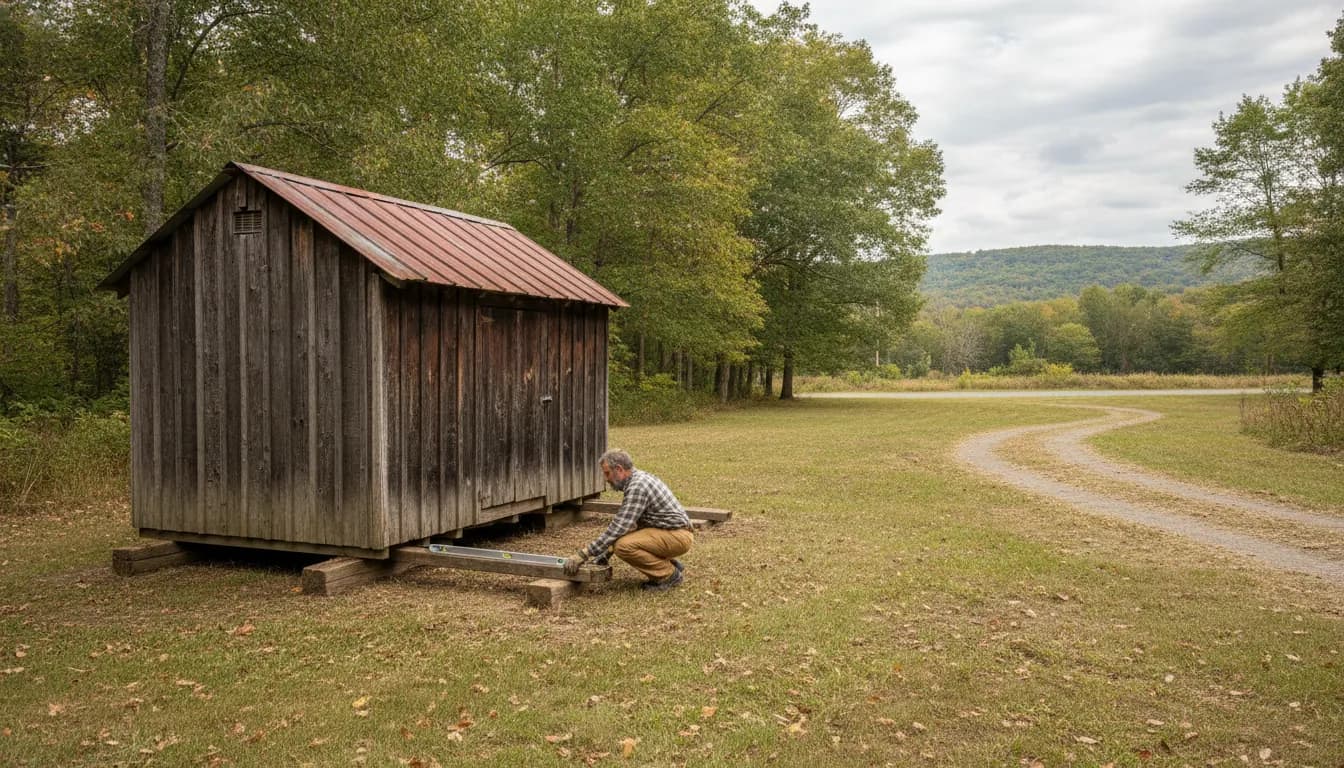
Tell the mover how the shed is supported, including whether it rests on skids and what kind of blocks or level pad are beneath it. Skids are part of the building's support and handling context; a mover may need to understand their condition and configuration when evaluating the job. Sheds should sit on or above the ground on appropriate support, not have their bases buried or frozen into it.
Distance and the route
The distance between the starting point and destination matters, but the route can matter just as much. A move within a property is different from transporting a shed along public roads. For a longer trip, the mover may need to consider road access, turns, travel time, and whether the structure's dimensions affect transport arrangements. Share both locations and any known route constraints when requesting an estimate.
Access, terrain, and overhead clearance
Describe the approach to the shed and the destination: narrow gates, tight turns, slopes, uneven or soft ground, trees, and limited working space can all affect access. Overhead wires and branches are important to identify early, along with other obstacles that could restrict clearance. A destination that is difficult for equipment to reach may need more planning than an open, level area.
These details do not produce a reliable price on their own, but they help a mover judge the scope and explain what is included or still uncertain. Provide clear photos and measurements when asked, and request a site-specific written estimate. Legacy Structures' information about its new-shed delivery should not be confused with a quote to relocate an existing building.
Is Your Shed Worth Moving or Better Replaced?
A moving estimate is only one part of the decision. Before paying to relocate a shed, consider whether the building is sound, fits the new location, and may need repairs. Age alone cannot settle the question. A number of years is not a reliable cutoff for every shed. The condition of its structure and materials matters more.
Look beyond the exterior
Check for signs the shed may not hold together during handling. Look for soft or damaged framing, shifting walls, or a sagging roof. Doors and windows that no longer sit square may also signal a problem. Check the floor, base, and siding. A clean exterior does not prove the structure beneath it is sound. If you are unsure, ask a qualified mover or builder to inspect it before giving a firm estimate.
Ask what preparation or repairs the mover expects, and whether those items are included in the written scope. A shed that needs substantial work may become a less practical candidate to relocate once repair labor and the move are considered together. Compare that complete estimate with the cost of choosing a replacement, rather than weighing the moving charge by itself. There is no dependable universal price comparison without details about the building and job.
Consider whether it will work at the new site
A shed can be structurally sound and still be the wrong fit for its next location. Think about the storage or work space you need, the available footprint, access to the spot, and whether the destination is prepared to support the building. If you rent or expect your needs to change, portability may be useful, but confirm that the particular shed and its condition make relocation realistic.
Before deciding, ask the mover what condition they require and what repair, preparation, or reassembly work is outside the estimate. Then compare that scope with a replacement option that meets your current needs. For background on safe handling and why shed moves need careful planning, see our shed-moving safety guide. It covers moving considerations in more detail without replacing an on-site assessment of your shed.
What Permits or Road Rules Could Affect a Move in New York?
Before scheduling, check two types of rules. One set covers what is allowed at the destination property. The other covers what the hauling vehicle or load needs for road travel. A town's building rules do not determine whether an oversized load needs a highway permit. A hauling permit does not approve the shed's location on your lot.
Start with the code or building department in the municipality where the shed will end up. Local rules can address setbacks, lot placement, dimensions, or site-plan review, and requirements may differ from one town to another. New York regulations exempt some detached, one-story tool or storage sheds at dwellings from building permits when their floor area is no more than 144 square feet. The exemption is limited, not blanket permission to ignore zoning or other code rules. Check with the destination town to learn how its local laws apply to your move. Do not assume a rule for a new shed settles the question for a relocated one.
The road-hauling check is different. The New York State Department of Transportation requires permits for vehicles or loads on state highways that exceed legal dimensions or weights. This describes an oversize or overweight transport requirement, not a permit required for every shed move. If a route uses the New York State Thruway, the Thruway Authority has its own special-hauling permit information and requirements. Ask the mover whether that route is involved and what arrangements it requires.
Ask the mover to assess the shed's transport dimensions and weight. Share the planned route, then clarify who will check for permits or restrictions and who will obtain them. Contact the destination town about placement, setbacks, and building or zoning review. Get both answers before scheduling, since rules may affect the work involved.
Quick comparison: property move or road transport?
| Move scope | What to confirm | Quote details to request |
|---|---|---|
| Within one property | Access to both positions, ground conditions, obstacles, and destination support. | Equipment and labor, preparation or leveling, and what the estimate excludes. |
| Between properties | Origin and destination, route, shed dimensions, road access, and applicable local or hauling rules. | Loading and transport scope, permits or approvals, site readiness, and responsibility for each task. |
What Should You Ask Before Accepting a Shed-Moving Estimate?
A useful estimate should describe the specific shed, both properties, and the work included, not just provide a bottom-line figure. Before comparing proposals, give each provider the same information and ask for the scope in writing. These questions can help reveal missing services or assumptions before you agree to a schedule.
- Can you assess the shed and the sites? Ask whether the estimate is based on an on-site inspection, photos, or measurements. Send clear photos of the shed from each side, its base, doors, and any visible damage, plus images of the pickup and destination areas. Confirm whether the provider needs to inspect in person before making the estimate firm.
- What details do you need about the move? Provide the origin and destination addresses, approximate travel route, shed dimensions, and an honest description of its condition. Ask how distance, narrow entrances, slopes, trees, overhead lines, gates, or limited turning room affect the proposed work. Confirm whether the quoted scope is for an on-property relocation or transport between properties.
- What crew and equipment are included? Ask what equipment and crew the provider expects to use for this specific shed and route. Find out whether the estimate assumes the shed can remain intact or may need disassembly to address access or transport constraints. Ask who is responsible for any disassembly and reassembly, and whether doors, ramps, trim, or other attached pieces are included.
- Who handles permits and site readiness? Ask which permits or road approvals may be needed, who will confirm them, and whether their costs or application work are included. Clarify what the destination must have ready, including suitable access and a stable, level support surface. Ask whether site preparation, supports such as blocks, or resetting and leveling the shed are included, excluded, or your responsibility.
- What insurance applies? Request confirmation of the provider's relevant insurance coverage and ask how damage to the shed or property is handled during the work. Have the provider explain any limits, documentation requirements, or exclusions before you accept.
- What is the schedule and written scope? Ask for the expected timing, how weather or access problems could change the date, and whether you need to prepare or remove anything beforehand. Request an itemized written estimate that lists labor, transport, equipment, permits, preparation, supports, disassembly or reassembly, and every exclusion. Ask how additional work would be approved and documented before it begins.
Compare estimates only after checking that each one covers the same tasks and responsibilities. If a proposal leaves a detail unclear, ask for a written clarification rather than assuming it is included.
When a New Storage Shed May Be the More Practical Option
Moving an existing shed is one way to solve a storage problem. Compare what you need at the destination with what the current building can provide. A replacement may be worth considering if the layout no longer fits your equipment, the site cannot fit the building, or the move involves more work than expected. The right choice depends on the shed, property, and mover's written assessment, not a general rule about which option costs less.
Keep the two projects separate when comparing estimates. A relocation quote covers moving an existing building, with scope determined by its route and circumstances. Buying a new building involves different decisions. You choose a style and size, prepare the destination, and confirm delivery arrangements. A new-shed delivery fee is not a moving price. Seller delivery terms cannot estimate the cost to relocate an old structure.
Legacy Structures offers storage sheds in varied styles and sizes for buyers considering a new building. Customers are responsible for preparing the site, with guidance available from the company. Its stated delivery model includes delivery within 30 miles of Hudson Falls, with additional fees possible beyond that area. Those terms apply to delivery of a new building, not relocation of an existing shed. Confirm the details for your location and chosen building before making a comparison.
For a fair decision, write down what the building must do and what space is available at the new location. Note the full scope in any relocation estimate. Then compare that with the new shed you would actually choose, including site preparation and delivery terms. This focuses the choice on the practical result, not an incomplete comparison between a move quote and a building price.
Explore Legacy Structures storage sheds if you are considering a new building. The Upstate New York shed buying guide can also help you think through size, site preparation, and delivery access before deciding.
Frequently Asked Questions
How much does it cost to move a 10x20 storage unit?
There is no reliable price based on dimensions alone. A mover needs to assess the structure, route, distance, access at both locations, and any permits or special equipment required. Ask for a written, site-specific quote that spells out what is included and what could add work.
How much would it cost to move a 12x16 shed?
A 12x16 shed also requires an individual quote; its footprint does not determine a universal moving charge. Share its dimensions, construction and condition, the origin and destination, and access details with the mover. Confirm whether the estimate includes preparation, transport, and setting it in place.
Is it worth it to move a shed?
It may be, if the shed is in sound condition, suits the new location, and the complete moving quote compares favorably with replacing it. Consider needed repairs and whether the destination is suitable, then compare written estimates for moving and a replacement before deciding.
What information should I have ready for a shed-moving quote?
Provide the shed's dimensions, approximate construction details and condition, both addresses, and clear photos of the structure and access routes. Ask the mover to identify labor, equipment, permits, site preparation, and any exclusions in writing. This helps clarify the scope without relying on a generic estimate.
Contact us about your next shed
If moving your current shed is not the right fit, comparing new storage shed styles and sizes can help you consider what works for your property. Call 518-544-2889 to discuss Legacy Structures' new shed options. This conversation is about choosing a new shed, not getting a quote to relocate an existing one.