
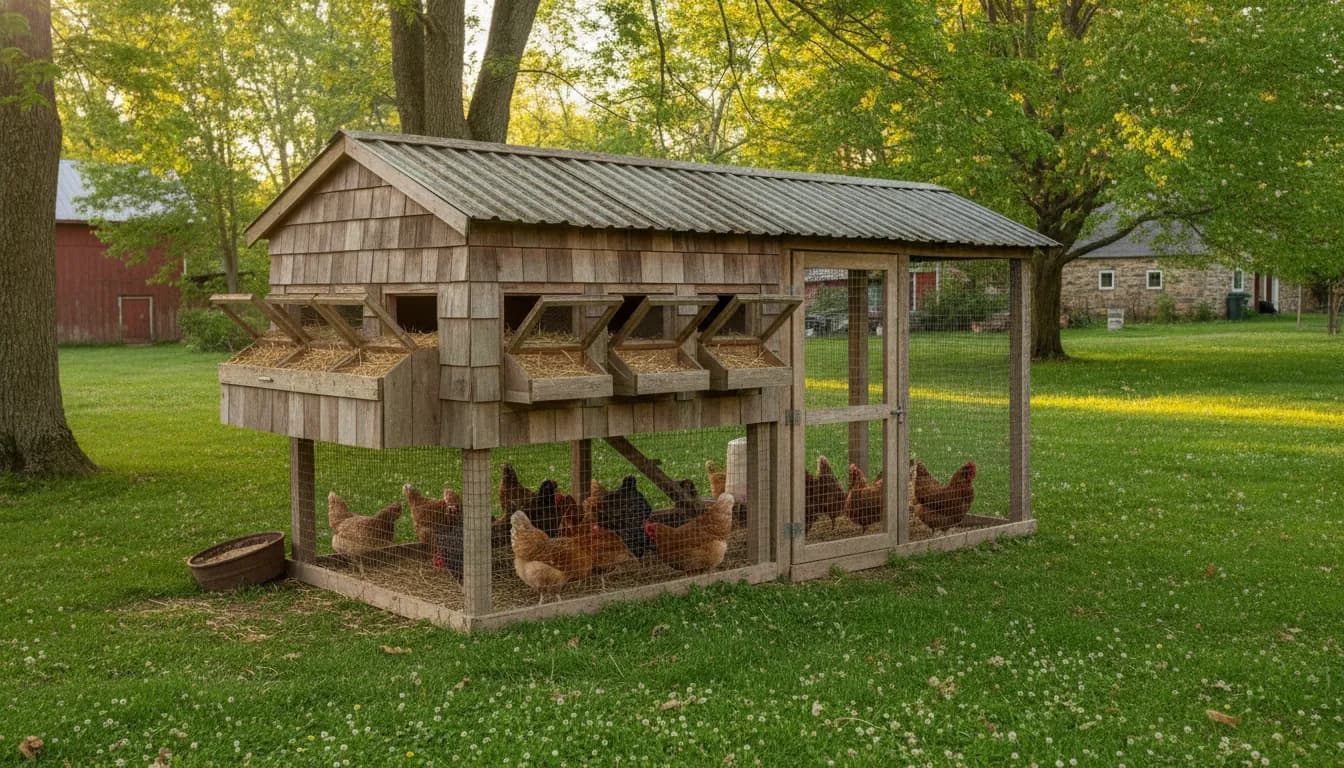
A backyard chicken coop has to do more than keep hens contained. It should stay dry through New York weather, discourage determined predators, and make daily feeding, cleaning, and egg collection straightforward. Choosing a coop by appearance alone can leave you with cramped birds, weak materials, or features that become frustrating after installation.
Ready to find the right coop for your flock? Browse our chicken coop options or call 518-544-2889 for your free pricing guide.
A practical chicken coop buying guide starts with enough interior and run space, strong predator protection, proper ventilation, accessible nesting boxes, and durable construction. Legacy Structures coops are built with ring-shanked galvanized nails, water-sealed T1-11 or LP SmartSide siding, and 5/8-inch treated floor decking, then backed by a 5-year warranty.
Stephen Kanagy, owner of Legacy Structures, helps homeowners across Washington, Warren, Saratoga, and Essex counties compare those details before choosing a building. The first decision is capacity: matching your flock to usable coop space now, while leaving room for healthy movement and future growth.
Chicken Coop Buying Guide: How Much Space Do Chickens Need in a Coop?
Coop size should give your flock enough room to move, roost, and settle comfortably without making daily care harder. As a starting point, plan for 2 to 4 square feet of interior space per standard adult chicken. The run should provide another 8 to 10 square feet per bird so chickens have room to scratch and move outside the sleeping area.
Match the coop to your current and future flock.
For four chickens, the minimum interior calculation is about 8 square feet. Six chickens need roughly 12 to 24 square feet, depending on how much room you want to provide and how much time they spend in the run. If you expect your flock to grow, size for the birds you plan to keep rather than buying only for today's count. Crowding can make cleaning more difficult and may increase stress within the flock.
A 6x8 coop provides 48 square feet of floor area and is a practical fit for approximately 4 to 6 birds. An 8x10 coop provides 80 square feet and can accommodate approximately 6 to 10 birds. These are useful planning ranges, not a substitute for considering your flock's breed, age, access to the run, and local weather. Chickens may spend more time inside during cold, wet, or snowy Hudson Falls winters.
Available chicken coop sizes.
Legacy Structures offers several footprints so you can choose a building that fits both your flock and your property:
- 6x8
- 6x10
- 6x12
- 8x8
- 8x10
- 8x12.
When comparing footprints, leave room for practical features such as roosts, nesting boxes, feed storage, and an easy-to-clean walkway. Stephen Kanagy, owner of Legacy Structures, focuses on durable, functional buildings made for real working properties, not just attractive display pieces. Each coop is built with details such as a treated floor deck and water-sealed siding to support long-term use.
Review the available Legacy Structures chicken coops and compare the footprint to your flock size, available run area, and future plans before choosing a model.
Essential Chicken Coop Features: Nesting Boxes, Roosts, and Ventilation
A well-designed coop should make daily care easier while giving hens a clean, comfortable place to rest and lay. Stephen Kanagy, owner of Legacy Structures, recommends paying close attention to the interior details, because small design choices can affect egg collection, flock health, and winter comfort.
Nesting boxes that keep eggs clean and accessible.
Plan on at least one nesting box for every three to five hens. Each opening should measure at least 12 by 12 inches, with larger openings useful for larger breeds. Nesting boxes should sit slightly elevated, away from the busiest floor traffic, and remain relatively dark so hens have a calm place to lay. These guidelines are also reflected in recommendations from Audrey's Little Farm.
Legacy Structures chicken coops include six raised nesting boxes and an exterior hatch. That hatch lets you collect eggs from outside the main coop, reducing disruption to the flock and making a routine chore more convenient. A sloped top can also discourage hens from perching on the boxes and soiling the nesting area.
Comfortable wood roosting bars.
Hens need a secure place to perch overnight. Look for wooden roosting bars about 1.5 to 2 inches wide. Wood gives chickens a stable surface to grip and stays more temperature-stable than metal, which matters during cold New York nights. Plastic can also be slippery, so it is less suitable for a primary roost. A roosting ladder can provide several levels while helping birds reach their preferred perch.
When comparing designs, review the location and height of the roosts as carefully as the number of nesting boxes. They should be high enough to feel secure, but still accessible for cleaning and inspection.
Ventilation without winter drafts.
Ventilation is essential in a New York chicken coop, especially in winter. Chickens produce moisture, and trapped humidity can contribute to respiratory problems, damp bedding, and frost-related concerns. Air should move through high openings without creating a direct cold draft across the roosting area. A gable roof design helps promote airflow above the flock while keeping the lower interior more protected.
As you compare coop features, consider the same practical balance you would use in a greenhouse buying guide: durable construction, purposeful airflow, and easy access all matter over the long term. Strong materials, thoughtful interior layout, and simple maintenance features help a coop serve your flock through changing seasons.
How to Protect Your Backyard Chickens From Predators
In upstate New York, a secure coop needs to account for more than curious pets. Raccoons, foxes, hawks, and weasels can threaten a backyard flock, especially at night or around an exposed run. As Stephen Kanagy, owner of Legacy Structures, explains, predator protection should be part of the coop design from the beginning, not an afterthought.
Use hardware cloth for the run.
Chicken wire helps contain birds, but it is not a reliable predator barrier. A determined raccoon or other animal may tear it, pull it apart, or reach through its openings. Hardware cloth provides a stronger barrier. Use 1/2-inch mesh for general protection, or choose 1/4-inch mesh where smaller predators and young birds are a concern. Fasten the mesh securely to the framing rather than leaving loose edges that animals can pry away.
Predators may also dig beneath a fence. Extend the hardware cloth below ground level by 6 to 12 inches around the perimeter. You can bury it vertically or create an outward-facing apron below the surface. This added barrier makes it much harder for foxes and other diggers to reach the flock.
Choose latches raccoons cannot manipulate.
Raccoons are capable of working simple hook-and-eye catches and other lightweight closures. Select sturdy latches that require a deliberate action to open, then check every access point regularly. The main door, nesting-box access, run gate, and small chicken door should all close securely. A small chicken door is convenient for daily flock movement, but it should have a dependable closure that cannot be pushed or lifted open from outside.
Start with a durable coop structure.
Wire protects the run, while the coop walls protect birds where they roost and nest. Legacy Structures chicken coops use solid T1-11 or LP SmartSide siding secured with ring-shanked galvanized nails. That construction offers substantially more resistance than the thin plywood used in many kit coops. It also supports the long-term value of a structure built for changing weather and daily use.
For a purpose-built option, review the Legacy Structures chicken coops and look for secure doors, strong siding, and carefully attached hardware before comparing price alone.
Should You Buy a Pre-Built Coop or Build Your Own?
For many backyard flock owners, the right choice comes down to more than the initial price. A DIY coop can be rewarding and inexpensive when you already have tools, time, and woodworking experience. A pre-built coop costs more upfront, but it can reduce construction risk and provide a finished, durable home for your chickens sooner.
| Consideration | DIY coop | Pre-built Legacy Structures coop |
|---|---|---|
| Upfront cost | Materials may cost less at the beginning, especially when you have lumber and hardware on hand. However, the total can rise as fasteners, roofing, doors, wire, and finishing materials add up. | Higher upfront investment, with transparent cash and rent-to-own options. An 8x8 Chicken Coop is $2,964 cash, $137 per month for 36 months, or $124 per month for 48 months. |
| Time and skill | Requires planning, measuring, cutting, assembly, and enough woodworking skill to create a square, weather-resistant structure. | Professionally constructed, delivered, and installed, so you can avoid a long build and begin using the coop sooner. |
| Customization | You control the layout and can adapt the design to your property, flock, and available materials. | Choose a size that fits your needs, with custom design support through the 3D shed builder tool. |
| Durability and protection | Results depend on the plans, materials, and construction quality. Gaps, weak latches, or inadequate flooring can leave chickens vulnerable to weather and predators. | Legacy Structures uses ring-shanked galvanized nails, water-sealed T1-11 or LP SmartSide siding, and 5/8-inch treated floor decking. These details support a stronger, more weather-resistant structure. |
| Warranty and payment | DIY work has no manufacturer warranty, and repairs are your responsibility. There is no built-in financing option. | Includes a 5-year warranty. No-credit-check rent-to-own financing with instant approval is available for qualified building purchases. |
Pre-built versus big-box coop kits.
A store-bought kit can appear convenient, but thin plywood and stapled construction may not provide the same long-term durability as a professionally built structure. When comparing options, look beyond the package price and inspect the siding, floor decking, fasteners, doors, ventilation, and predator protection.
Stephen Kanagy, owner of Legacy Structures, emphasizes construction that is built for practical use in the region. For homeowners in Washington, Warren, Saratoga, and Essex counties. Professional installation and free delivery within 30 miles of Hudson Falls can make the higher initial investment easier to manage. A pre-built coop is often the better fit when dependable construction, warranty coverage, and a predictable timeline matter as much as customization.
Choosing the Right Location for Your Chicken Coop
A well-built coop still needs the right setting to stay comfortable, dry, and easy to maintain. Start with a level area that has good drainage. Low spots can collect rainwater and melting snow around the building, creating muddy ground and excess moisture. If your preferred site is uneven, plan how the area will be graded or prepared before delivery.
Balance sunlight, shade, and shelter.
Choose a location with partial shade, especially during the hottest part of the day. Some morning sunlight can help the area dry, while afternoon shade gives chickens relief during summer heat. Avoid placing the coop where it is fully exposed to prevailing winter winds. A fence, tree line, or other windbreak can provide protection, but leave enough open space for airflow around the building.
Think about the daily routine, too. A coop that is close to the house is easier to check in the morning, refill with feed and water, and secure at night. Convenient placement also makes seasonal cleaning and collecting eggs less of a chore. Keep the route from the driveway to the site clear, with enough room for delivery and installation equipment.
Prepare the site before delivery.
Before choosing a final location, consider access, drainage, ground conditions, and the planned run. Legacy Structures offers a free site evaluation to help identify preparation needs. The team provides free delivery within 30 miles of Hudson Falls and professional installation with 2-foot leveling, helping create a stable foundation on the prepared site.
For a practical checklist covering access and ground preparation, review our coop delivery preparation guide. Clear branches and obstacles, identify any soft or wet areas, and discuss concerns before the building arrives. A little planning upfront can make delivery smoother and give your flock a cleaner, more comfortable home.
Frequently Asked Questions
How much space does each chicken need in a coop?
Plan for about 2 to 4 square feet of indoor coop space per adult chicken, plus 8 to 10 square feet in the outdoor run. Those figures give your flock room to move and help prevent crowding. See the sizing guidance in our chicken coop models when estimating your flock's needs.
What are the essential elements of a safe chicken coop?
A safe coop needs predator-resistant mesh and latches, adequate ventilation, elevated nesting boxes, sturdy roosts, and an easy-to-clean layout. It should also keep birds dry through changing weather. Stephen Kanagy, owner of Legacy Structures, emphasizes construction details such as water-sealed T1-11 or LP SmartSide siding and 5/8-inch treated floor decking.
What kind of nesting boxes do chickens need?
Provide roughly one nesting box for every 3 to 5 hens, with boxes at least 12 by 12 inches. Keep them elevated, dark, and quiet so hens have a comfortable place to lay. Legacy Structures chicken coops include six raised nesting boxes with an exterior hatch for easier egg collection.
How do I protect my chicken coop from predators?
Use hardware cloth rather than chicken wire for vulnerable openings, install secure latches, and bury the fencing around the perimeter to discourage digging. Check doors and mesh regularly for gaps. These steps help protect backyard flocks from common threats, including raccoons and foxes.
Ready to Choose the Right Chicken Coop?
A well-planned coop can make daily care simpler and give your flock a dependable space through changing weather. To request your free pricing guide and discuss sizes, features, and payment options, call 518-544-2889 and speak with the Legacy Structures team.