Preparing your property for a new outdoor building is the single most important step to protect your investment. When you make a few simple adjustments before delivery day, you guarantee a smooth setup and prevent long term structural damage.
To prepare your property for shed delivery, you must choose a level spot. Clear a wide path at least 12 to 14 feet across, and lay down a solid foundation. Start by selecting an accessible area that meets local setback rules, then remove all rocks, limbs, and low branches along the delivery route. A flat, stable base like a crushed stone pad keeps the building dry and prevents uneven settling over time. This careful planning ensures that specialized delivery trailers can easily navigate your yard and place your new building safely. When you do your part to prepare the site, Stephen Kanagy and the professional delivery crew at Legacy Structures handle the setup. Including up to two feet of leveling on the foundation you have prepared.
A successful delivery depends on a clear plan that starts long before the delivery truck arrives at your driveway. Stephen Kanagy, owner of Legacy Structures, emphasizes that thorough site preparation is the difference between a smooth drop-off and a delayed installation. Let us look at the critical details of how to prepare your property for shed delivery so your new building stays secure for years to come.
How to Choose the Right Location When You Prepare Your Property for Shed Delivery
Choosing the right location for your shed or barn starts with checking property lines, avoiding low-lying wet areas, and considering overhead tree coverage. The ideal spot sits on high ground with natural drainage, at least three feet from your property line. And away from large trees that could drop branches or debris on the roof.
Before you begin any site prep, you must select the best spot on your land. Choosing a poor location can lead to future structural damage and make the drop-off process much harder. According to Stephen Kanagy, finding the perfect location is the most critical first step when you prepare your property for shed delivery.
Check Your Property Lines and Setbacks
You must know your exact property boundaries before you install a new building. Setting up a shed in the wrong place can lead to costly disputes with neighbors. Homeowners should confirm their property lines before delivery day. You should also check with your town office in Warren or Washington County about setbacks. Local zoning laws dictate how far your structure must sit from your property line and other buildings on your land. Checking these rules early helps you avoid fines or having to move your structure later.
Avoid Water Runoff and Low Spots
Moisture is the biggest enemy of wooden structures. You should avoid low-lying areas where water pools during heavy rains or spring thaws. Placing a backyard barn or shed in a soggy area leads to wood rot, mold, and unstable ground. To keep your building dry, pick high ground with natural drainage. The United States Department of Agriculture offers guidance on heavy use area protection which highlights the value of proper grading so water drains away from the foundation.
Consider Surrounding Trees and Sunlight
Look up before you make your final choice. Placing a shed directly under large trees can cause problems over time. Falling branches can damage your metal or shingle roof, while heavy leaf debris traps moisture and promotes moss growth on siding. You also need to think about sunlight based on how you plan to use your building. If you are placing a backyard barn to use as a greenhouse or chicken coop, you will want plenty of daily sun exposure. If you plan to use it as a greenhouse instead. On the other hand, if you plan to use it for cool storage, some afternoon shade is helpful.
- Leave at least three feet of clearance around all sides for maintenance access.
- Face the door toward your house or a path you use frequently.
- Avoid placing the building directly under power lines or low-hanging utility cables.
- Check for underground utilities by calling 811 before you dig.
Clear the Delivery Path and Site Area
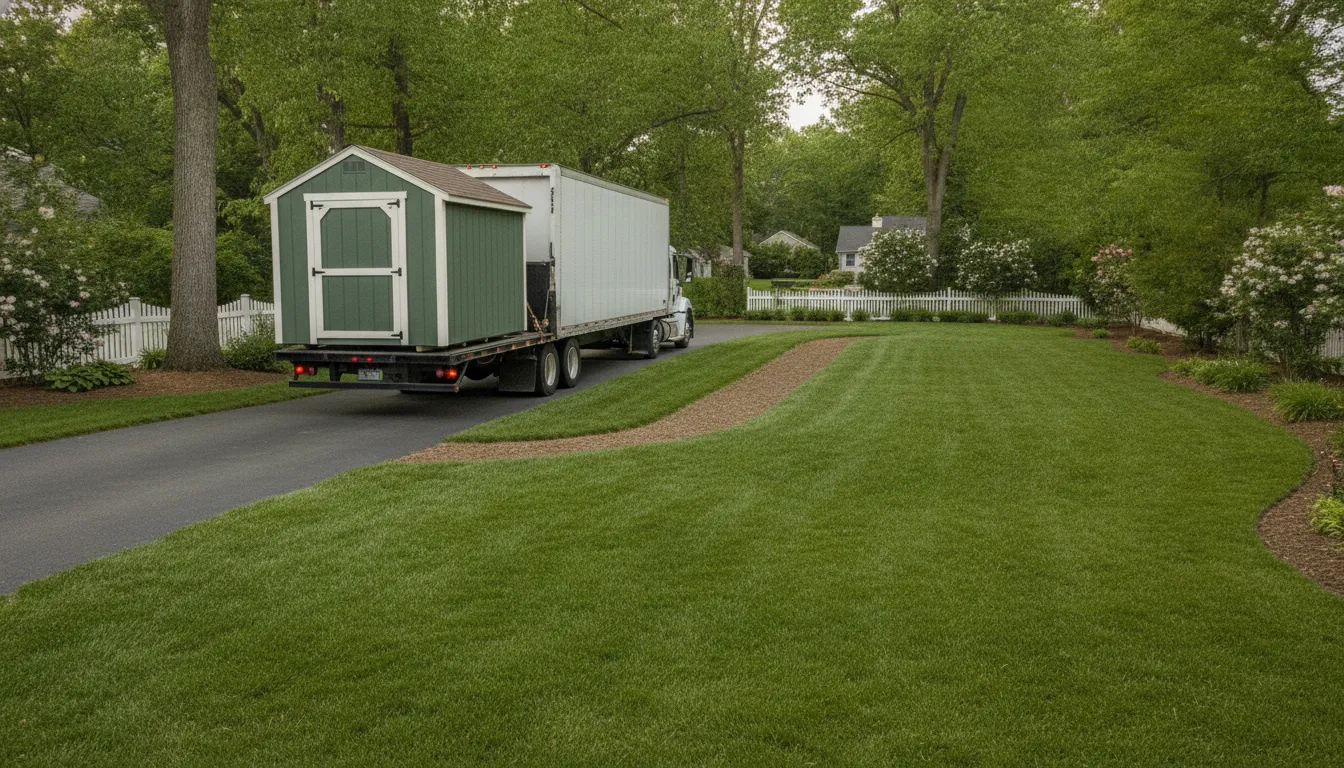
Clearing the delivery path requires removing all obstacles along a route at least 12 feet wide and 13 feet high from the road to the installation site. Gate openings must measure at least 10 feet wide. Overhead branches, clotheslines, and low-hanging wires should be trimmed or temporarily moved before delivery day.
Your delivery crew needs a clear path to transport the building from the truck to its final location. A clean, wide access route prevents damage to your landscaping and allows the crew to work safely and efficiently. Here is what you need to clear before the truck arrives.
Width and Height Requirements
The delivery trailer carrying your shed or barn is wide. You need a path that is at least 12 to 14 feet wide to give the driver enough room to maneuver. Gate openings must be at least 10 feet wide. If your gate is narrower than that, you may need to remove a section of fencing temporarily. Overhead clearance is just as important. Make sure there are no low-hanging branches, power lines, or cables along the route. A clearance height of at least 13 feet is recommended for most shed delivery trailers.
Remove Yard Obstacles
Walk the full delivery path from the street to the installation site and remove anything in the way. This includes lawn furniture, garden decorations, potted plants, firewood piles, childrens toys, and sports equipment. Mark any sprinkler heads or landscape lighting that the delivery truck wheels might run over. If you have a steep driveway or soft ground, discuss this with your dealer ahead of time so they can bring the right equipment for a safe drop-off.
Weather Considerations
The ground condition on delivery day matters. Wet, muddy, or snow-covered ground can make it difficult for the truck to reach the installation site. If the ground is too soft, the truck may get stuck or leave deep ruts in your lawn. Try to schedule your delivery during a dry season if possible. Stephen Kanagy notes that spring thaw and heavy rain periods are the most challenging times for shed deliveries in the Hudson Falls area. If your yard has poor drainage, consider installing a gravel access path well before delivery day.
Gravel vs. Concrete vs. Blocks: Which Foundation Is Best for Shed Delivery Preparation?
A crushed stone gravel base is the most popular and practical foundation for portable sheds and barns because it provides excellent drainage. Resists frost heave, and costs less than a poured concrete slab. Concrete slabs offer the strongest permanent foundation but are more expensive and cannot be moved. Concrete blocks on gravel are a budget option suitable for small utility sheds on perfectly level ground.
A stable foundation is non-negotiable for a long-lasting shed. The foundation lifts the building off the ground, preventing moisture damage and keeping the structure level. Your foundation choice affects cost, durability, drainage, and whether the building can be relocated later. Here is how the three main options compare.
| Feature | Crushed Stone Gravel | Poured Concrete Slab | Concrete Blocks on Gravel |
|---|---|---|---|
| Cost | $ Moderate | $$$ High | $ Low |
| Drainage | Excellent | Poor - needs grading | Good |
| Frost Heave Resistance | Excellent | Good with proper footings | Moderate |
| Can Building Be Moved? | Yes | No - permanent | Yes |
| Skill Level to Install | DIY friendly | Professional required | Moderate |
| Best For | Most sheds and barns | Heavy workshops and garages | Small utility sheds under 8x10 |
Why Gravel Is the Top Recommendation
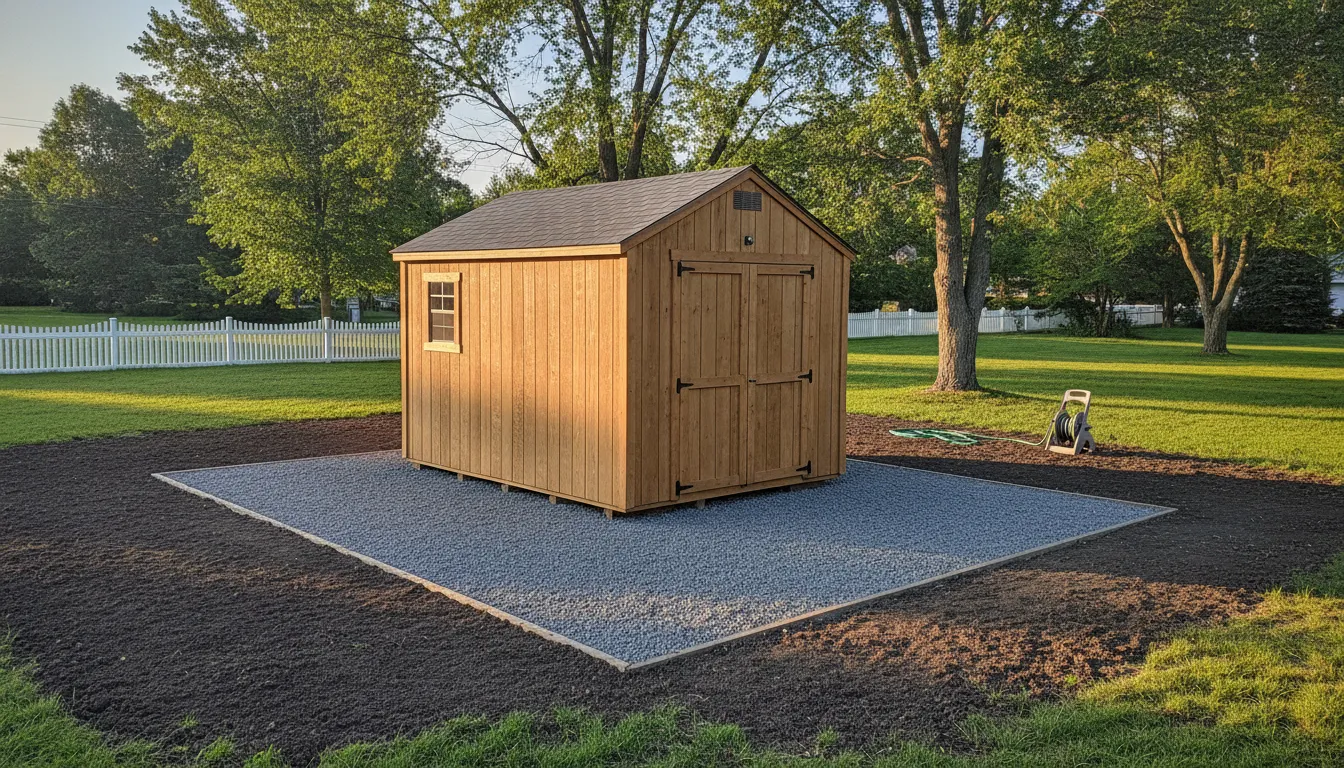
For most Legacy Structures customers, a crushed stone gravel base is the best choice. It drains water away from the building, resists shifting during freeze-thaw cycles, and costs significantly less than concrete. A gravel pad also keeps your 5-year warranty valid because it prevents moisture contact with the floor joists. To build one, excavate 4 to 6 inches of soil, fill with crushed stone, and tamp it level. The finished pad should extend at least one foot beyond the shed footprint on all sides.
When to Choose Concrete
A poured concrete slab is the most permanent foundation. It provides an ultra-flat floor and can support heavier loads like vehicle weight in a double-wide garage. However, a concrete slab costs two to three times more than gravel, requires professional installation, and makes the building permanent. Choose concrete only if you plan to use the building as a workshop or garage and never intend to move it.
Concrete Blocks as a Low-Cost Option
Concrete deck blocks placed on a gravel base are sometimes used for very small utility sheds. While inexpensive, they offer less stability and can shift over time with frost heave. This option works best for lightweight structures under 100 square feet on perfectly level ground. For larger backyard barns or cabins, stick with a full gravel pad.
Check Height and Width Clearance for Delivery
Delivery clearance requirements include a 12- to 14-foot-wide path, a 10-foot-wide gate opening, and 13 feet of overhead clearance. Measure your driveway width, gate openings, and the height of any overhead obstructions like tree branches, power lines, and porch awnings before delivery day.
Many homeowners focus on the installation site and forget to check the route the delivery truck must take to get there. A building that fits perfectly on its foundation is useless if the truck cannot reach the spot. Walk the entire route and take measurements at every pinch point.
Driveway and Gate Measurements
Measure your driveway width at its narrowest point. If you have a curved driveway, the delivery trailer needs extra width on the inside of the curve to avoid running off the pavement. Gates are the most common bottleneck. If your gate opening is less than 10 feet wide, measure again from the hinge edge to the latch edge at its narrowest point. If the opening is too tight, remove the gate from its hinges temporarily on delivery day.
Overhead Obstructions
Walk the route while looking up. Low-hanging tree branches are the most common overhead obstacle, but also check for power lines, cable TV lines, clotheslines, porch overhangs, and low roof eaves. Trim any branches that hang below 13 feet. Contact your utility company if power lines run across your driveway and hang low. Never attempt to trim near power lines yourself.
Ground Conditions
The delivery truck can weigh several tons when carrying a large barn or cabin. Soft ground, especially after rain, can cause the truck to sink or get stuck. If your access route goes across a lawn or field, make sure the ground is firm and dry. For soft ground, some dealers can lay down plywood or track mats to distribute the weight. Ask your dealer about this option if you have concerns about your driveway or yard conditions.
What Permits and Regulations Do You Need for Shed Delivery?
Permit requirements for shed delivery vary by town in Washington, Warren, Saratoga, and Essex counties. Most towns require a building permit for structures over 100 to 200 square feet. Setback rules typically require the building to sit 5 to 15 feet from property lines. Always check with your local zoning office before delivery day.
Failing to pull the right permits can result in fines, a stop-work order, or being forced to move the building after installation. Different towns in the Legacy Structures service area have different rules, so you need to check the specific requirements for your property.
When You Need a Permit
In most towns in Washington County, a building permit is required for sheds larger than 100 to 200 square feet. Some towns require permits for any structure regardless of size. Permits typically cost between $25 and $100 depending on the municipality. You may also need an electrical permit if you plan to run power to the building. The permit application usually requires a site plan showing where the building will sit relative to property lines and existing structures.
Setback Requirements
Setbacks are the minimum distance a structure must be from your property line. Typical setback requirements in the region range from 5 to 15 feet from side and rear property lines. Front yard setbacks are usually larger, often 20 to 30 feet from the road. If your property is in a subdivision or has a homeowners association, there may be additional restrictions on outbuildings. Check your HOA covenants before you commit to a location.
How Legacy Structures Can Help
As a local dealer serving Hudson Falls and the surrounding area, Legacy Structures has experience with permitting across Washington, Warren, Saratoga, and Essex counties. Stephen Kanagy and the team can advise you on what permits you are likely to need based on your specific location. While you as the property owner are responsible for pulling permits, having a knowledgeable local dealer in your corner makes the process much smoother.
What to Expect on Shed or Barn Delivery Day
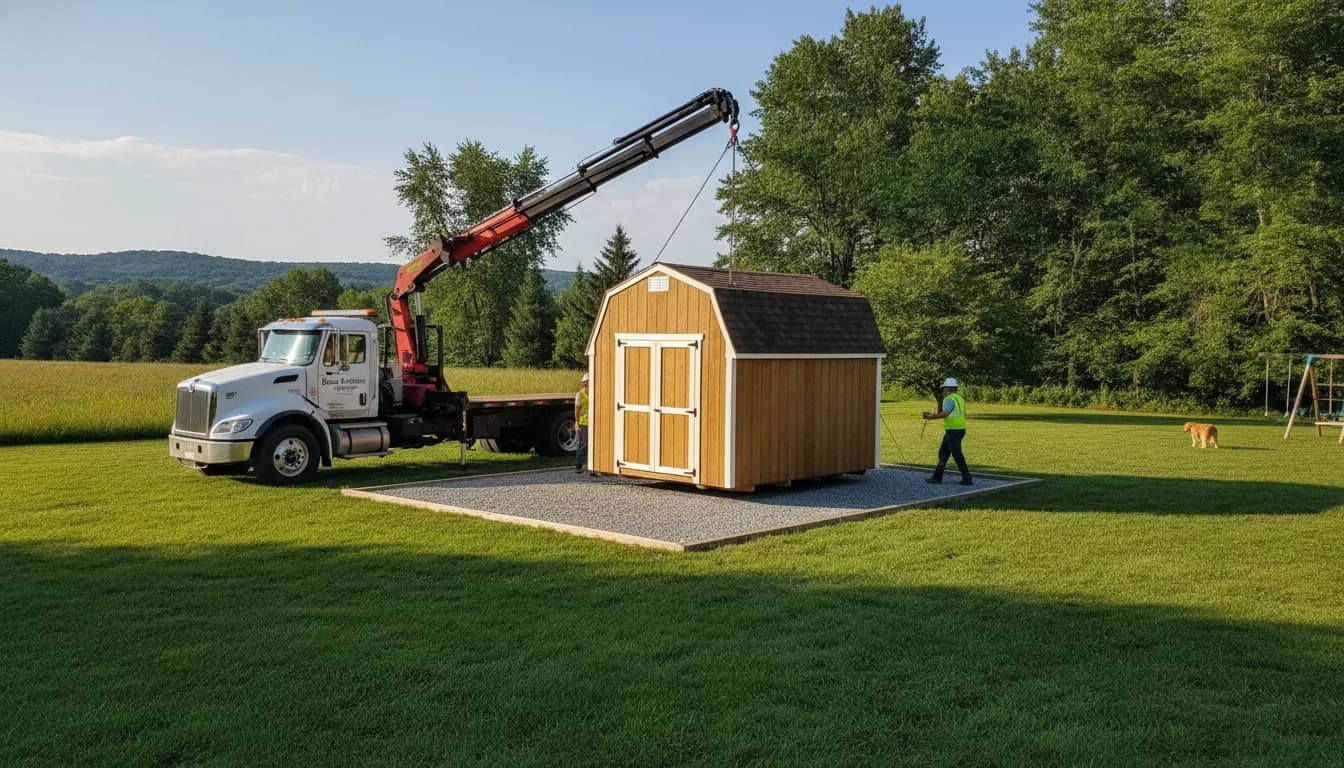
On delivery day, the truck arrives on a trailer with your building already assembled. The driver backs into position near the prepared foundation. The crew uses a winch or boom to slide the building off the trailer and onto the foundation pad. They then level the building, adjusting up to two feet as needed. The entire process typically takes one to three hours depending on the building size and site conditions.
Knowing what happens on delivery day helps you be ready and reduces stress. Here is the step-by-step process so you know exactly what to expect when your new building arrives.
- Pre-delivery confirmation. Your dealer will call or email a day or two before to confirm the delivery window. Make sure your contact information is up to date and that you will be home during the scheduled time.
- Final site check. Walk the delivery path one more time on the morning of delivery. Make sure no new obstacles have appeared since your initial clearing. Confirm that the foundation pad is clean, level, and ready.
- Truck arrival and positioning. The delivery truck will arrive with your building fully assembled on a flatbed trailer. The driver will assess the site and back into position as close to the foundation as possible. Be prepared to direct the driver to your location and open any gates ahead of time.
- Offloading and placement. Using a winch system or boom, the crew carefully slides the building off the trailer and onto your prepared foundation. The team then positions the building exactly where you want it, provided the foundation pad allows for adjustment.
- Leveling and securing. Once the building is on the foundation, the crew uses specialized jacks and leveling equipment to ensure the structure sits perfectly level. Legacy Structures includes up to two feet of leveling at no extra cost. The crew checks all corners and the center of the building to confirm it is square and stable.
- Final walk-through. Before the crew leaves, they will walk through the building with you to confirm everything is in order. This is your chance to ask questions about maintenance, the warranty, or any adjustments you want made.
Browse our inventory of backyard barns, storage sheds, and portable garages ready for delivery to your property.
Frequently Asked Questions
How long does it take to prepare a site for shed delivery?
Basic site preparation like clearing the delivery path and leveling a gravel pad usually takes one weekend for most homeowners. More complex tasks like pouring a concrete slab or obtaining permits may take several weeks. Start your site preparation at least two to three weeks before your scheduled delivery date.
Can the delivery crew level the shed if my ground is uneven?
Yes. Legacy Structures provides up to two feet of leveling during setup at no additional charge. However, significant grading or filling should be done before delivery day. If your site has a slope greater than two feet across the building footprint, consider hiring a contractor to grade the area first.
What happens if the delivery truck cannot reach my installation site?
If the truck cannot reach the site, the dealer may need to use a forklift or smaller equipment to move the building from the road to the foundation. This may incur additional fees. That is why checking your access route thoroughly before delivery day is so important. Measure gate widths, driveway clearance, and overhead obstructions ahead of time.
Do I need a gravel pad for every type of shed?
A gravel pad is strongly recommended for wooden sheds, portable cabins, and barns to prevent moisture damage, allow drainage, and keep the 5-year warranty valid. Portable buildings with metal skids can sit on gravel but may also be placed on concrete pavers or a concrete slab. Always discuss foundation requirements with your dealer before delivery day.
Can I move my shed after it has been delivered and installed?
Yes, portable sheds and barns from Legacy Structures can be moved after installation. Buildings on gravel pads are the easiest to relocate because the foundation is not permanently attached. Buildings on concrete slabs cannot be moved without demolition. If you think you may want to relocate your building in the future, choose a gravel foundation and discuss skid options with Stephen Kanagy during the planning phase.
Ready to Prepare Your Property for Shed Delivery?
Leaving your site unprepared can lead to delayed deliveries, settling issues, and structural damage over time. Starting your site preparation early ensures a smooth installation and protects your investment for years to come. Stephen Kanagy and the team at Legacy Structures can help guide you through the process or handle up to two feet of leveling during setup.
Call 518-544-2889 today to discuss your shed or barn delivery and get a free consultation.
About the Author: Stephen Kanagy is the owner of Legacy Structures in Hudson Falls, NY. With years of hands-on experience delivering and installing portable buildings across Washington, Warren, Saratoga, and Essex counties. Stephen is committed to helping homeowners and farmers find the perfect storage solution with quality construction and professional service.