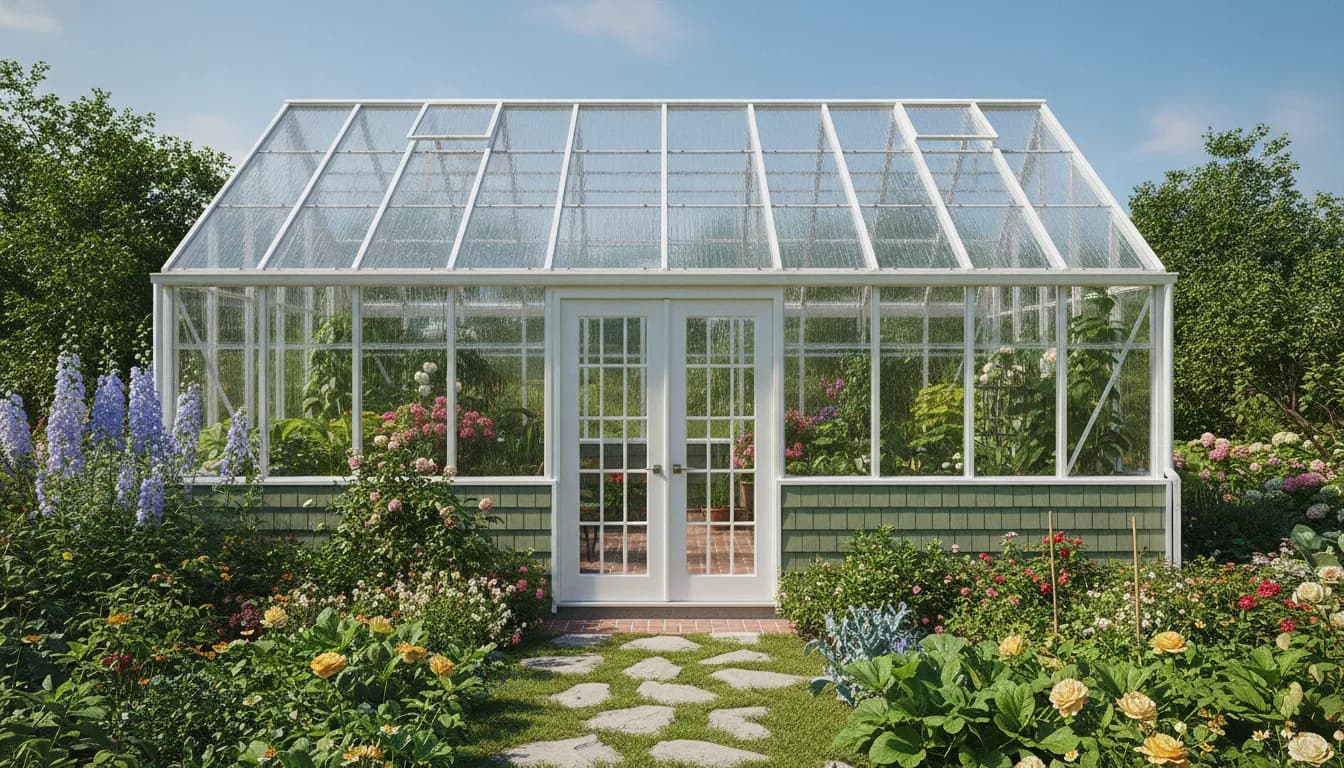
Extreme weather and sudden frosts can destroy a season of hard work in a single night. A backyard greenhouse shields your plants from wild temperature shifts so you can grow fresh food all year. As Stephen Kanagy, owner of Legacy Structures, explains, starting with the right setup ensures your growing season never gets cut short.
This greenhouse buying guide helps beginners choose the best backyard structure by looking closely at size, strong framing, durable glazing, and local styles. More local home gardeners now choose to buy greenhouses because climate change makes outdoor weather hard to predict and frequently ruins outdoor crops. A very strong backyard greenhouse creates a warm, safe space that shields young seedlings from sudden spring freezes, high winds, and heavy winter rains.
Pre-built greenhouse models with strong timber frames and clear polycarbonate panels offer the easiest and best path to successful year-round backyard growing. These strong structures keep your seedlings safe from pests, hold solar warmth on cold winter nights, and easily extend your harvest season by several months.
But how do you find the perfect match for your own backyard growing goals? We will walk you through every key option, starting with choosing the right dimensions.
Greenhouse Buying Guide: How to Choose the Right Size for Your Garden
The best greenhouse size for a beginner depends on your available yard space, sun exposure, and what you want to grow. Most home gardeners in upstate New York start with an eight by twelve or eight by sixteen foot model. A flat, level site with at least six hours of daily sun and three feet of clearance on all sides provides the ideal foundation. Choose a size that leaves room to walk between shelves and reach plants without crowding.
As Stephen Kanagy, owner of Legacy Structures, explains, many beginners start too small and quickly run out of space. You do not want to buy a small house only to find out you need more room next spring. Guides from the University of Arkansas show that choosing the right size involves your growing season, space, and goals. Planning your layout now will save you time and money in the long run.
Garden space and backyard layout
Before you pick a building, measure your backyard to find the best spot. You will need a flat, level site that gets at least six hours of sun each day. Avoid placing the structure under tall trees that block light or drop heavy branches. Leave three feet of open space on all sides for care and setup. This extra room makes it easy to wash the walls and paint the trim.
Sizing options for your plants
Legacy Structures offers two great pre-built sizes to match your garden needs. Our eight by twelve model is perfect for starting seeds and growing small salad crops. It gives you room for shelves on both sides while keeping a clear center path. For tall crops like tomatoes or year-round growing, our eight by sixteen model is the better choice.
Inside the greenhouse, you must plan for pathways, potting benches, and tools. Plants need plenty of fresh air and space to prevent damp rot and disease. Do not crowd your pots together on the shelves. A larger layout lets you organize your plants by how much heat they need. You can see these sizes in our pre-assembled greenhouses to find the best fit for your backyard.
Once you select your size, getting the building to your home is simple. Legacy Structures provides free delivery within thirty miles of our Hudson Falls shop. Our expert crew will bring the fully built greenhouse right to your yard. They will set it up and make sure it is level and ready for use. This service saves you from dealing with complex assembly kits and heavy lifting.
Greenhouse Materials Compared: Which Is Best for You?
Polycarbonate panels offer the best balance of durability, insulation, and cost for home greenhouse owners. Unlike plastic film that degrades within two to three years or expensive glass that breaks easily, polycarbonate diffuses sunlight, traps heat, and resists impact. For upstate New York's freeze-thaw cycles and heavy snow loads, double-wall polycarbonate paired with a treated wood base provides reliable year-round performance.
When you search for a greenhouse, you must think about the walls and roof. These parts are called glazing. The material you pick decides how much light gets inside. It also affects how well the space stays warm and how long it lasts. Stephen Kanagy suggests looking at your choices in this greenhouse buying guide to find the best fit.
The limits of plastic film and glass
Many people start with cheap materials like plastic film. Polyethylene film is a common glazing because it is low in cost, lightweight, and very easy to set up on many frame styles. But there is a catch. Without special additives, this polyethylene film lasts only two to three years before it breaks down from sun damage. You will have to replace the cover often, which wastes time and money.
On the other end of the scale, glass is a classic option. Glass is resistant to heat, UV light, and scratches. It can last for more than 25 years. But glass is very heavy, easy to break, and costs a lot to buy and set up. For most home growers in New York, the high price and fragile nature of glass make it a tough choice.
The strength of polycarbonate panels
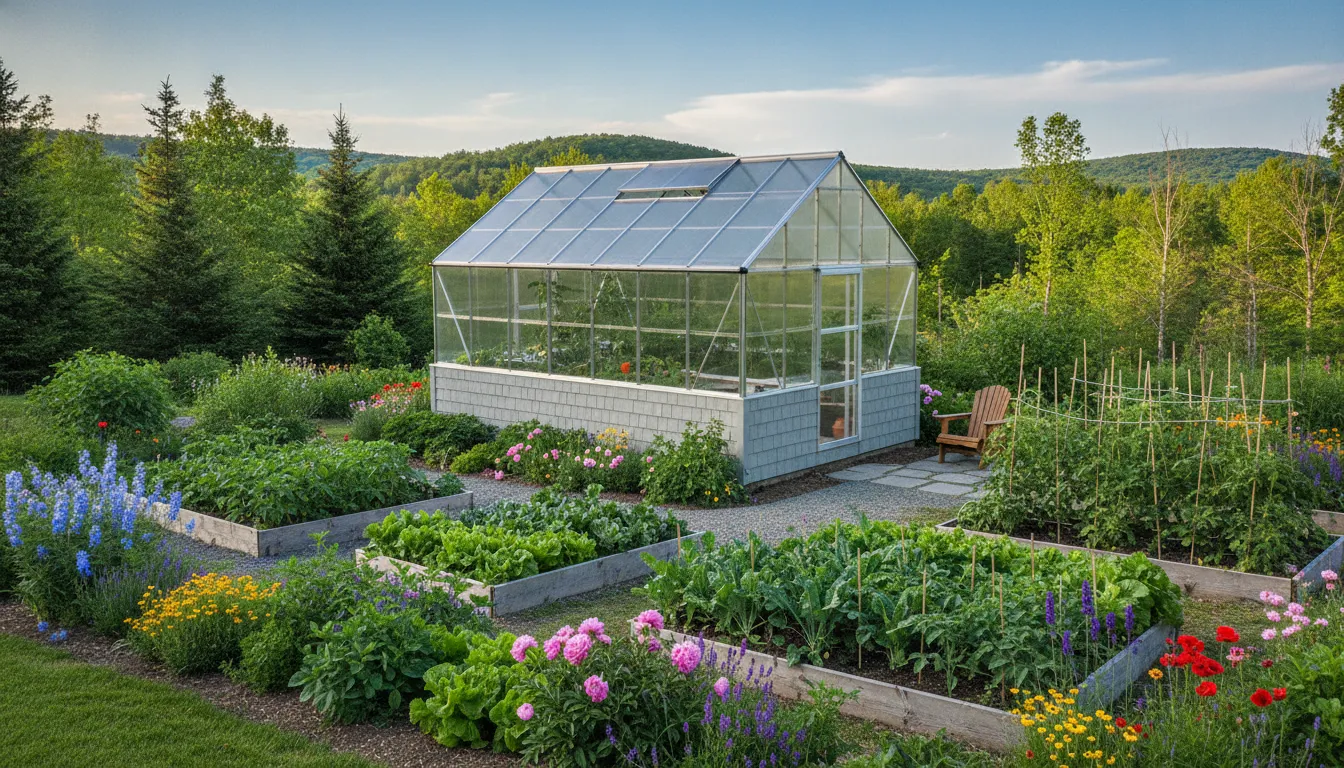
To get the best of both worlds, most modern growers choose polycarbonate panels. This material is a tough plastic that does not break easily. It lets in plenty of soft, useful sunlight while keeping your plants safe from strong UV rays. It also traps heat much better than glass or thin film, which keeps your plants warm during chilly spring nights.
Stephen Kanagy notes that polycarbonate acts like double-pane glass. It has two layers with an air gap between them. This gap acts as a shield, keeping warm air in and cold air out. It means you can start your seeds early in the spring and grow later into the fall without paying for extra heat.
At Legacy Structures, we use thick, clear polycarbonate panels for the roof and upper walls of our pre-assembled greenhouses. We pair these panels with a strong LP SmartSide base. This design gives you the perfect mix of light, heat control, and strength. Your greenhouse can withstand heavy snow and strong winds without cracking or tearing.
Comparing greenhouse materials
To help you choose, here is a quick look at how the three main greenhouse materials compare. You can see how they score on cost, strength, and heat retention for your plants.
| Material | Durability | Insulation | Relative Cost |
|---|---|---|---|
| Polycarbonate | High (impact resistant) | Excellent (double-wall heat trap) | Moderate |
| Glass | Over 25 years (fragile) | Good | High |
| Polyethylene Film | Low (lasts 2 to 3 years) | Poor | Low |
Key Features Every Beginner Greenhouse Should Have
A beginner greenhouse needs automatic ventilation, durable potting shelves, and passive solar design to succeed in cold climates. An auto-vent opener regulates temperature without electricity. Pressure-treated flooring prevents rot from watering. Wide barn doors with windows improve access and light. These features make daily plant care simple and protect your investment through New York's harsh winters.
When you look at a greenhouse buying guide, you must check the features that make daily plant care easy. A good setup protects your plants and saves your time. Stephen Kanagy notes that beginner growers often struggle with heat and water control. Choosing the right features from the start will prevent these common issues.
Smart ventilation and climate control
Greenhouses can get too hot in a few minutes under direct sun. An automatic vent door opener, or auto-vent, is a key tool for any beginner. It uses a wax cylinder that expands when warm to push the window open. This setup does not need electricity, so your plants stay safe even during power drops. In our area, where summer heat can spike quickly, an automatic louvre vent keeps the air moving without your constant help.
To match this venting, you need quality walls. Pre-built models use a clear polycarbonate roof and upper walls. This material diffuses bright light to protect leaves from burns. Underneath, a tough LP SmartSide siding base keeps the structure strong. This solid wood siding resists rot and handles heavy snow, which is needed for New York winters.
Durable shelving and flooring options
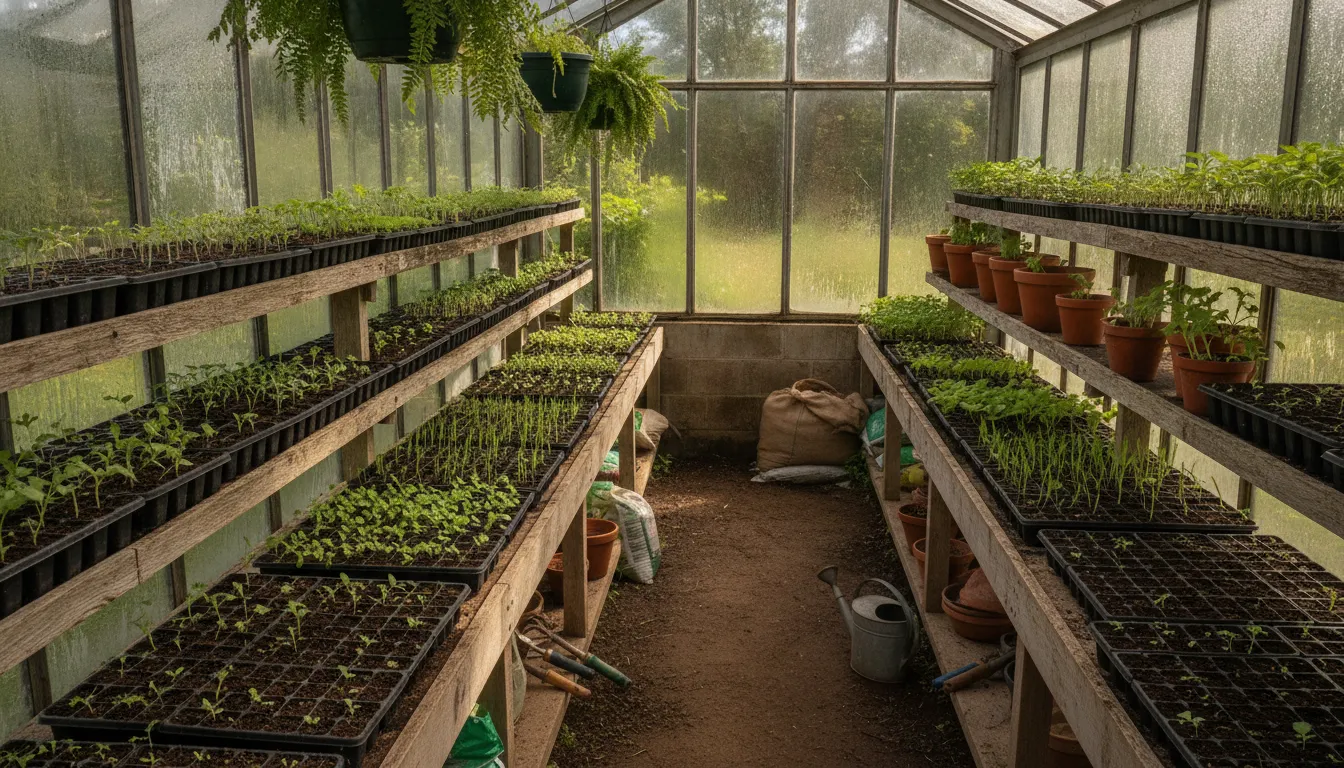
Potting space is another key feature to check when you browse our pre-assembled greenhouses. You will want 18-inch deep potting shelves to hold your seed trays, pots, and hand tools. Having these shelves pre-built at a comfortable height prevents back strain. They let you work on your plants for hours without feeling tired.
Next, check the floor and the door. A pressure-treated raised deck floor is best because it lets water drain away fast. Water from hose sprays or spilled pots will fall through the deck gaps. This prevents mold and mud from building up on the floor. For easy entry, look for a wide barn-style door with a built-in window. The window lets you see inside and gives extra light to young sprouts.
Passive solar design for cold climates
If you want to grow plants all year in a cold state like New York, you must think about heat. Many growers now use passive solar layouts to capture free warmth from the sun. According to the University of Minnesota Extension, deep winter greenhouses are passive-solar structures designed to maximize solar energy capture for heating during cold winter months.
The school notes that a deep winter greenhouse design focuses on passive solar heating, energy efficiency, and simplicity to support local crops. By using clear polycarbonate sheets to trap sun heat and a solid wood frame to block cold winds, you can grow food even in freezing weather. Adding a solid stain finish to the outer wood siding helps protect the structure from damp air and harsh snow.
Budgeting for Your First Greenhouse: Cash, Rent-to-Own, and Value
A high-quality pre-built greenhouse costs more upfront than a kit but delivers far better long-term value through durable materials, professional installation, and a five-year warranty. Legacy Structures offers transparent cash pricing with free delivery within 30 miles. For buyers who prefer monthly payments, no-credit-check rent-to-own plans spread the cost over 36 or 48 months with instant approval.
As Stephen Kanagy points out, planning your budget is a key step in any greenhouse buying guide. You need to think about the first cost and the long-term value. A high-quality greenhouse is a smart choice for your garden for years to come. By choosing the right payment path, you can set up a sturdy growing space that fits your needs.
Transparent cash pricing
Buying with cash is the most direct path, but we do not list a single price because sizes and options change. To help you plan without surprise fees, you can download our pricing guide to see all options for your yard. Stephen Kanagy says to check the guide first to compare different sizes. For most beginners, an 8x12 or 8x16 greenhouse may fit your garden best.
We also offer free delivery within a 30-mile radius of Hudson Falls, New York. This local service saves you money right from the start. It reduces your setup costs so you can spend more on plants and soil.
Flexible rent-to-own plans
If you do not want to pay the full cash price at once, we have other options. Our rent-to-own programs give you an easy way to get your greenhouse now. We offer both 36-month and 48-month payment plans. These plans come with no credit checks and instant approval.
You can browse our greenhouse inventory to find a unit that fits your monthly budget. For a 36-month term, we divide the cash price by 21.6 to find your payment. For a 48-month term, we divide the cash price by 25.44. This keeps your monthly payments low.
If you are still unsure about sizing or materials, learn more about our building process and how each greenhouse is crafted by local Mennonite builders.
Long-term value and durability
When you look at your budget, you must think about how long the building will last. Many cheap greenhouse kits seem like a good deal at first. But these cheap kits often use thin plastic sheets that do not hold up. Standard plastic film degrades from sun damage very fast.
Research from the University of Arkansas shows that basic polyethylene film lasts only two to three years. Changing this plastic often adds to your long-term costs. While a cheap kit might save you money today, a solid greenhouse is built with superior materials and construction to ensure it stands for years.
At Legacy Structures, we build our greenhouses with top-grade materials. This quality construction is why we offer a 5-year warranty on our structures. This warranty is much longer than the standard one-year or two-year industry warranty. These strong buildings easily handle the heavy snow and wind of upstate New York.
What Makes Legacy Structures Greenhouses Built to Last?
Legacy Structures greenhouses are built by local Mennonite craftsmen using ring-shanked galvanized nails, five-eighths-inch treated floor decking, and LP SmartSide siding. Each unit includes an automatic louvre vent, 18-inch potting shelves, a heavy barn-style door with window, and clear polycarbonate panels on the roof and upper walls. Every greenhouse carries a five-year warranty that exceeds the industry standard.
Buying a greenhouse is a big step for any home gardener. But many cheap kits from big stores do not hold up to wind and snow. At Legacy Structures, we do things differently. We build each unit to last for decades in upstate New York.
Mennonite craftsmanship and framing
Stephen Kanagy points out that local Mennonite builders use skills passed down for many years. We do not use cheap glue or staples to hold the frames together. Instead, our team uses strong ring-shanked galvanized nails. These nails grip the wood tight and do not rust or pull out over time. Each greenhouse sits on a very strong base. We use 5/8" treated floor decking to prevent rot and mold. Below the floor is a pressure-treated raised deck floor that keeps the unit off the cold ground. Stephen Kanagy ensures that every unit is Built With Superior Materials and Construction! so it lasts.
Ventilation and potting features
A good greenhouse needs to stay cool in the hot summer sun. Each of our units has an automatic louvre vent. This vent opens on its own when the air gets too hot, so your plants do not burn. Inside, you get 18-inch potting shelves that give you plenty of space to work and grow your seeds. Our structures also feature a heavy barn-style door with a built-in window. This door makes entry easy and boosts air flow when needed. We apply a solid stain finish to both the inside and outside wood. This stain blocks UV rays and seals the wood against damp air.
Built for cold New York winters
The roof and upper walls use clear polycarbonate panels. Unlike glass, which is fragile, these panels can take heavy hits from hail or snow. According to a University of Arkansas extension study, glass breaks easily and costs a lot to set up. Our polycarbonate panels keep the heat in and let the sun shine through without breaking.
Our structures are ready for the deep snows of Warren and Washington counties. We are so sure of our work that we give a 5-year warranty on all greenhouse structures. This warranty far exceeds the normal 1-2 year standard you see from other dealers. We invite you to learn more about Legacy Structures and our deep roots in the local area.
Ready to explore your options? Browse our greenhouse models online or call us to discuss your specific backyard needs.
Frequently Asked Questions
Are small greenhouse kits worth it for beginners?
While cheap plastic kits look easy to start with, they often break quickly. Many thin plastic film covers degrade under the sun. They need replacement every two to three years according to the University of Arkansas. A solid wood or vinyl greenhouse from a local dealer lasts much longer and comes with a real warranty.
How do you keep a greenhouse warm in the winter?
To grow crops during cold months, you can use passive solar heating. Many northern growers build deep winter greenhouses that face south to capture maximum solar energy according to the University of Minnesota. Good insulation, thermal mass like water barrels, and double-walled polycarbonate panels also help trap daytime heat.
What are the benefits of a polycarbonate greenhouse?
Polycarbonate is lightweight, virtually shatterproof, and diffuses sunlight to protect plants from burning. Unlike glass, which is fragile and expensive, polycarbonate panels last for years with minimal care. Our greenhouses at Legacy Structures feature a five-year warranty that exceeds the typical one to two year industry standard.
How do I choose a greenhouse for my specific growing season?
To choose a greenhouse, you must know what you want to grow and when. For spring starts, a simple unheated hoop house is enough. But if you want to grow fresh vegetables during freezing winters. You will need a well-insulated solar structure like the pre-built greenhouses from Legacy Structures, which use polycarbonate panels and treated wood framing for cold-weather performance.
Ready to Build Your Perfect Greenhouse Today?
If you wait to buy your backyard greenhouse, you will miss the early spring growing season and lose out on fresh garden crops. Starting your setup now lets you protect young plants from cold New York weather so you can enjoy a healthy harvest much sooner. Our local team will do all the hard work to level your ground and set up a solid backyard building that lasts for years.
Ready to grow your garden? You can browse our greenhouse models and pricing online today to find the perfect fit for your specific home and backyard. When you are ready, please Call 518-544-2889 to get your free greenhouse pricing guide or schedule a consultation with owner Stephen Kanagy today.