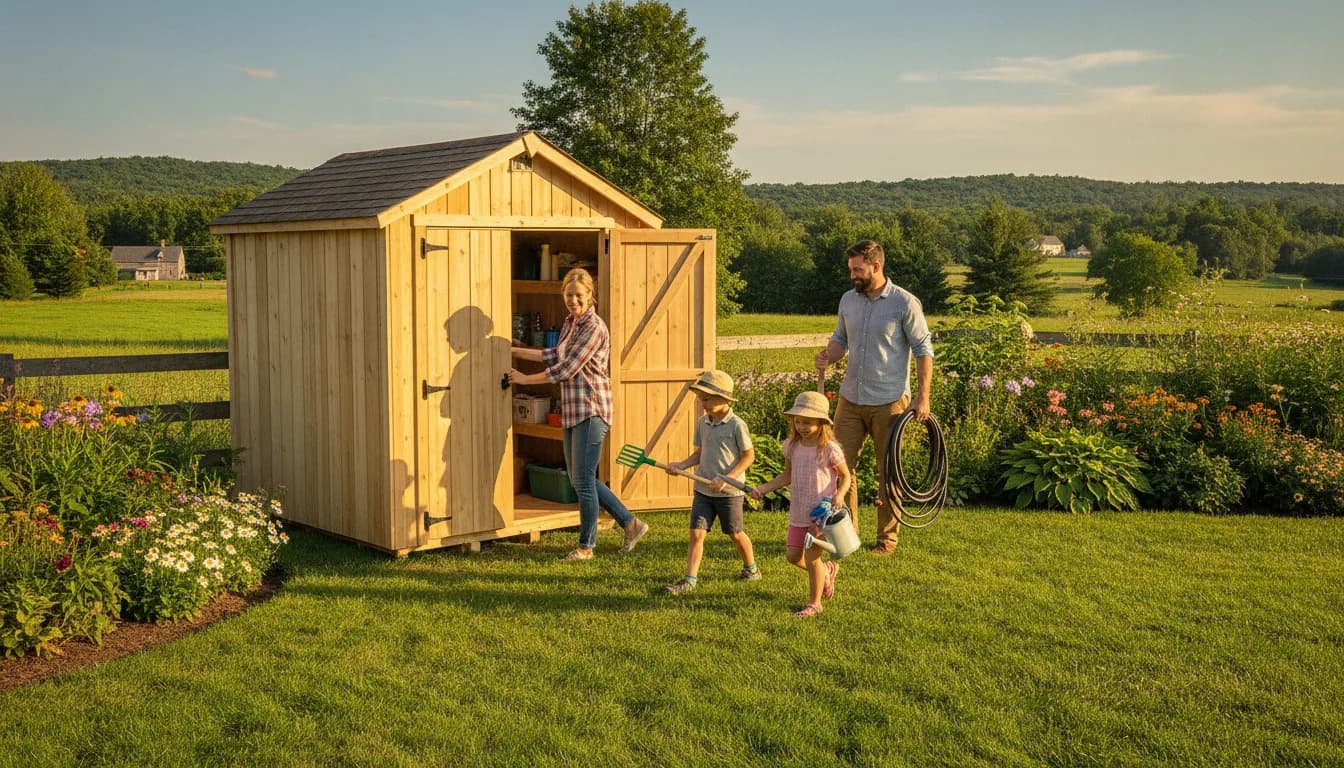
A utility shed can solve more than a crowded garage. With the right layout, it can hold lawn equipment, protect farm tools, give a hobby room its own space, or become a practical workshop close to the house. The best choice starts with how you need the building to work today and how that use may change over time.
Ready to see what a utility shed can do for your property? Call (518) 544-2889 for a free consultation and get your FREE Pricing Guide today.
The most useful utility shed ideas combine organized storage with a dedicated work or hobby area, using durable construction and a layout that fits your property. Stephen Kanagy, owner of Legacy Structures, recommends starting with the jobs the shed must handle, then planning shelving, access, lighting, and floor space around those jobs.
That planning also makes it easier to compare building styles without focusing only on appearance. Before choosing a size or loading the walls with equipment, it helps to understand what separates a utility shed from a basic storage shed.
What Makes a Utility Shed Different From a Storage Shed?
A utility shed is more than a place to put items you rarely use. It can become a flexible extension of your home, farm, or rental property.
The main difference is purpose. A basic storage shed is usually planned around keeping household goods, lawn equipment, or seasonal items protected and organized. A utility shed can handle those needs while also supporting a small workshop, hobby area, or dedicated project space.
That versatility makes the structure useful as your needs change. You might begin with garden tools and bins, then add a workbench for repairs or a separate area for painting, crafting, or outdoor gear. Instead of filling a corner of the garage, you gain a space designed around one clear function.
Utility shed or larger barn?
The right choice depends on the space, weight, and utilities you need. A larger barn may make sense for substantial equipment, livestock, or a wide open work area. A utility shed is often better suited to household storage, lighter equipment, and smaller projects.
Consider these questions before choosing a building:
- How much square footage do you need now, and what might you need later?
- Will the building hold ordinary tools, heavy equipment, or a mix of both?
- Do you need electricity or other utilities, or will a self-contained building work?
Ohio State University Extension recommends comparing square footage, weight support, and utility needs before selecting a storage structure. Those criteria help prevent choosing a building that is either too small or unnecessarily large.
Utility sheds are also practical for renters. Their portable design can provide additional storage without creating the same type of permanent improvement as an attached structure. Renters should still confirm property rules and obtain the landlord's approval before delivery.
Ready to use when it arrives
Pre-built utility sheds are self-contained and ready for use after delivery, unless you choose to add electricity or other utilities. That can reduce the disruption of building storage space on-site.
Legacy Structures builds portable structures for practical everyday use, with local Mennonite craftsmanship and materials selected for durability. Stephen Kanagy's customer-first approach focuses on matching the building to how you will use it, not simply selling the largest option.
Explore the storage shed collection to compare styles and think through the best fit for your property. The goal is a building that solves today's storage problem while leaving room for tomorrow's projects.
Utility Shed Ideas for a Home Workshop or Hobby Space
A utility shed can become more than a place to store seasonal equipment. With thoughtful planning, it can provide a focused workspace for woodworking, gardening, painting, repairs, sewing, or other hands-on interests. Stephen Kanagy, owner of Legacy Structures, often emphasizes matching the building to how a customer will use it today and how that use may develop later.
Plan power, lighting, and tool organization together
Start by sketching the activities you want to perform inside the shed. A workbench may need outlets nearby, while a hobby table may need brighter task lighting. Plan electrical work with a qualified professional, and place outlets where cords will not cross walkways or work surfaces.
Use the walls for tools that you reach for often. Pegboards, narrow shelves, and mounted racks can keep hand tools visible without taking up valuable floor space. Keep heavier equipment low and leave enough clearance to move safely around the main work area.
Divide the interior into dedicated zones instead of letting every activity compete for the same surface. One corner might hold a compact workbench, another could store gardening supplies, and a third might support crafts or seasonal projects. This approach keeps household storage separate from recreational gear and workshop tools.
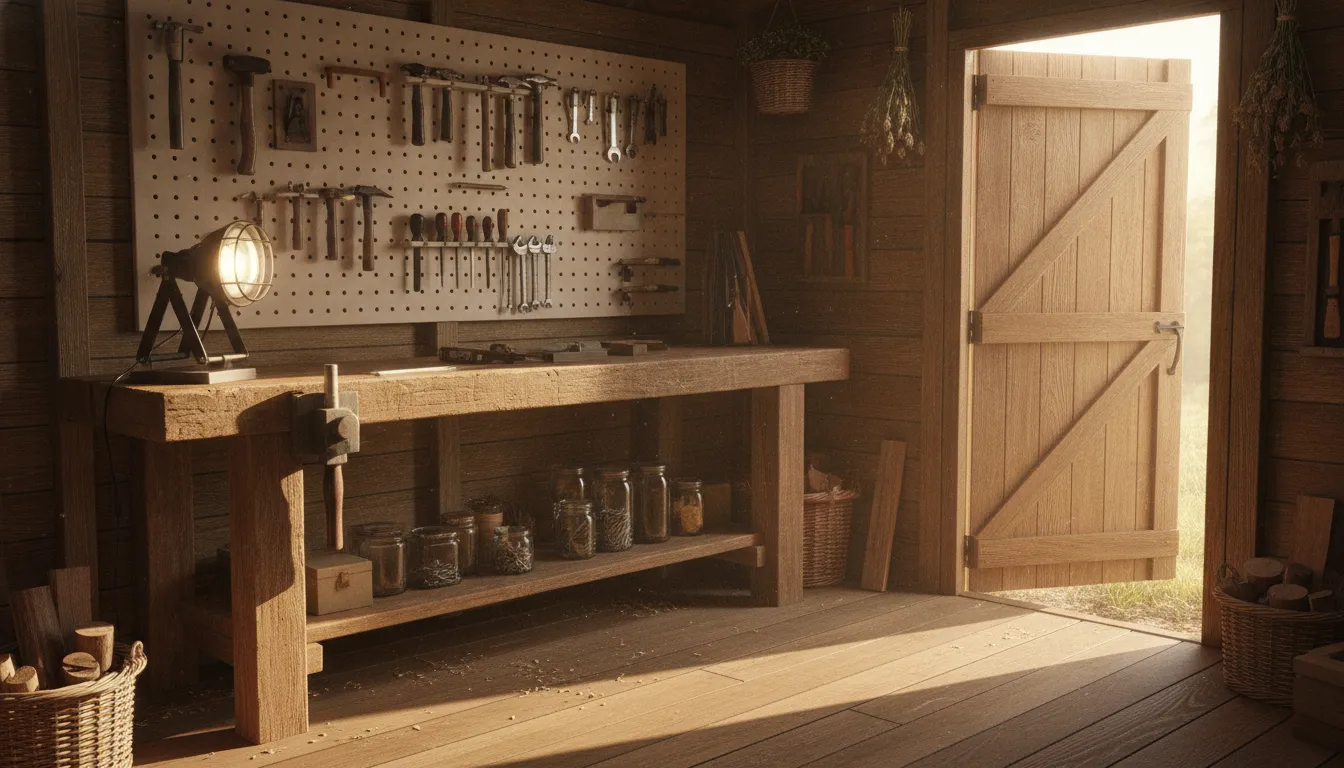
A smaller model can still work well when each zone has a clear purpose. Review smaller utility shed models to consider a practical footprint for your property and intended activities.
Check local rules and leave room for changing hobbies
Before adding electrical service or planning a permanent workshop setup, contact your local zoning office. Requirements can vary depending on the structure, property, location, and whether officials consider the building temporary or permanent. The Ohio State University Extension recommends consulting local zoning officials early, before plans become expensive or difficult to change. Review this OSU guidance on small farm structures as a starting point, then confirm requirements with your local office.
Design the interior so it can adapt as your interests change. Choose movable benches, adjustable shelving, and storage containers that can serve more than one purpose. A room first used for pottery could later support model building, seed starting, or equipment repair without requiring a complete redesign.
That flexibility is one of the strongest advantages of a utility shed. Instead of dedicating valuable space inside your home, you gain a separate room that can evolve with your household, projects, and storage needs.
Garden and Lawn Care Storage Ideas for Your Utility Shed
Garden tools work best when they are easy to see, easy to reach, and protected from moisture. Start by grouping supplies according to the job they support. Keep hand tools near the entry, long-handled tools along one wall, and lawn-care equipment in a clear floor zone.
Use the walls before filling the floor. Floating shelves can hold seed packets, gloves, pruning supplies, and small pots. Adjustable shelving lets you change the spacing as containers and equipment change. Free-standing metal shelving is useful for heavier bins and awkward supplies, provided the floor and shelf ratings match the load. These vertical storage options make more of the shed's footprint useful, while keeping walkways open.
Small wooden crates provide flexible storage for hand tools, twine, plant ties, and seasonal accessories. Stack them securely, or place them on shelves so you can see the contents without emptying a larger container. A sturdy repurposed bookshelf can also organize watering cans, soil amendments, and gardening books. Check that any reused furniture is stable and suitable for the shed's conditions before loading it.
Plastic tubs add another layer of protection for items affected by humidity. Use lidded tubs for fertilizer, spare gloves, extension cords, and delicate tools. Label each tub by task, such as planting, pruning, or lawn repair. Keep chemicals separate from general supplies, and follow each product's storage directions.
Small-Farm and Homestead Organization
On a small farm or homestead, a utility shed can separate daily tools from the household garage. Ohio State University Extension notes that new and small farmers often begin with limited storage for tools, equipment, and supplies. A dedicated shed can help create order without committing immediately to a larger permanent structure.
Divide the space into practical zones. Reserve one wall for hand tools, another for animal-care or fencing supplies, and a dry shelf for seed and feed-related items. Store frequently used equipment closest to the door. Keep sharp tools secured and heavier items low, where they are easier to handle safely.
Before storing large equipment, confirm that the floor can support its weight. A standard wood floor may not be appropriate for a larger tractor. For garden and lawn equipment, choose a layout that leaves enough clearance to remove each item without moving everything else.
For more options, browse Legacy Structures storage sheds and compare layouts that fit your property, tools, and routine.
Shed Organization Ideas That Keep Everything Findable
Good organization starts by assigning every item a home before the shed becomes crowded. Build upward first, then use containers for smaller supplies.
Choose storage that matches the item
Floating shelves use wall height for lightweight boxes, seasonal supplies, and small hand tools. Adjustable shelving gives you flexibility when container sizes change.
Free-standing metal shelving works well when you need sturdy, movable storage. Secure tall units if children or frequent activity could make them unstable.
| Storage method. | Best for. | Approx benefit. |
|---|---|---|
| Floating shelves. | Light tools, small boxes, and supplies. | Frees floor space. |
| Adjustable shelving. | Changing container sizes and mixed equipment. | Adapts as needs change. |
| Free-standing metal shelving. | Heavier bins and frequently used equipment. | Creates strong, movable storage. |
For a smaller unit, such as a smaller utility shed model, prioritize one shelving wall. Keep the center aisle open for access.
Use crates and tubs for smaller supplies
Stackable wooden crates can separate hand tools, garden gloves, and hobby materials without hiding everything in one deep bin. Repurposed bookshelves can provide similar compartments.
Label each crate by use, not by room. Labels such as pruning tools, painting supplies, or hardware make retrieval faster.
Plastic tubs are useful for items that need extra protection from shed humidity. Use tight-fitting lids for seasonal textiles, paper goods, and sensitive hand tools.
Place tubs on shelves instead of directly on the floor. Leave space around walls and doors so stored items do not interfere with airflow or drainage.
Plan for weight before loading the floor
Storage planning must account for the weight of the equipment. A tractor or other heavy load may require a reinforced floor because a standard wood floor may not support it.
Discuss the intended load before ordering or installing the building. The Ohio State University Extension guidance recommends matching the floor structure to heavy storage needs.
Site preparation matters too. Grading and leveling support stability while reducing drainage and moisture concerns. Choose a firm, level location before the shed arrives.
Stephen Kanagy's practical advice is simple: decide what must enter the shed, where it will live, and how much weight the floor will carry. That plan makes organization easier from day one.
How to Protect Your Utility Shed Through All Four Seasons
Good seasonal care protects the shed, its contents, and the investment beneath them. Start with durable construction, then make a short inspection part of each season.
-
Check the floor and foundation in spring.
Look for soft spots, standing water, or shifting supports after snow and spring rain. Legacy Structures uses 5/8 inch treated floor decking for added resistance to moisture and wear. Keep the ground around the shed graded so water moves away instead of collecting beneath the floor.
-
Inspect siding and the drainage plane before summer storms.
Water-sealed T1-11 or LP SmartSide siding helps protect the exterior from changing weather. Behind exterior materials, a drainage plane provides a secondary layer of protection. The University of Minnesota Extension recommends overlapping drainage components so water moves outward and over the layer below, rather than into the wall assembly. Review the drainage plane guidance from the University of Minnesota Extension.
-
Keep airflow moving during humid weather.
Open the doors periodically when conditions are dry, and avoid packing belongings tightly against walls. Ventilation supports drying cycles that affect wood and composite materials. This matters because repeated wetting and drying can reduce material durability over time, according to the University of Minnesota Extension.
-
Inspect flashing, seals, and door edges before fall.
Check roof transitions, corners, trim, and the areas around doors for gaps or damaged sealant. Flashing must direct water away from joints. At roof-to-wall transitions, correctly integrated flashing and drainage components help prevent water from entering the structure. Repair small defects before freezing weather arrives.
-
Prepare for winter without trapping moisture.
Store sensitive tools in closed containers, leave airflow around stored items, and clear leaves or snow from drainage paths. After major storms, check the roof, flashing, siding, and floor area again. Prompt inspections help catch moisture problems before they become expensive repairs.
These checks take little time, but they help preserve the shed's materials through Hudson Falls winters, wet springs, humid summers, and windy fall weather.
How to Choose the Right Utility Shed for Your Property
Choosing a utility shed starts with the way you will use it, then moves to construction, access, financing, and site conditions. A gardening shed may need open floor space and easy door access, while a workshop may need room for benches, tools, and future electrical work.
Match the building to your use and property
Start by listing what the building must hold today. Then leave room for equipment, seasonal items, or hobbies you may add later. Heavy storage deserves special attention. If you plan to store a tractor or other substantial equipment, ask whether the floor structure is reinforced for that load. Standard wood floors may not support heavier machinery without the right design. See the Utility Shed 12 x 12 model for one example of a practical starting point.
The ground beneath the building matters as much as the building itself. Proper grading and leveling help support long-term stability and reduce moisture or drainage problems. Clear vegetation, direct water away from the site, and prepare a firm, level area before delivery. Local conditions can affect the work required, so confirm the plan before ordering.
It is also useful to compare a delivered building with a do-it-yourself project. Ohio State University Extension notes that pre-built sheds can provide a cost-effective, immediate solution, while permanent structures may involve more complex site preparation and other costs. A portable building can be ready for use soon after delivery, unless you add electrical or other utilities. Source: Ohio State University Extension guidance on small farm structures.
Legacy Structures adds practical value for local property owners. Buildings include a 5-year warranty, compared with the typical 1-2 year industry standard, and are built with ring-shanked galvanized nails and water-sealed siding for weather resistance. Free delivery is available within 30 miles of Hudson Falls, NY. The company also offers no-credit-check rent-to-own with instant approval for customers who prefer flexible payment options. Review the rent-to-own program to understand that option.
Customization helps prevent compromises. Use the 3D shed builder to explore dimensions, doors, windows, and other design choices before committing. This makes it easier to picture how the structure will sit on your property and support your routine. For questions about layout, access, or site preparation, call Legacy Structures at 518-544-2889.
Not sure which utility shed fits your property? Request your FREE Pricing Guide or call 518-544-2889 to talk with Stephen Kanagy about the right size and layout for your needs.
Frequently Asked Questions
Can you use a utility shed as a workshop or hobby room?
Yes. A utility shed can become a focused workshop, gardening room, craft area, or hobby space when the layout matches the activity. Plan work surfaces, tool storage, lighting, and electrical needs before delivery. If you add electrical service, have the work completed safely and check local requirements.
Is it cheaper to build a shed or buy one?
The answer depends on your materials, labor, site preparation, and timeline. A pre-built shed provides a self-contained structure that can be ready when delivered, while a custom build requires you to coordinate each stage. Compare the complete project, not just the price of lumber. The Ohio State University Extension notes that site preparation and permanent-structure requirements can add meaningful cost to larger options (Ohio State University Extension).
What is the difference between a storage shed and a utility shed?
The terms often overlap, but a utility shed usually emphasizes flexibility. It can hold household items, farm tools, seasonal equipment, or a dedicated hobby setup. Choose based on the floor area, door access, weight requirements, and whether you need power or other utilities. Heavier equipment may require a reinforced floor.
How much does a utility shed cost?
There is no single price because size, materials, options, delivery distance, and installation affect the total. Legacy Structures also offers rent-to-own with instant approval and no credit check, giving eligible homeowners and farmers another way to plan for a portable building. Ask for a current quote based on your property and intended use rather than relying on a generic estimate.
Do I need a permit for a utility shed?
Permit and zoning requirements vary by location and by how the structure is classified. Contact your local zoning office early, especially if you plan a workshop, electrical service, or a larger building. Confirm setbacks, placement, and utility requirements before ordering. Rules can differ between temporary and permanent structures, according to Ohio State University Extension (Ohio State University Extension).
Ready to Get Started With the Right Utility Shed?
The best utility shed setup starts with a clear plan for your storage, workspace, and hobby needs. Stephen Kanagy and the Legacy Structures team build every unit with superior materials and construction, and they back it with a 5-year warranty that exceeds the typical 1-2 year industry standard.
Call 518-544-2889 for a free consultation, or get your FREE Pricing Guide today.
Request your FREE Pricing Guide and talk with Stephen about the right utility shed for your property. He can help you think through building size, layout, doors, and features that fit how you plan to use the space. Every unit is delivered free within 30 miles, installed by our team, and backed by local family ownership.