
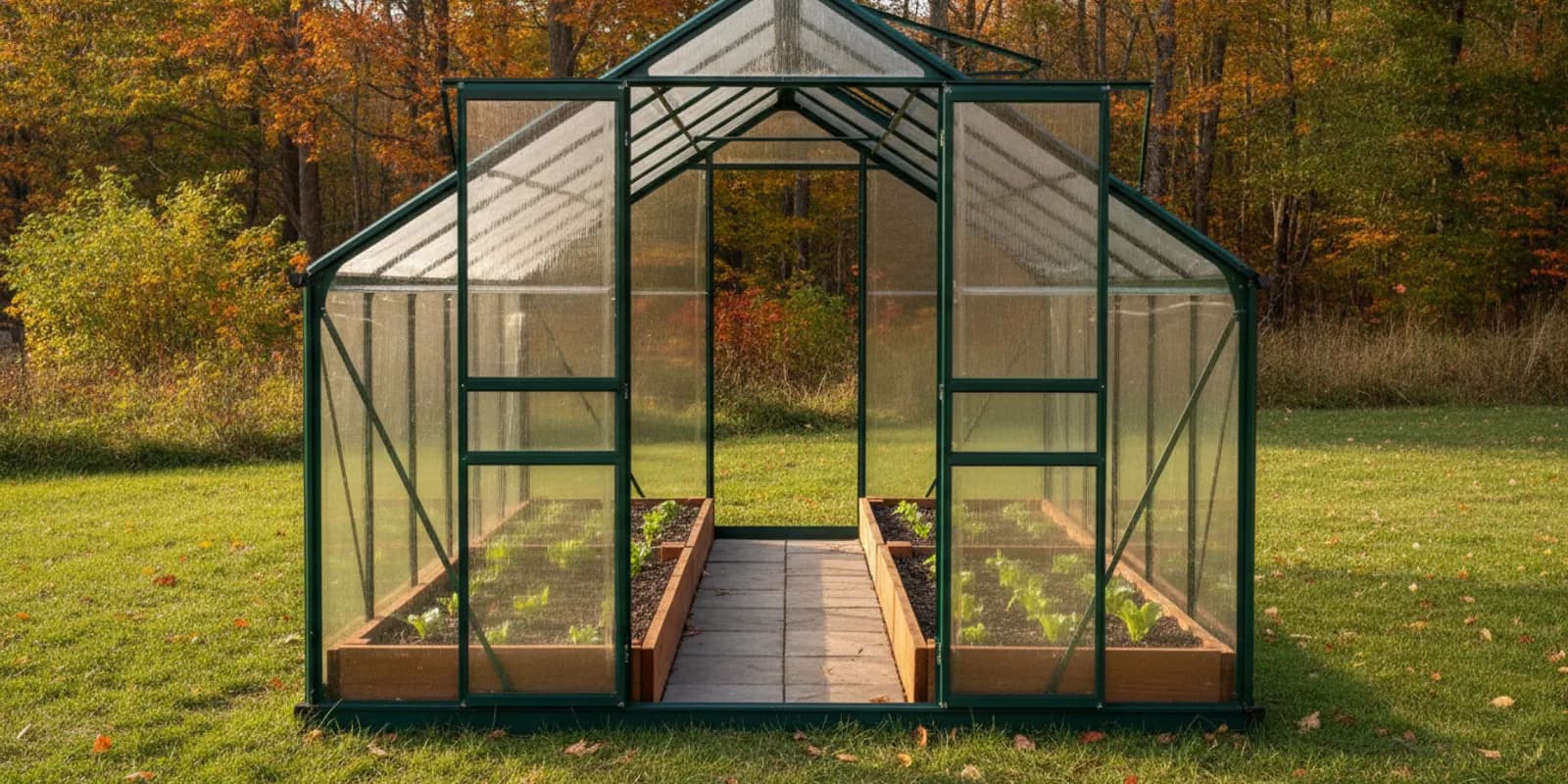
Small greenhouses can make a limited garden more useful, but the best footprint is not always the smallest one available. Start with what you want to grow, the room those plants need, and the space required to reach and care for them. For Hudson Falls and other Upstate New York gardens, also think through seasonal weather, access, and where the greenhouse will sit. A clear plan makes it easier to compare small greenhouses by how they will work day to day, not just by their outside dimensions.
Talk with Legacy Structures about your greenhouse plans
What counts as a small greenhouse?
“Small” can describe a compact footprint, a modest growing area, or a greenhouse intended for a focused set of plants. It does not have one universal size. A structure that feels roomy for seed trays may feel crowded when you add mature tomato plants, shelves, watering equipment, and room to turn around.
Think about the greenhouse as a working space rather than an empty rectangle. The walls take up some of the outside footprint, while the door, aisle, shelves, and plant containers determine how much of the interior is practical to use. Height matters too. Taller plants need room above their containers, and a higher roof can make the interior feel less cramped. Before choosing a model, write down the tasks you expect to do inside: sow seeds, pot up starts, water, prune, harvest, or store supplies.
If you are comparing available structures, browse the current greenhouses at Legacy Structures and note the dimensions of any options that catch your eye. Treat listed dimensions as a starting point for planning, then confirm the exact layout and details with the dealer.
How much growing space do you really need?
Begin with a short list of plants and the way you want to grow them. A few trays of seedlings need a different arrangement from a collection of large pots or a row of tall, climbing plants. Include both the growing area and the working area. You need to reach the plants without brushing them every time you pass.
- Seed starting: Plan for trays on shelves or benches, plus enough room to move them in and out. Consider where supplies and watering tools will go.
- Herbs and compact crops: Shelves can make use of vertical space, while pots or a narrow bed below keep the floor from becoming the only growing surface.
- Tall or spreading plants: Allow space for mature growth, supports, and access for pruning and harvesting. A layout that fits young plants may become crowded later.
- Mixed use: If you want both plants and storage for pots or tools, reserve that space on your plan instead of assuming it will fit around the growing area.
Make a simple inventory of how many containers, trays, or beds you expect to use at the busiest point of the season. Sketch their approximate positions. Leave a route to reach each group of plants and avoid filling every inch of floor with containers. A greenhouse that is easy to work in can be more useful than one with a slightly larger outside measurement but no clear path.
Which compact layout makes the most of the footprint?
There is no single best layout. The right choice depends on whether you prefer beds, pots, benches, or a mix, and whether you need access from one side or both. Compare the working space each layout leaves after you account for plants and equipment.
| Layout | How it uses space | Works well for | Watch for |
|---|---|---|---|
| Central aisle with growing space along both sides | Creates a route through the center and places plants at either side | People who want to reach beds or containers from a walkway | A narrow aisle can be awkward; include the width needed to carry trays and supplies |
| Perimeter benches or shelves | Uses wall-side space for trays and smaller containers | Seed starting, herbs, and organized container growing | Check that shelves do not block access to plants or make the center difficult to use |
| One-sided bench with open floor | Concentrates work surfaces on one side and leaves a more open area | Gardeners who want room for larger pots or a flexible work zone | Plants on the far side of a bench may be harder to reach if the arrangement is too deep |
| Raised bed or ground-level growing area | Devotes a larger portion of the footprint to planted space | A focused group of crops with fewer shelves or stored supplies | Leave room for access, watering, and maintenance around the growing area |
Use the table to narrow down a style, then draw it to scale. Mark the door swing, aisle, benches, largest containers, and any supports. You do not need a detailed architectural drawing. A paper sketch with measurements is enough to reveal a common problem: the plan fits when empty but becomes difficult to navigate once plants grow.
How can you plan the interior before choosing a model?
Measure the greenhouse’s proposed footprint on paper and add the items you expect to keep inside. Label the door and indicate how you will carry supplies in. Then test the route from the entrance to the plants at the back. Can you reach each bed or shelf? Is there room to turn with a tray in your hands? Can you get to the plants without moving other containers?
Work through these details before deciding that a smaller size will be enough:
- Choose the main growing method. Decide whether beds, pots, benches, hanging supports, or seed trays will take priority. A plan can include more than one, but each addition uses space.
- Allow for mature plants. Mark the space a plant will occupy later in the season, not only the room needed for a seedling or newly potted start.
- Keep an access route. Draw the path you will use to reach plants and move watering supplies. Keep the route clear in the busiest part of the season.
- Place tools deliberately. Decide whether small supplies will stay inside or be stored elsewhere. A shelf that becomes a catch-all can take over valuable growing space.
- Plan for cleaning and changes. Leave enough access to remove spent plants and tidy the interior. Consider whether your layout can be rearranged as seasonal needs change.
If you already have a garden, use containers or cardboard to outline the proposed interior arrangement on the ground. This can help you picture how much room a bench or walkway occupies. It will not replace checking the actual building dimensions, but it makes your expectations more concrete.
Where should a small greenhouse sit?
Choose a spot by looking at light, access, drainage, and the surroundings together. A sunny location may suit many growing plans, but nearby trees, buildings, and fences can affect light and shade throughout the day. Notice where shadows fall at different times, and consider how the pattern may change as seasons shift.
Plan a convenient route from the house or garden so you can bring in trays and tend plants regularly. Think about how you will approach the greenhouse in wet or snowy weather, and whether the door and work area will remain practical to reach. Avoid choosing a spot solely because it is an unused corner; check whether the available space allows the door to operate and leaves room for access around the structure.
Also consider how water will move across the site. A persistently wet or uneven area can make everyday use difficult. Ask the dealer what site preparation is recommended for the particular structure and location. Legacy Structures can provide site evaluation and preparation guidance, and its delivery and installation details depend on the service area and site. For current product information, compare the greenhouse selection and available building inventory before making a plan.
What should Upstate New York gardeners consider?
In Hudson Falls and the surrounding region, a greenhouse plan should account for changing seasons rather than assume year-round growing will happen automatically. Cold weather, snow, wind, and shorter winter days can affect how and when you use a compact greenhouse. Your intended season matters: a place to start plants in spring has different demands from a space you hope to use through winter.
Think through these practical questions:
- Will you use the greenhouse mainly in spring and summer, or do you want to extend use into colder months?
- What plants will be inside during the shoulder seasons, and what temperature conditions do they need?
- How will you manage ventilation and moisture when the greenhouse is closed or less frequently visited?
- Can you reach the door and maintain the space after snow or heavy rain?
- What site preparation and care does the selected model require in your location?
Do not assume a compact enclosure will provide a particular temperature or protect every plant from cold. Those results depend on the greenhouse, site, weather, ventilation, and any additional equipment you choose. If winter use is important, state that clearly when you compare models so you can discuss whether a particular option is suited to your expectations.
For broader agriculture and growing resources, the U.S. Department of Agriculture provides a starting point for information from federal agriculture programs. Use local growing guidance for decisions about specific crops and seasonal conditions.
How do footprint, access, and budget fit together?
A model’s listed price is only one part of a buying decision. The finished setup may also involve site preparation, delivery considerations, accessories, and any changes needed to make the interior work for you. Ask what is included and which details depend on your site. Do not compare two options only by outside dimensions or headline price if their features and installation needs differ.
One way to keep the comparison clear is to list what matters most, then assess each candidate against the same points:
- Does the footprint fit the space you measured, including door access?
- Can the interior support your intended mix of beds, containers, shelves, and working space?
- Is the greenhouse practical to reach and maintain through the seasons you plan to use it?
- What site preparation, delivery, or installation questions remain?
- Which optional features are useful to your plan, and which would consume space without helping?
Ask for a clear explanation of the dimensions and options before you make a final decision. Legacy Structures is a family-owned portable building dealer in Hudson Falls. You can learn more about the business on the About Legacy Structures page or see current offerings on the greenhouse page. Availability can change, so confirm the details directly rather than relying on an older listing.
What should you ask before choosing a small greenhouse?
Bring your sketch and measurements when you speak with a dealer. A specific plan makes it easier to discuss whether a model aligns with your garden and what details need confirmation. These questions can help keep the conversation focused:
- What are the exact outside and usable interior dimensions?
- How is the doorway arranged, and what access space should I leave around it?
- Which layout will work for my planned shelves, beds, or containers?
- What site preparation is recommended, and what should I have ready before delivery?
- What delivery and installation arrangements apply to my address?
- Which options are available, and how would they affect the usable interior?
- What care or maintenance should I plan for throughout the year?
- Is this model appropriate for my intended season of use, and what limitations should I understand?
If you are comparing structures, you can also review the contact page to ask about current greenhouse choices and your site. The team serves customers from its Hudson Falls location, with delivery coverage and fees depending on distance and arrangements.
How can you tell whether a footprint will feel comfortable?
Numbers are useful, but it helps to picture how you will move around the greenhouse. Think through a typical task from start to finish. For seed starting, you may carry a tray inside, set it down, water several containers, and take tools back out. For harvesting, you may need to reach around foliage while holding a basket. If every task requires shifting a pot or squeezing past a bench, the layout may be too dense.
Try a “busy day” sketch rather than planning for the neatest version of the space. Draw the largest plant containers and the mature spread of the crops you expect to grow. Mark where watering supplies will sit temporarily while you work. Leave the doorway and route clear. If you plan to use a cart or carry bulky items, account for that as well. You can also use masking tape or a garden hose to outline the outside footprint on the proposed site, then walk around the marked area and consider whether it obstructs paths or access to other parts of the yard.
Remember that a greenhouse is not just a place for plants. It is also where you will observe them, tend them, and handle ordinary seasonal tasks. A small work surface may be valuable if you pot up seedlings, while extra shelving may be more useful if your main goal is to organize trays. Prioritize the features that match your habits. Avoid adding shelves or storage simply because a product photo shows them; check how each item changes the space left for growing and movement.
What details are easy to overlook when planning a compact greenhouse?
Small spaces make minor layout choices more noticeable. The position of an entrance, the depth of a bench, and the size of the containers can all affect whether the interior feels workable. Before choosing, review the less obvious details below:
- Door and approach: Consider the swing or opening area and the route you will use when carrying plants. Do not plan a shelf or bed where it will interfere with entry.
- Vertical clearance: Think about mature plant height, hanging supports, and whether you can comfortably reach upper shelves. A vertical arrangement still needs safe, practical access.
- Watering routine: Decide how you will bring water to the greenhouse and where watering tools will be kept. Make the routine convenient without letting hoses or cans block the aisle.
- Ventilation and moisture: Ask how the selected greenhouse is intended to be ventilated and cared for. Plant needs and seasonal conditions vary, so clarify the model’s features rather than assuming a particular setup.
- Changing seasons: Consider whether seasonal cleanup or moving containers will require extra working room. Keep the plan flexible enough to change crops or rearrange shelves.
- Site surroundings: Check nearby paths, fences, buildings, and trees, along with the way people use the yard. A footprint that fits on paper may still complicate access or everyday movement outdoors.
Some buyers find it useful to create two sketches: one for the growing layout and another for the greenhouse’s position on the property. The first helps check interior function; the second helps check access and fit with the yard. Bring both when discussing options. If a product’s dimensions or features are unclear, ask for confirmation before you commit rather than estimating from a photo.
How do you make a final footprint decision?
Choose a greenhouse that fits both the space available outside and the routine you want inside. A useful final check is to revisit the plan at three stages: the first planting, the busiest point of the growing season, and cleanup. At each stage, make sure plants, tools, and access routes have a place.
Do not select a footprint just because it fits the bare patch of ground. Measure the full area needed for the building, approach, and door. Then compare the interior layout with your actual growing list. If the plan feels too tight on paper, reduce the number of uses, adjust the layout, or consider a different size before purchase.
For an easy decision record, note the measurements, your intended season, the plants you want to grow, and the questions you still need answered. That short list helps you compare options consistently and makes a consultation more useful. Browse greenhouses available through Legacy Structures, then confirm current dimensions, features, and delivery details for the option you are considering.
Call 518-544-2889 to discuss your greenhouse plans
Frequently asked questions
How do I know if a greenhouse is too small?
If the planned shelves, mature plants, and access route do not fit at the same time, the footprint is likely too tight for your intended use. Sketch the interior with measurements and test whether you can reach each planting area without moving other items.
Can I use a small greenhouse for seed starting?
A compact greenhouse can be part of a seed-starting plan if its usable space, layout, and conditions suit your trays and routine. Decide where trays and supplies will go and confirm what growing conditions the greenhouse can support for your intended season.
Should I choose shelves or growing beds?
Choose based on the plants you want to grow and how you prefer to work. Shelves can organize trays and smaller containers, while beds devote more of the footprint to planted space. A mixed layout can work if you preserve an easy path and room to tend the plants.
Can a small greenhouse be used through an Upstate New York winter?
Do not assume that every greenhouse is intended for winter growing. Cold, snow, light, ventilation, site conditions, and any added equipment all matter. Tell the dealer how you hope to use the structure and confirm the model’s suitability and limitations.
What should I measure before asking about a greenhouse?
Measure the proposed building area, the route to reach it, and the space needed for the door to open. Also sketch the planned interior arrangement, including shelves, beds, larger pots, and a path for working.
A small greenhouse is a better fit when its footprint supports your plants, access, and seasonal routine without wasting the space available in your garden.