
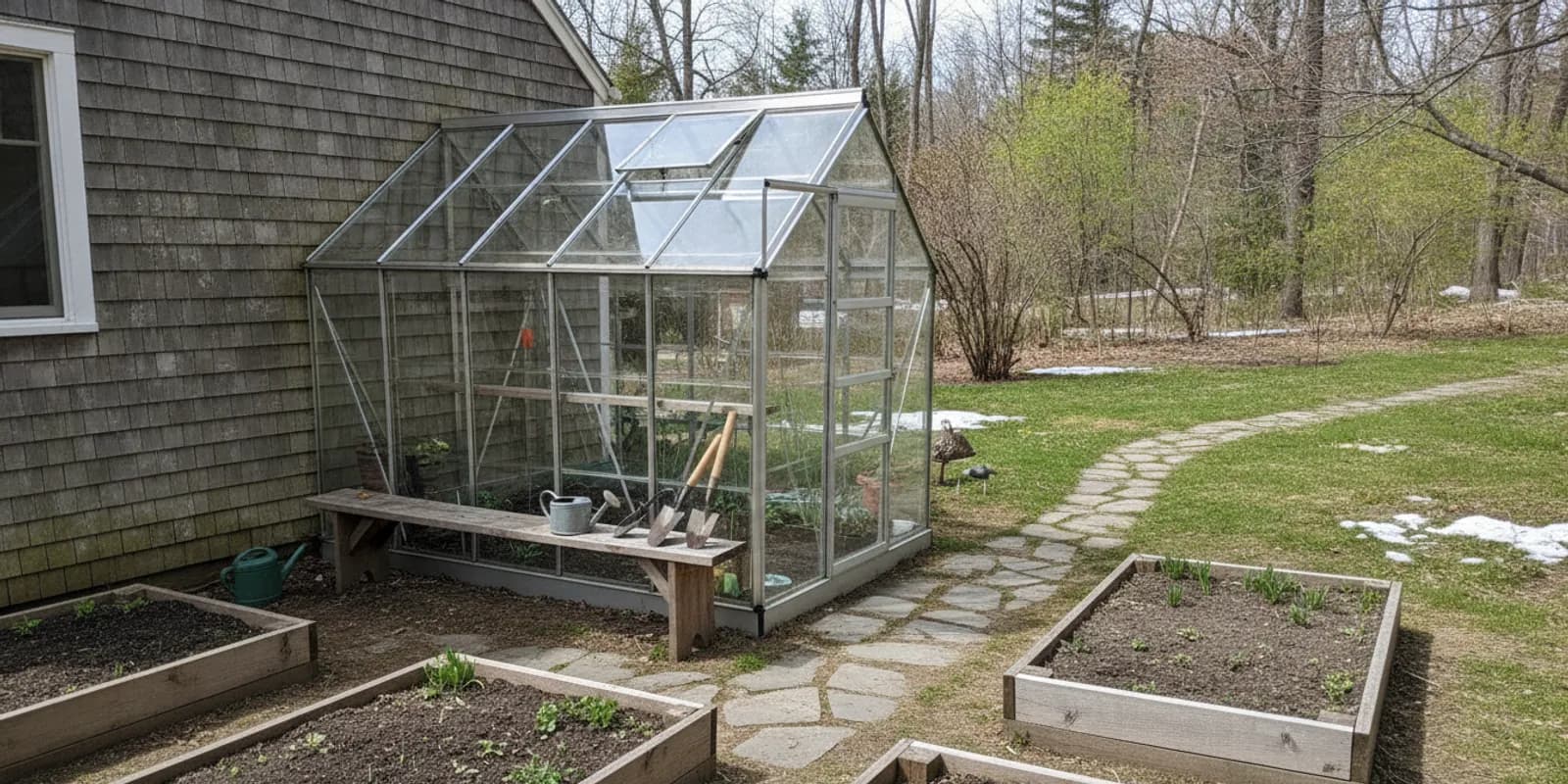
A small greenhouse kit can add useful growing space without taking over a yard, but a compact footprint leaves little room for planning mistakes. For Upstate New York, think beyond the outside dimensions: decide what you will grow, how you will move through the space, where it can sit, and how you will handle seasonal weather. This checklist helps you compare a kit with a ready-to-use greenhouse and prepare clear questions before choosing.
What should you decide before choosing a small greenhouse kit?
Start with the job the greenhouse needs to do. A space for starting seedlings has different needs from one where you plan to keep plants growing through changing temperatures. List the plants, containers, and tools you expect to use. Then estimate how often you will enter the greenhouse and whether more than one person needs room to work.
- Seed starting: Plan for trays, a work surface, and a convenient way to reach plants for watering.
- Container growing: Allow space for pots, access around them, and room to move containers as plants grow.
- Longer-season growing: Consider how the structure will be managed in colder weather and what level of seasonal use is realistic.
- Mixed use: Make sure storage for supplies does not take over the growing area.
Write down your priorities before looking at models. “Small” is not a complete specification. A greenhouse can fit a yard and still feel cramped inside if the entry, work area, and plant arrangement are not considered together.
How do you turn the footprint into a workable layout?
Use the interior, not just the advertised outside dimensions, to picture your routine. Sketch the floor area on paper or mark it temporarily in the yard. Place a door in the sketch, then add the path you need to reach plants and supplies. Think about whether you can carry a watering can or tray through the space without moving other items.
For a compact greenhouse, the main trade-off is growing area versus access. Fitting plants tightly may look efficient at first, but crowded containers can make watering, pruning, and cleaning awkward. Keep a usable route to the plants you tend most often. If you expect to use shelves or benches, include their depth in your plan and check whether they leave enough standing room.
| Planning choice | Best fit | What to check |
|---|---|---|
| Seed-starting layout | Trays and small plants | Reachable work surface, light access, and room to handle trays |
| Container layout | Pots and changing plant sizes | Clear route, stable places for containers, and enough room to tend them |
| Mixed-use layout | Plants plus a limited set of tools | Keep supplies organized so storage does not displace growing space |
| Ready-to-use structure | Buyers who want to review a completed building option | Dimensions, entry, delivery access, placement, and intended seasonal use |
The table is a planning aid, not a guarantee that every kit or model includes particular features. Confirm the actual dimensions and configuration for the option you are considering.
How can you test the layout before deciding?
A quick mock-up can reveal whether a layout works better than a drawing alone. Mark the proposed footprint with string, garden stakes, or another temporary marker. Walk the entry route while carrying a tray or watering can. Then place boxes or planters where shelves and large containers might go. This simple test helps you notice pinch points before you commit to a footprint.
Think about the growing sequence, too. Seed trays may be easy to reach in spring, but larger plants can change the amount of space you need later. Plan where tall or spreading plants will go and whether they could block access to smaller containers. If you rotate crops or move pots outdoors as the weather changes, leave a staging spot near the door rather than filling every corner.
Consider the work surface as part of the layout rather than an extra to squeeze in at the end. A small bench can make potting and sorting easier, but it also takes up floor area. Decide whether you need a permanent surface or can do those jobs elsewhere. Keep frequently used hand tools in a compact, organized place so they are easy to find without taking over the main route.
What should you check when comparing a kit and a ready-to-use greenhouse?
A kit may appeal if you want to assemble the structure yourself and can verify what the package includes. Before ordering, check the assembly instructions, required tools, number of helpers, and whether any materials or site work are excluded. Look for clear details on the frame, covering, door, ventilation, and care instructions. Do not assume that two kits with similar footprints include the same components.
Ask how the parts are identified and whether the instructions explain the order of assembly. Check whether the advertised dimensions describe the outside or usable interior. If the greenhouse depends on a particular surface or preparation method, get that information before delivery. An apparently simple kit can still require careful measuring, a level work area, and enough time to follow the instructions safely.
A ready-to-use greenhouse is another route to consider if you would rather evaluate a completed portable building. Compare the actual footprint, style, access, intended placement, and delivery arrangements. Legacy Structures lists greenhouses for sale; ask which available option suits your space and how delivery and installation would work at your property.
For either route, ask for written specifications and separate confirmed details from assumptions. A product photograph does not show every dimension or included feature. If a detail matters to your growing plan, get it answered before making a decision. You can also review a greenhouse listing as a starting point for questions about a specific option.
Where should a small greenhouse sit?
Choose a location with the daily routine in mind. Consider access from the house or garden, the route for carrying supplies, and whether the proposed spot leaves room around the structure for ordinary use and upkeep. Observe how sun and shade move across the area during the day. Nearby trees, buildings, or fences may affect light, shelter, and the amount of space available.
Also consider water management. Note where rainwater moves across the yard and avoid a spot that regularly collects runoff. Think about the ground surface and whether it is reasonably level and prepared to support the building. Portable structures should sit on a suitable surface above ground, such as a properly prepared gravel pad or other appropriate support—not be embedded or frozen into the ground. Confirm site requirements for the specific structure and local conditions before arranging delivery.
Access matters as much as the final spot. Measure gates, turns, driveways, and overhead obstructions along the route to the location. Share those details when discussing delivery so that the delivery plan can be checked in advance. Also note whether the route changes seasonally: a path that is easy to reach in summer may be harder to use after snow or heavy rain.
What does Upstate New York weather change?
A short growing season makes preparation valuable, but a greenhouse does not remove the need to plan for local weather. Consider wind exposure, snow, drainage, and how you will use the structure in colder periods. Ask what care the chosen greenhouse requires and whether its design and materials are appropriate for the conditions where it will sit. Do not rely on a general product label as a promise of year-round performance.
Set a realistic seasonal plan. Decide when you expect to begin using the greenhouse, what you will grow during the cooler parts of the year, and how you will manage temperature and ventilation. The U.S. Botanic Garden greenhouse manual describes varied greenhouse uses and growing approaches; it can help you think through how the space may support your goals. Match any technical practices to your specific plants and equipment.
Make a simple season-by-season note: what you plan to start indoors, when you expect to transplant, and whether you intend to use the structure after outdoor conditions cool. This is not a promise about what any building can withstand. It is a way to identify practical questions about ventilation, care, and the equipment your plants may need. If a model has specific weather guidance, follow its instructions and ask for clarification where anything is uncertain.
Also plan for the days when you cannot tend plants. Think about how you will check moisture, open or close ventilation as needed, and keep tools or supplies from blocking access. A small greenhouse is easiest to manage when the routine is straightforward. Avoid building a plan that depends on daily tasks you cannot reliably do.
How can you use this small greenhouse kit checklist?
- Define your growing purpose. Name the plants and season you are planning for.
- Measure the site. Record the available footprint, route, and any access limits.
- Draw the interior. Include the door, walking route, plants, benches, and supplies.
- Compare specifications. Check dimensions, materials, included parts, assembly expectations, and care needs.
- Plan the site surface. Ask how the location should be prepared and keep the structure supported above ground.
- Confirm delivery details. Discuss the access route and placement before scheduling.
- Ask local questions. Get answers on the actual model, seasonal use, and what is included.
Keep the checklist with your measurements and any product notes. That makes it easier to compare options fairly rather than choosing by appearance alone. To make the comparison concrete, put the exact model names at the top of a page and record each answer next to the same question. This avoids relying on memory after several product conversations.
Separate must-haves from preferences. A clear entrance, suitable location, and workable interior may be essential to your routine; a particular appearance or extra shelf may be flexible. If a product does not fit your essentials, do not let a favorable photograph or a minor convenience distract from the mismatch. Recheck dimensions and the site route before making the final selection.
What should you ask before ordering?
Use specific questions rather than asking only whether a greenhouse is “right” for your yard. The answers should relate to the exact product and your site.
- What are the exact outside and usable interior dimensions?
- What parts and features are included, and what must be supplied separately?
- What tools, skills, and help are expected for assembly, if it is a kit?
- What site preparation and surface does this structure require?
- How should the structure be cared for in local seasonal conditions?
- What delivery access and clearances should be available?
- Which details can be customized, and which are fixed?
- What does the delivery plan include, and what should be ready before arrival?
- How should doors, vents, and other moving parts be maintained?
Legacy Structures is based in Hudson Falls and offers greenhouse options as part of its portable building range. You can contact the team with your measurements and questions, or review current building inventory before you call. Bring a rough site sketch, the width of gates or other tight access points, and a list of your intended uses. Those details make it easier to focus the conversation on practical fit rather than guessing from a photo.
Call 518-544-2889 to discuss your measurements, intended use, and greenhouse questions with Legacy Structures.
How do you compare the real workload of each option?
Compare more than the purchase and assembly stages. A greenhouse becomes part of a weekly routine, and the best fit is often the one you can maintain consistently. Write down who will handle watering, ventilation checks, cleanup, and seasonal preparation. If more than one person will use the space, agree on where tools and supplies belong so the path stays clear.
Think through a typical busy day. Can you reach the plants that need attention without shifting pots? Is the watering source close enough that carrying water remains practical? Can you open the door and move a tray without bumping into a bench? Small inconveniences can become recurring frustrations when every task involves moving something first. The footprint mock-up is a good time to act out those jobs.
Also consider what happens when a plant is finished or a new batch is ready. Set aside a temporary place for empty trays, potting mix, and plants waiting to move outdoors. If that staging area has no home, it may end up in the entry. A simple plan—such as keeping a small tote of frequently used tools near the door and storing less-used supplies elsewhere—can preserve usable growing space.
How do light, shade, and nearby features affect placement?
Before settling on a site, observe it at different times rather than relying on a single glance. Note when direct sun reaches the proposed footprint and when buildings, fences, or trees cast shade. This does not require a technical calculation. A few observations across the day can reveal whether the spot changes substantially and help you discuss the location with the supplier.
Look above and around the structure as well as at the ground. Overhanging branches can drop leaves or other debris, while nearby walls and fences can limit access for upkeep. A tight corner may appear to save yard space but make it difficult to reach the sides or bring in supplies. Leave room for the way you will enter, move around, clean, and inspect the building, subject to the model's specific guidance.
Consider how the greenhouse relates to the rest of the garden. A location near beds can make moving seedlings easier, while a spot close to a water source may simplify routine care. On the other hand, the most convenient location may be shaded or difficult to deliver to. List the advantages and drawbacks of two possible sites, then compare them against your priorities instead of choosing the first open patch.
What practical details should go into a comparison sheet?
A comparison sheet makes conversations and product research easier to follow. Give each option its own column and use the same questions for every one. Mark a detail as confirmed only when it comes from written specifications or a direct answer about that model. Use “not confirmed” when you still need to ask; that is more useful than filling gaps with assumptions.
- Dimensions: Record outside measurements and usable interior space separately, if both are available.
- Entry and access: Note the door position, opening, and whether your route through the yard can accommodate delivery.
- Included items: List the frame, covering, vents, shelves, or other components only when the seller confirms them.
- Preparation: Write down the required surface, how level it must be, and any work that is your responsibility.
- Assembly or placement: Clarify who assembles or positions the greenhouse and what must be ready beforehand.
- Care: Note instructions for cleaning, moving parts, seasonal checks, and any material-specific maintenance.
- Use limits: Record the seller's guidance about local conditions and intended seasonal use.
Keep a separate list of unresolved questions. For example, a listing may show a vent, but if it is unclear whether that feature comes with the exact model, ask before comparing it as included. The same applies to dimensions: measurements shown in a photograph or heading may not describe the usable interior. A careful comparison is not about creating paperwork for its own sake; it is a way to make a decision based on the same facts for every choice.
How should you plan for delivery and preparation?
Delivery planning starts with a route, not just a destination. Measure the narrowest gate, the tightest turn, and any low branches or overhead wires along the way. Note soft ground, slopes, steps, or other obstacles that could affect access. Share the route details early and ask what the delivery arrangement requires. Do not assume that an open driveway means the greenhouse can reach its intended spot without a separate access check.
Prepare a simple site sketch with the proposed footprint, nearby structures, boundaries, and the direction of the entry. Include measurements where you can. This gives the supplier a clearer basis for discussing placement and can expose conflicts such as a door opening toward a fence or a narrow path that leaves no room to carry plants. If you have two possible locations, label both and ask which details need confirmation for each.
Before the scheduled arrival, confirm what must be completed and what the delivery team will handle. The surface should match the requirements for the specific greenhouse, and the work area should be accessible. Keep the route clear of movable items and make sure the intended spot is easy to identify. These steps reduce last-minute uncertainty without assuming that every product has the same delivery or setup process.
How can you make a final decision without overbuying?
Once you have collected the details, compare each option against a short list of essentials. Start with a workable interior, a suitable site, and a realistic plan for the growing season. Then consider preferences such as appearance, shelf arrangement, or how close it sits to a garden bed. This order helps prevent an appealing extra from distracting from a basic mismatch.
Try a “one season at a time” test. Picture the first period of use, when trays and small plants may dominate; then picture the later period, when plants are larger and access can be tighter. Ask whether the layout remains manageable in both situations. If you plan to use the greenhouse for more than one purpose, write each purpose down and make sure the combined plan does not exceed the available room.
A useful final check is to explain your choice aloud using the facts on your comparison sheet: “This option fits because the route works, the interior supports these plants, and I understand what preparation is required.” If you cannot explain a key point because it is unknown, pause and get the answer. Taking time to verify a detail is better than discovering after delivery that a size, feature, or site assumption was wrong.
Frequently asked questions
Is a small greenhouse kit a good choice for beginners?
It can be, if the size, assembly requirements, and included components match your comfort level. Read the instructions and confirm what is required before ordering. If you prefer to compare a completed building, ask about ready-to-use options as well.
How do I know whether a greenhouse is too small?
Sketch the interior with the plants, benches, and supplies you expect to use. If the drawing leaves no comfortable route to reach plants or manage trays, consider a different layout or a larger footprint.
Can a small greenhouse be used in winter?
That depends on the structure, its care requirements, local weather, and how you manage the interior. Ask about the specific model and plan for temperature and ventilation; do not assume that a greenhouse alone provides winter growing conditions.
What should I prepare before asking about delivery?
Measure the proposed site and the route to it, note gates and overhead obstructions, and identify the surface where the greenhouse will sit. Share those details so the delivery and placement questions can be addressed early.
A clear plan for the site and interior will help you choose a greenhouse that fits both your yard and the way you want to grow.