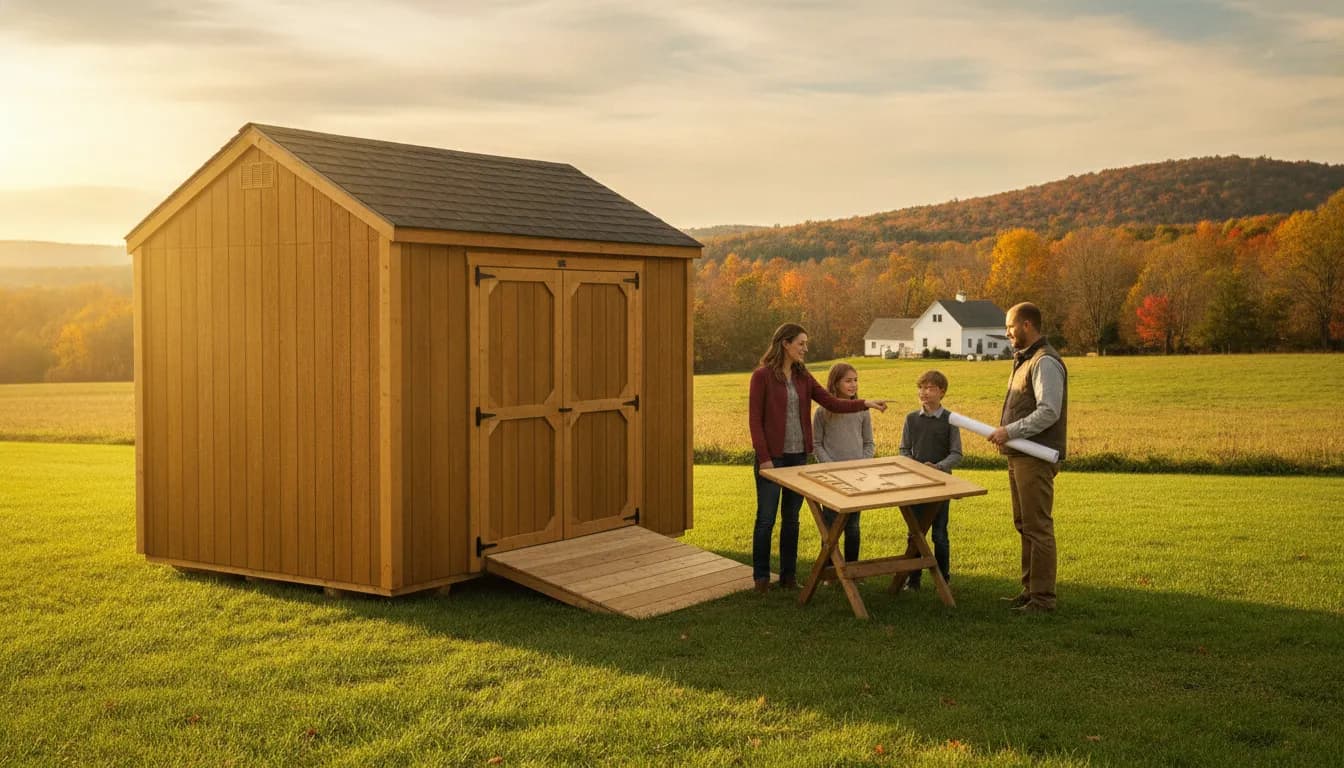
Rent to own sheds no credit check can give Upstate New York buyers a way to use a portable building through regular payments without a traditional credit review. At Legacy Structures, owner Stephen Kanagy and the local team explain the available 36-month and 48-month options in plain English. The agreement controls the payment, total obligation, fees, and point at which ownership is completed, so review those details before signing.
Call Legacy Structures at 518-544-2889
A portable building can solve a real storage or workspace problem without turning your property into a permanent construction project. Review Legacy Structures' rent-to-own program alongside the specific building you need. For homeowners, renters, farmers, and budget-conscious buyers, the right rent-to-own decision starts with understanding the full cost and practical delivery requirements, not just the first monthly amount.
What Rent to Own Sheds No Credit Check Means for Your Budget
Rent-to-own can be an accessible way to get a shed when a traditional credit-based loan is not a good fit. Instead of applying for a conventional loan and going through a formal credit review, you agree to recurring payments under a rent-to-own contract. You use the portable building while making those payments, with the agreement setting out how ownership is reached.
No credit check is different from a traditional loan
A traditional loan usually places the lender's decision around credit information and other lending requirements. A no-credit-check rent-to-own plan uses a different approval process. You are still entering a binding agreement with payment obligations. Read the terms before accepting them. The Federal Trade Commission explains that rent-to-own plans generally involve regular weekly or monthly payments while the customer uses the item. The FTC's consumer guidance is a useful plain-English resource when comparing this arrangement with other ways to pay.
That distinction matters for your budget. No credit check does not mean no cost, no agreement, or no need to plan. It also does not automatically tell you the final amount you will pay. Before moving ahead, ask for the payment amount, payment schedule, length of the agreement, and the total obligation in writing. If a term is unclear, ask the dealer to explain it before you sign.
Who may find this approach useful?
This option may be worth considering if you need a movable storage solution but want to avoid a traditional credit hurdle. It can be relevant for someone with little established credit. It can suit a renter who does not want a permanent property improvement or a homeowner who needs storage, workspace, or a garage alternative. Farmers and agricultural customers may also need a portable building for equipment, a coop, or an animal shelter. Choose based on the building you need and the payment you can manage consistently.
When exploring custom portable shed styles, treat "instant approval" as a statement about the approval process, not a promise that the plan will fit every budget. Ask what the approval covers, which building choices qualify, and what happens if your circumstances change. A clear conversation at the start helps you choose a structure and payment arrangement that make sense for your property and your finances in Upstate New York.
How Monthly Payments and Contract Terms Work
A rent-to-own agreement usually lets you take possession of a building while making regular weekly or monthly payments under a written contract. The payment schedule, contract length, fees, and ownership terms all matter. A monthly figure by itself does not tell you what the building will cost in the end.
Contract length is one of the biggest tradeoffs. A longer term can reduce the amount due each month. That may make a building easier to fit into a household budget. However, the lower monthly payment may come with a higher total cost because the agreement can include markups and fees. The Federal Trade Commission recommends looking beyond the advertised payment and finding out the full details before agreeing to a plan: review the FTC guidance on rent-to-own plans.
Ask for the total obligation in writing, not just an estimated monthly amount. Confirm how many payments are required, when the first payment is due, and whether the amount changes under any circumstance. If a payment is listed as weekly, calculate the actual yearly outlay before comparing it with a monthly plan. Also ask whether taxes, delivery, site preparation, processing, or other charges are included or billed separately.
| Option | How it generally works | What to compare |
|---|---|---|
| Cash purchase | Pay the agreed purchase price upfront and avoid a recurring financing contract. | Confirm the complete purchase price, delivery charges, and any site costs. |
| Traditional credit | Use a separate credit or loan arrangement, subject to that provider's approval and terms. | Compare interest, fees, payment schedule, and total repayment with the cash price. |
| Rent-to-own | Make recurring payments while using the building and work toward ownership under the contract. | Check the full payment total, markups, fees, late-payment rules, and ownership conditions. |
Questions to ask before choosing a term
- What is the exact total amount I will pay if every payment is made on time?
- How many payments are required, and what is the due date for each one?
- Are there late fees, processing fees, delivery charges, or other costs outside the advertised payment?
- When does ownership transfer, and what happens if I need to end the agreement early?
- Can the payment amount or contract terms change after signing?
Take time to read the agreement before signing. A clear payment calendar and a written total cost make it easier to decide whether the plan fits your budget for the full term. Review that fit across the full term.
What to Check Before You Sign a Rent-to-Own Agreement
A rent-to-own agreement is more than a monthly payment. It is a contract that lets you use a building while making recurring payments toward ownership, so read the complete document before you commit. Policies vary between providers and plans. If you are comparing rent to own sheds no credit check, confirm the actual terms in writing rather than relying on a headline or verbal explanation.
Start with the contract term. Ask whether your available options are 36 months, 48 months, or something else, and note the exact first and final payment dates. A longer term may reduce the monthly amount while increasing the total amount paid. The Federal Trade Commission explains that price markups and fees can make a longer rent-to-own arrangement cost more overall.
- Payment amount: What is due each week or month, when is it due, and how can you pay?
- Total obligation: What will you pay from start to finish, including every listed fee?
- Fees and late payments: Are there processing charges, delivery charges, late fees, reinstatement costs, or other add-ons?
- Ownership point: When does ownership transfer, and is there a final payment or other requirement?
- Return and default policy: What happens if you cancel, miss payments, or can no longer use the building?
- Site and delivery duties: Who prepares the site, receives the building, handles access concerns, and pays any related cost?
Do not judge the plan by the payment amount alone. The FTC advises consumers to find out the full details because fees and other costs may produce a higher-than-expected total. Request a written payoff or ownership calculation if the agreement provides one. This gives you a clearer basis for comparing the plan with paying cash or using another financing option.
Ask specifically how credit reporting works. Some companies that manage rent-to-own plans may report payments to nationwide credit bureaus, and a late or missed payment could affect your credit. Other plans may handle reporting differently. Ask the provider and check the contract for that answer.
Finally, discuss what happens if your circumstances change. A job change, move, property sale, or unexpected expense can affect your ability to continue payments. Some agreements may allow a return. Nonpayment can lead to repossession and loss of money already paid. Do not assume a return ends every obligation. Ask what notice is required, who arranges removal, whether prior payments are refunded, and whether delivery or site costs remain your responsibility.
Before signing, review every page and ask for unclear language to be explained. This is general consumer information, not legal advice. If a term matters to your decision, make sure it appears in the agreement you will actually sign.
Which Portable Buildings Can Fit This Payment Approach?
The right structure starts with the job you need it to do, not with a financing label. A rent-to-own arrangement may be worth exploring when you need a portable building now. want to spread payments over time, and expect to keep making payments through the agreement. Eligibility can depend on the building, the selected options, and the provider's terms, so treat these examples as starting points rather than a promise that every unit qualifies.
Storage sheds and portable garages
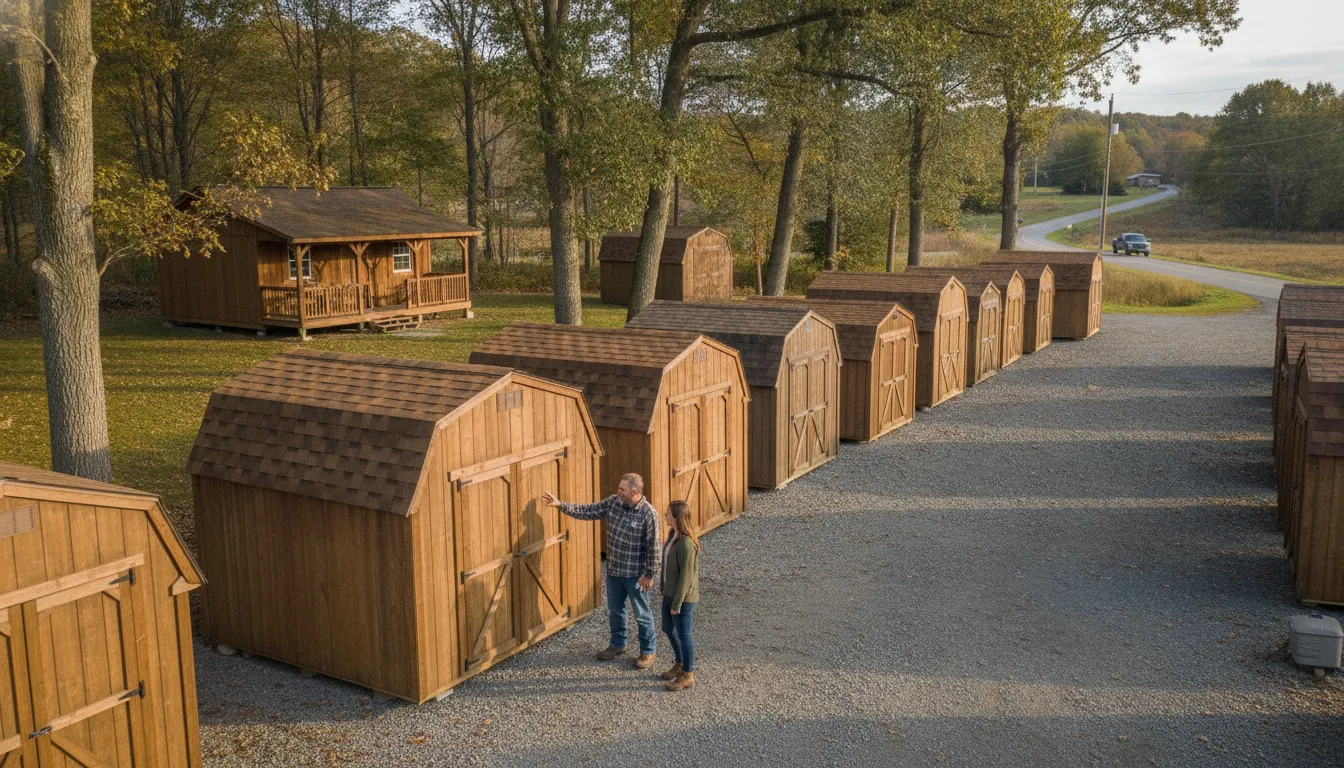
A storage shed is often the simplest fit for a buyer who needs room for lawn equipment, seasonal items, tools, or a small workshop. Homeowners can compare the footprint and layout with the available space. Renters may value a building that can move with them instead of becoming a permanent property improvement. Portable garages may make sense when the priority is vehicle protection or larger equipment storage. Confirm the required width, height, access route, and site clearance before choosing a model. You can browse custom portable shed styles to compare the kinds of buildings and uses available.
Cabins and backyard barns
Cabins and backyard barns require more careful planning because their size and intended use can vary substantially. A cabin may serve as a retreat, hobby space, or flexible backyard room. A backyard barn may support storage, workshop tasks, or a small agricultural setup. Before asking about a payment plan, identify how the building will be used, how much interior space you need, and whether the delivery path can accommodate its dimensions. Ask which configurations and terms are available for the specific building rather than assuming a larger structure receives the same treatment as a basic shed.
Chicken coops and greenhouses
Farmers and small-property owners may be looking for a chicken coop, animal shelter, equipment building, or greenhouse instead of conventional storage. Those needs can be practical candidates to discuss, but the details matter. Consider ventilation, door placement, sunlight, drainage, animal access, seasonal use, and local site requirements. A greenhouse may need a different orientation and setup than a coop. If the structure is intended for future relocation, its placement should preserve portability. Sheds and similar buildings should sit on an appropriate movable base, such as pressure-treated skids, gravel, or blocks, rather than a ground-embedded foundation.
Across these uses, compare the building's size, purpose, site, delivery conditions, and likely future plans. A portable structure is most useful when it solves today's need without limiting tomorrow's options. If you are still comparing layouts, review Legacy Structures' portable cabin options, chicken coops, and greenhouses. Ask the dealer to confirm whether the exact model, custom features, and desired payment term are available before relying on the plan. That conversation can also clarify the agreement's total obligation, so a lower monthly payment does not become the only factor in your decision.
Can Rent to Own Sheds No Credit Check Fit Your Situation?
Rent-to-own can be a sensible way to get a portable building when you need the space now. But the right answer depends on your budget, timeline, and comfort with the agreement. It is not automatically cheaper than paying upfront. Think of it as a flexibility tradeoff: you may get access without a traditional credit hurdle, while accepting recurring payments and a potentially higher total cost.
Rent-to-own may fit when accessibility matters
This approach may be worth considering if you need storage, a workshop, or another portable building but do not have enough cash available today. Legacy Structures describes its rent-to-own program as requiring no credit check with instant approval, which can make the process more accessible for buyers who may not qualify for traditional credit. The available terms are 36 months and 48 months, so ask which choices apply to the specific building you are considering.
A predictable monthly payment can also make planning easier than using a large portion of your savings at once. That matters when the building solves an immediate problem, such as protecting equipment or clearing space in your home. Before agreeing, make sure the payment fits comfortably alongside rent or mortgage, utilities, insurance, seasonal expenses, and an emergency reserve.
When the total cost deserves a closer look
A lower monthly payment does not necessarily mean a lower price. The Federal Trade Commission cautions that longer rent-to-own terms can reduce the monthly amount while increasing the total through markups and fees. Read the agreement for the full obligation, processing charges, late-payment penalties, and any costs that are not included in the advertised payment. Compare that figure with the cash price and with any traditional credit option available to you. The FTC's rent-to-own guidance recommends understanding the details before saying yes.
Default risk is another important consideration. Depending on the agreement, missed payments may lead to repossession, and you could lose money already paid. Policies vary, so ask what happens if your income changes, you need to return the building, or you move before the term ends. Do not rely on a verbal explanation. Have the answer in writing.
Ask yourself these questions first
- Can I make every payment through the full term, including during slower or more expensive months?
- Do I know the total amount I will pay, including every fee?
- Have I compared rent-to-own with paying cash or using another financing option?
- Do I understand when ownership transfers and what happens after a late or missed payment?
If you can pay cash without weakening your emergency savings, an outright purchase may cost less overall. If neither cash nor rent-to-own feels comfortable, ask about another building size, a different term, or an option that better matches your budget. A clear conversation is better than stretching into an agreement you may struggle to maintain.
Call 518-544-2889 to talk through your rent-to-own options.
How Local Delivery and Site Preparation Affect the Plan
A rent-to-own plan covers more than the building itself. Before choosing a portable structure for a property in Hudson Falls, Upstate New York, or the Adirondacks, ask how delivery works and what the site needs before delivery. A clear conversation up front can prevent surprises with access, placement, seasonal conditions, or extra preparation.
Legacy Structures is a family-owned portable building dealer based in Hudson Falls, NY, serving the surrounding Upstate New York region, including the Adirondacks. Free delivery is available within a 30-mile radius of Hudson Falls for qualifying portable buildings. That verified service area is a useful starting point, but your exact address and building should still be confirmed before you make a decision. If you are outside that radius, ask what delivery arrangements may apply rather than assuming a boundary or fee.
Ask about access before delivery day
Delivery access can affect whether a building can reach its intended location. Share the complete address and describe the route from the road to the placement area. Mention narrow driveways, sharp turns, steep grades, low branches, gates, soft ground, overhead lines, or other tight points. Photos can help the local team understand the approach. Ask what clearance and turning room the delivery equipment needs, and whether anything must be moved before arrival.
Also confirm who handles site preparation and what condition the area should be in. A level, accessible placement area makes the delivery conversation more straightforward. If the property has changing winter conditions, ask how snow, ice, frozen surface conditions, and limited access could affect timing or the delivery plan. Do not wait until the scheduled day to raise seasonal concerns. A local review can help you plan with the realities of your property in mind.
Plan for a movable, stable base
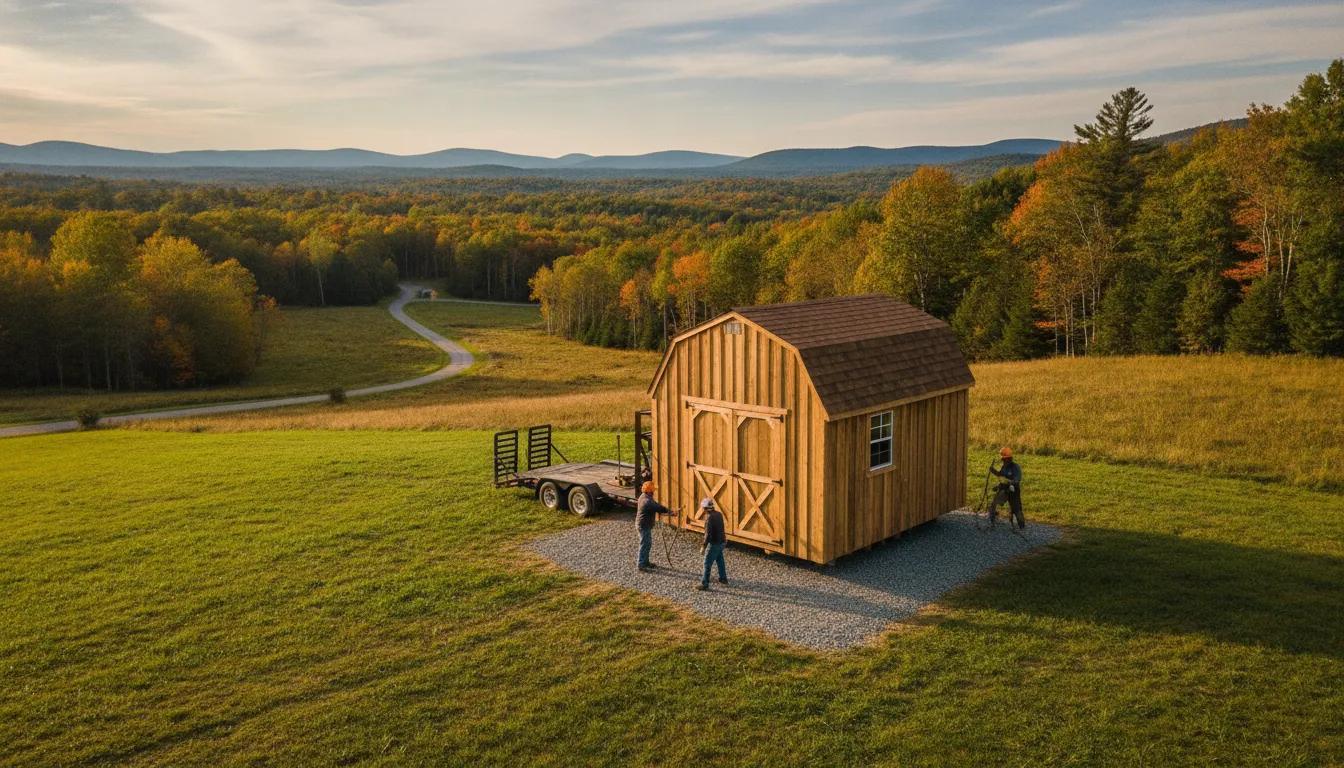
Portable buildings should sit on or above the ground on a movable base. Legacy Structures specifies pressure-treated skids, gravel, or blocks for shed siting. These options support a stable placement while preserving the building's portability if your needs or property change. They also keep site preparation focused on a practical base rather than a permanent property improvement.
Placement matters after delivery, too. Think about how doors will open, where snow may collect, and how you will reach the building in winter. Also consider whether future access for maintenance or moving the structure remains possible. Ask how the selected base, building size, and site conditions work together. Legacy Structures emphasizes superior materials and local craftsmanship, along with a 5-year warranty on storage sheds and portable structures. You can learn more about the company as a local shed builder in Upstate New York.
Before signing, ask what delivery includes and what preparation is your responsibility. Confirm the placement details in writing so the plan matches your property.
How to Request a Clear Rent-to-Own Shed Quote
A clear quote starts with useful details. Before contacting Legacy Structures, gather information about your needs, site, and preferred payment approach. Legacy Structures advertises rent-to-own approval with no credit check, along with 36- and 48-month terms. The right building, delivery requirements, and final agreement still need to be confirmed for your situation.
- Explain how you will use the building. Tell the sales team whether you need storage, a workshop, a garage alternative, a cabin, or an agricultural building. Your intended use helps narrow the layout and practical features.
- Choose a starting size and design. Share the approximate dimensions you have in mind, plus any equipment, vehicles, shelving, or work areas that must fit inside. If you are still comparing options, review the custom portable shed styles first, then mention the models or features that caught your attention.
- Describe the site. Provide a clear description of the placement area. Note slopes, narrow access points, overhead branches or wires, gates, and the surface you plan to prepare. Portable buildings should remain movable and be placed on pressure-treated skids, gravel, or blocks. That information matters for both stability and delivery planning.
- Give the complete delivery address. Include the town, ZIP code, and any details that could affect access. Legacy Structures is based in Hudson Falls and offers free delivery within 30 miles for qualifying portable buildings. The address helps the team determine whether that policy applies. Locations farther away may require a separate delivery discussion.
- State your preferred term. Ask about the 36-month and 48-month options, then request the payment schedule for the specific building you are considering. A longer term may lower the regular payment while increasing the total amount paid, so compare both figures rather than choosing by monthly payment alone.
- Ask direct questions about total cost and fees. Request the total obligation, all recurring charges, delivery or site-preparation costs, late-payment fees, and the point at which ownership is completed. Ask what happens if your circumstances change. Clear answers make comparison easier.
Remember that an estimate is not the same as a confirmed agreement. The final quote should reflect the selected building, options, site, delivery address, term, and applicable charges. Ask the team to confirm those details in writing before you rely on the payment amount or schedule. You can request a local shed quote with the information above ready to review.
Call 518-544-2889 for a clear quote
What Should You Compare Before Choosing a Payment Plan?
The most useful comparison starts with the building itself. A smaller storage shed may keep the regular payment within reach, while a portable garage, cabin, or larger barn may better solve the need but create a larger total obligation. Review the current portable building inventory and identify the size, doors, windows, siding, and other options that matter before discussing payment terms.
Next, compare the same building under each available payment path. Ask for the cash price, the amount due at signing, the recurring payment, the number of payments, and the total amount paid. If delivery or site preparation is separate, include that cost in your comparison. A lower monthly amount is not automatically the least expensive choice, and a cash purchase is not automatically practical if it would drain savings needed for other obligations.
Finally, compare the agreement's flexibility with your circumstances. Ask how early payoff is calculated. Also ask what happens after a missed payment and whether the building can be returned if your situation changes. If you are considering a garage or barn, review the relevant backyard barn options or portable garage styles before requesting a specific quote. A careful comparison gives you a clearer conversation with the local team and reduces the chance of choosing a plan based on one attractive number.
Frequently Asked Questions
How does rent to own work for sheds without a credit check?
You choose an eligible portable building, review the agreement, and make regular monthly payments while using the shed. Some plans do not require a formal credit check, and Legacy Structures describes its rent-to-own program as requiring no credit check with instant approval. Confirm the specific building, payment, term, and approval details before signing.
What are the requirements for a no-credit-check shed plan?
Requirements depend on the provider and the building you select. Be prepared to provide contact and delivery information, choose an eligible structure, and agree to the payment schedule. Ask whether the plan is available for your preferred size and use, and request the full agreement so you can review fees and ownership terms.
Does rent to own affect my credit score?
It may, depending on how the plan administrator handles payment reporting. The Federal Trade Commission notes that companies managing these plans might report payments to the nationwide credit bureaus, and late or missed payments could hurt your credit. Ask directly whether the agreement reports payment activity and what happens after a late payment: FTC consumer guidance.
What happens at the end of a rent-to-own shed agreement?
Ownership arrangements vary by contract. In many rent-to-own plans, you continue scheduled payments until the agreement's purchase requirements are met. But the exact ownership point, final payment, and any fees should be stated in writing. Before signing, ask what confirms ownership and keep a copy of the completed agreement.
Can I return a shed if I can no longer afford the payments?
Do not assume returning the building cancels every obligation or refunds prior payments. The agreement should explain return, default, late-payment, and repossession policies. The Georgia consumer guidance warns that nonpayment can result in losing the item and money already paid. Contact the provider promptly if your circumstances change and ask what options are available.
Ready to Request a Clear Rent-to-Own Shed Quote?
A clear quote can help you compare the building, payment schedule, agreement terms, and delivery details before you make a decision. Have your intended use, approximate size, delivery address, and preferred term ready so the conversation stays practical and specific. To get started, call Legacy Structures at 518-544-2889 and request a local rent-to-own shed quote.