
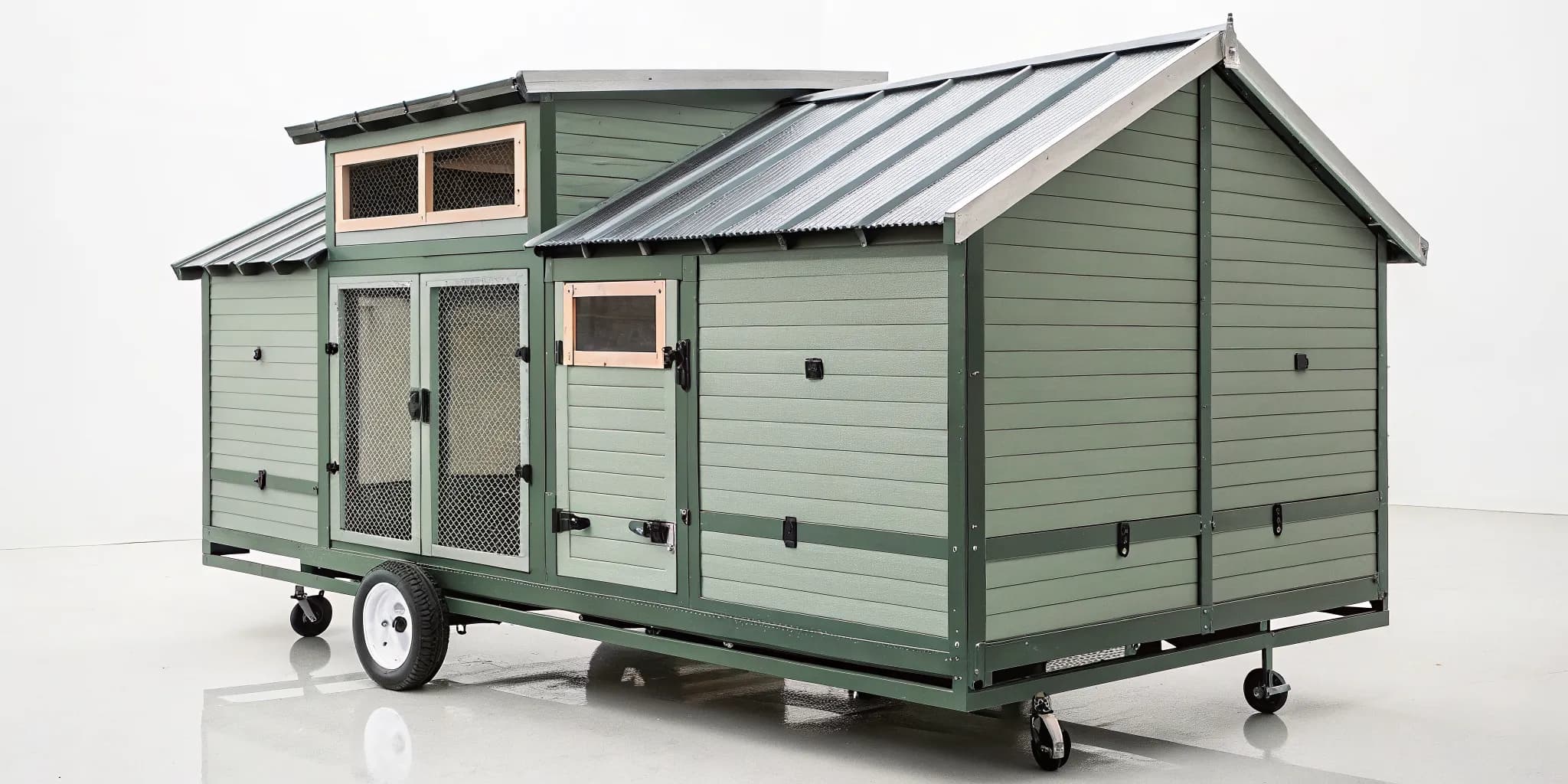
To a fox, a raccoon, or a hawk, your backyard is a buffet, and your chicken coop is the main attraction. These animals are intelligent, persistent, and equipped with natural tools for breaking and entering. Raccoons have nimble paws that can solve simple latches, foxes are expert diggers, and hawks can strike from above in seconds. Your job as a flock owner is to create a fortress that accounts for every one of these threats. A weak point is an invitation. This is why investing in a well-designed predator proof mobile chicken coop is so critical. It’s a complete security system built to withstand attacks from every angle, ensuring your flock stays safe day and night.
Key Takeaways
- Prioritize Predator-Proof Materials: A secure coop starts with the right components. Always choose ½-inch hardware cloth over standard chicken wire, install two-step locking latches that raccoons cannot solve, and ensure the coop has a solid, sturdy frame.
- Defend Your Flock from Every Direction: Predators will test your coop from the ground, sides, and air. A complete defense includes a fully covered run to block hawks, an anti-dig skirt to stop animals from tunneling underneath, and ensuring there are no gaps a weasel could squeeze through.
- Make Security Part of Your Daily Routine: A strong coop needs consistent habits to be effective. Make it a rule to lock your flock in every night, perform regular inspections for weak spots or damage, and keep the surrounding area clean to avoid attracting unwanted visitors.
Meet the Predators: Who's Targeting Your Flock?
Keeping your chickens safe is the number one job of any coop owner. The first step in effective protection is knowing exactly what you’re up against. A surprising number of local animals, from the neighbor’s dog to a sly fox, see your flock as an easy meal. Understanding who these predators are and how they operate will help you choose a coop that keeps your chickens secure day and night. Let’s get to know the most common culprits.
Ground Threats: Foxes, Raccoons, and Weasels
Many of the most common threats to your flock will approach at ground level. Predators like foxes, coyotes, dogs, and weasels are expert diggers and can burrow under a weak coop wall in a single night. A determined animal can exploit any small gap, so a sturdy foundation is non-negotiable. Raccoons present a unique challenge; while they aren't powerful diggers, they are incredibly intelligent and have nimble paws that can figure out simple latches and hooks. Never underestimate their cleverness. Your coop needs to be secure from the ground up to fend off these persistent hunters.
Aerial Threats: Hawks and Owls
You can’t just focus on what’s happening on the ground. Hawks and owls are formidable aerial predators that can strike from above, especially if your chickens are free-ranging or in an open-topped run. A hawk can swoop down in broad daylight, while an owl can attack in the quiet of the night. The only effective defense against these birds of prey is a physical barrier. A quality chicken coop must have a fully covered and enclosed run, typically using strong hardware cloth or durable aviary netting that prevents even the most determined bird from getting through.
Daytime Dangers: Why Predators Don't Only Hunt at Night
It’s a common mistake to think your flock is only in danger after the sun goes down. While many predators are nocturnal, plenty are active during the day. Hawks, foxes, coyotes, and even neighborhood dogs can attack in broad daylight. This is especially true if your coop is located near woods or if your chickens are allowed to roam freely without a secure run. Relying only on locking your coop at night leaves your flock vulnerable for hours. Your coop needs to be a 24/7 fortress, providing a safe space for your chickens to eat, rest, and lay eggs without the constant threat of an attack.
What Makes a Mobile Coop Predator-Proof?
Keeping your flock safe is the number one job of any chicken coop. A truly predator-proof coop isn't just a box with a door; it's a complete security system designed to defend against threats from every angle. Predators are clever and persistent, so your coop needs to be built with their tactics in mind. A secure structure addresses vulnerabilities from the ground up, literally. This means thinking about digging animals trying to get underneath, clever raccoons attempting to open latches, and hawks swooping down from above.
The best defense is a combination of strong materials, smart design, and secure hardware. Every component, from the wire mesh to the door locks, plays a critical role. When you’re looking at chicken coops, you should inspect these features closely. A well-built coop will have no weak points for a predator to exploit. It’s about creating a fortress that is sturdy, impenetrable, and gives you peace of mind knowing your chickens are protected day and night. Let's break down the essential features that make a mobile coop a safe haven for your flock.
Hardware Cloth vs. Chicken Wire
One of the most common mistakes in coop security is using the wrong kind of wire. While "chicken wire" sounds like the obvious choice, it’s really only good for keeping chickens in, not for keeping predators out. Raccoons and foxes can easily tear through its thin, flexible mesh. For real protection, you need to use hardware cloth. This is a rigid steel mesh that is much stronger and more durable. Look for a mesh size of 1/2 inch or 1/4 inch. These small openings prevent predators from reaching their paws through the wire to grab a chicken, a common and heartbreaking tactic.
Secure, Two-Step Locking Latches
Raccoons are notoriously intelligent and have nimble paws that can figure out simple latches, hooks, and slide bolts. A basic latch is an open invitation. To keep them out, your coop needs secure, two-step locking latches. This means a lock that requires two distinct actions to open, like a spring-loaded carabiner or a barrel bolt that also has a hole for a padlock or pin. This simple upgrade is often enough to frustrate a raccoon until it gives up and moves on. When you invest in a quality coop, you should expect hardware that is built to last and designed for security, backed by a solid 5-year warranty.
Sturdy Framing and Elevated Floors
A coop is only as strong as its frame. A wobbly structure made from flimsy materials can be pushed over, broken into, or weakened by the elements, creating entry points for predators. A secure coop must have a solid wood frame that feels sturdy and rigid. In addition to a strong frame, an elevated floor is a key design feature. Raising the coop off the ground keeps the interior dry and healthy for your chickens. It also creates a significant barrier for predators like snakes and weasels and makes it much harder for digging animals to gain access from below.
Fully Enclosed Runs for Aerial Defense
Your flock isn't just vulnerable to ground predators. Hawks and owls are a serious threat, especially for chickens that are out in their run during the day. An open-topped run is a major security risk. A truly predator-proof coop must have a fully enclosed run with a secure roof. Just like the walls, the top of the run should be covered with hardware cloth or heavy-duty aviary netting. This creates a complete barrier that protects your flock from aerial attacks, allowing them to enjoy their outdoor space safely.
Anti-Dig Skirts for Ground-Level Protection
Determined predators like foxes, coyotes, and even neighborhood dogs will try to dig their way under a coop. To stop them, you need to install an anti-dig skirt or apron. This is a layer of hardware cloth that extends outward from the base of the coop. You can either bury the mesh vertically at least 12 inches deep around the perimeter or lay it flat on the ground, extending at least 12 inches out from the walls and securing it with stakes or rocks. When a predator tries to dig at the base, it will hit the wire and be unable to proceed. You can even design a custom coop that incorporates this feature from the start.
Choose the Best Materials for a Secure Coop
The strength of your chicken coop comes down to the materials it’s built with. Predators are persistent, and a flimsy structure is an open invitation. Think of your coop as a long-term investment in your flock’s safety and your own peace of mind. Choosing high-quality, durable materials from the start saves you from heartbreaking losses and costly repairs down the road. A well-built coop should feel solid and secure, with no weak points for a predator to exploit.
When you’re looking at different options, pay close attention to the construction. The best chicken coops are made from materials designed to withstand both predators and harsh weather for years to come. A company that stands behind its work with a strong 5-year warranty is usually a good sign that they use quality materials. From the frame that holds it all together to the locks that secure the doors, every component plays a critical role in keeping your chickens safe. Let’s break down what to look for in each part of the coop.
Framing: Treated Wood vs. Metal
The frame is the skeleton of your coop, and it needs to be incredibly sturdy. A wobbly frame can be easily broken or pushed over by a determined predator like a bear or even a couple of raccoons working together. Treated wood is a fantastic and popular choice because it’s strong, durable, and holds up well against rot and insects. It provides a solid structure that can support the weight of the siding, roofing, and any chickens roosting inside. Metal framing is another excellent option, offering great strength and longevity. Whichever material you choose, the most important thing is that the frame is solid and expertly assembled to create a rigid, unyielding structure.
Siding, Roofing, and Mesh Options
When it comes to protecting your flock, not all wire is created equal. Chicken wire is great for keeping chickens in, but it’s not designed to keep predators out. A raccoon can tear right through it. Instead, you need to use hardware cloth, which is a heavy-gauge wire mesh. Look for a mesh with openings that are 1/2-inch or 1/4-inch at most. This small size prevents paws and claws from reaching through to grab a chicken. For siding and roofing, solid wood or metal panels are your best bet. They create a tough barrier with no gaps for a weasel to squeeze through or a predator to pry open.
Heavy-Duty Latches and Hardware
Raccoons have incredibly nimble paws and are smart enough to figure out simple latches and hooks. A basic gate latch is no match for them. To truly secure your coop, you need to use two-step locking mechanisms on all doors, windows, and nesting box lids. A two-step lock requires two separate actions to open, like sliding a bolt and then removing a carabiner clip, or lifting a latch that also has a spring-loaded pin. Barrel bolts and spring locks are also great options. Walk around your coop and check every single access point. If you can open it with one simple motion, so can a predator.
How to Stop Predators From Digging Under a Coop
One of the most unsettling feelings is thinking you’ve done everything right, only to find that a predator has tunneled its way into your coop. Determined animals like foxes, raccoons, and even neighborhood dogs will exploit any weakness, and the ground beneath the coop is a prime target. While a solid floor is your first line of defense, a persistent predator can try to dig around the edges to gain entry. This is an especially important consideration for mobile chicken coops, which sit directly on the ground and are moved frequently. A coop that moves to fresh pasture every few days is great for your chickens' health, but it also means the ground underneath is never permanently secured.
Because you can't build a permanent, buried foundation for a portable structure, you need a solution that moves with the coop. The goal is to create a barrier that stops digging before it starts. Thankfully, there are simple and highly effective methods to secure the perimeter. These strategies prevent predators from getting the leverage they need to dig, keeping your flock safe day after day. When you invest in well-built chicken coops, you have a strong base to work with, and adding these external security measures provides complete peace of mind. Let's look at the best ways to fortify the ground around your mobile coop.
Install Hardware Cloth Skirts
The single best way to stop digging predators is to install a hardware cloth skirt, also known as an apron. This is a simple but brilliant solution. You attach a wide strip of half-inch hardware cloth to the base of your coop, extending it outward flat on the ground by two to three feet. Predators instinctively try to dig right at the wall of the coop. When they start digging, they hit the wire mesh and can't get through. They rarely think to back up a few feet and start digging from there, so this simple barrier effectively foils their plans. It’s a perfect solution for mobile coops because the skirt just lays on top of the grass and moves with the structure.
Use Rocks and Barriers for Extra Security
For an added layer of security, you can place heavy objects around the base of your coop. Large rocks, cinder blocks, or even logs create a physical barrier that makes digging impossible. This method works well on its own or in combination with a hardware cloth skirt. By lining the perimeter, you block the exact spot where a predator would try to start tunneling. This is a low-cost, low-effort solution that can be incredibly effective. It also helps weigh down a hardware cloth skirt, keeping it flush with the ground. The key is to use objects that are too heavy for a raccoon or fox to simply push out of the way.
Why Burying Wire Isn't Ideal for Mobile Coops
You might see advice online about burying hardware cloth a foot or two deep around the coop. While this is an excellent strategy for a permanent coop, it completely defeats the purpose of a mobile one. The main benefit of a chicken tractor is the ability to move it to fresh pasture, which is impossible if you have a fence buried in the ground. That’s why a hardware cloth skirt that lays on top of the ground is the superior choice for any portable design. It offers the same dig-proof protection without anchoring your coop to one spot, giving you the security you need and the mobility you want.
DIY vs. Pre-Built: Which Option Is Right for You?
Deciding between building a chicken coop from scratch and buying one ready-made is a big decision. Your choice affects your budget, your weekend plans for the near future, and most importantly, the safety of your flock. Both paths can lead to a secure home for your chickens, but they require very different investments of time and skill. A DIY project offers total customization, while a pre-built coop provides professional-grade security right from the start. Let's break down the pros and cons to help you figure out which approach is the right fit for you and your backyard.
The Pros and Cons of Building Your Own Coop
If you have a knack for building and a specific vision in mind, building your own coop can be a rewarding project. You have complete control over the design, materials, and size, allowing you to create a structure that perfectly fits your space and flock. This is your chance to add custom features and tailor every detail to your liking, from the number of nesting boxes to the color of the paint.
However, the DIY route isn't for the faint of heart. It requires a significant time commitment, the right tools, and a good understanding of construction principles. The biggest challenge is ensuring your design is truly predator-proof. A small miscalculation in materials or a gap in the frame can leave your chickens vulnerable. While you might save money on labor, the cost of high-quality materials and the risk of mistakes can quickly add up.
The Pros and Cons of Buying a Pre-Built Coop
For many chicken keepers, buying a pre-built coop is the most practical and secure option. The biggest advantage is the time and effort you save. Instead of spending weekends with a saw and drill, you can have a professionally designed and constructed coop ready in a fraction of the time. These coops are engineered by experts who understand predator tactics and have already worked out the kinks in the design.
High-quality chicken coops from a reputable builder give you peace of mind, knowing that your flock is protected by a structure designed for maximum security. While the initial cost might be higher than the raw materials for a DIY project, you're paying for convenience, expert craftsmanship, and the assurance that the coop is built correctly from day one.
What to Look For When Buying a Pre-Built Coop
Not all pre-built coops are created equal. To ensure you’re investing in a truly secure home for your flock, you need to know what to look for. A genuinely predator-proof coop will have several key features. First, check the mesh; it should be hardware cloth, not chicken wire. Raccoons can easily tear through chicken wire, but hardware cloth is much stronger.
Next, inspect the latches. They should be complex, two-step locks that a clever raccoon can't figure out. A simple slide bolt isn't enough. Finally, examine the overall build quality. Look for sturdy framing, solid siding, and no gaps or weak spots. A coop that is built to last will not only keep predators out but will also stand up to the elements for years to come.
Essential Design Features for a Secure Coop
Beyond strong materials and ground-level defenses, the very design of your coop plays a huge role in its security. Thoughtful features can make the difference between a safe home and a vulnerable target. When you’re choosing a coop, look for smart designs that protect your flock from every angle without compromising their comfort or your convenience.
Provide Ventilation Without Creating Vulnerabilities
Proper airflow is non-negotiable for a healthy flock. Good ventilation prevents ammonia buildup and keeps the coop from overheating, but open windows can be an invitation for predators. The solution is to secure every opening. All vents, windows, and gaps designed for airflow should be covered with ½-inch or ¼-inch hardware cloth. This sturdy mesh allows fresh air to circulate freely while blocking raccoons, weasels, and snakes from squeezing through. Unlike flimsy chicken wire, hardware cloth can’t be torn or pushed aside, ensuring your coop stays both fresh and secure. Our chicken coops are designed with ventilation in mind, balancing airflow with robust protection.
Ensure an Easy-to-Move Design That Stays Secure
The main benefit of a mobile coop is the ability to move it to fresh pasture, which keeps your chickens healthy and your lawn in better shape. However, a portable design shouldn't be a weak one. A secure mobile coop needs a sturdy frame that won’t warp or bend when moved, preventing new gaps from forming. Look for features like durable, air-filled tires that can handle uneven terrain and a well-placed handle or tow point that makes moving simple. The structure should feel solid and stable both during and after a move, ensuring it remains a fortress for your flock no matter where you place it. This commitment to durability is central to all our portable buildings in the current inventory.
Consider Automatic Doors for Convenience and Safety
One of the most effective security upgrades you can make is an automatic door. These doors operate on a timer or a light sensor, opening at dawn and closing securely at dusk. This simple feature is a game-changer for flock safety. It ensures your chickens are safely locked in for the night, even if you get home late or have to be away. A determined raccoon can easily figure out a simple latch, but an automatic door that closes flush with the frame offers a much higher level of protection. You can even customize your coop to include one, giving you peace of mind and saving you a daily chore.
Plan for Proper Size, Space, and Roosting Bars
A secure coop is also a comfortable one. Overcrowding can lead to stress and disease, so make sure your coop provides enough space for your entire flock. Chickens need elevated roosting bars to sleep on at night, as it makes them feel safe from ground-level threats. These bars should be wide enough for them to grip comfortably. Just as importantly, inspect the entire structure for small gaps. A weasel can slip through a hole as small as a quarter, so every seam and joint must be tight. Our coops are built with these details in mind, providing adequate space and secure construction to keep your flock happy and safe.
Common Security Myths That Endanger Your Flock
When you're trying to keep your flock safe, it’s easy to fall for some common myths. Believing these misconceptions can leave your chickens vulnerable, so let's clear up a few of the most dangerous ones. Understanding the truth behind coop security helps you make smarter choices, whether you're building a DIY setup or investing in a pre-built structure. A truly secure coop accounts for predator behavior, not just popular opinion. By getting the facts straight, you can give your chickens the safe, sturdy home they need to thrive and give yourself some much-needed peace of mind.
Myth: Chicken Wire Is Predator-Proof
It’s probably the most common mistake I see: relying on chicken wire for protection. The name is misleading because this thin, hexagonal wiring is designed to keep chickens in, not to keep predators out. Determined raccoons can tear it open with their paws, and larger animals like foxes or coyotes can chew right through it. A much safer and more durable option is hardware cloth. This is a sturdy, welded wire mesh with small openings that can withstand a predator's attempts to bite, tear, or pull it apart. For true security, every window, vent, and opening on your coop should be covered with hardware cloth, not chicken wire.
Myth: Daily Moves Are Enough to Deter Predators
Mobile chicken coops, or "chicken tractors," are fantastic for giving your flock fresh ground to forage. However, some people believe that moving the coop every day is enough to confuse predators and keep them away. While changing locations can help, it doesn't make the coop itself secure. Many chicken tractors are built to be lightweight for easy moving, but this often means they lack the structural strength to fend off an attack. A predator that finds your coop won't be deterred just because it's in a new spot. Your mobile coop still needs all the essential security features, including a sturdy frame and strong locks.
Myth: A Simple Latch Can Stop a Raccoon
Never underestimate a raccoon. These animals are incredibly intelligent and have nimble paws that are surprisingly good at solving problems, like how to open your chicken coop door. A simple hook-and-eye latch or a basic gate clasp is no match for a persistent raccoon. They can easily lift, slide, or jiggle them open in minutes. To keep your flock safe, you need to use a two-step locking mechanism that requires more than one simple movement to open. Think about installing spring-loaded barrel bolts or carabiner clips that raccoons can't easily manipulate. It’s a small upgrade that makes a huge difference.
Myth: All "Predator-Proof" Coops Are Created Equal
The term "predator-proof" gets thrown around a lot, but it doesn't always mean what you think. A coop that can stop a hawk might not be able to stop a weasel, and one that keeps out a dog might be easy for a raccoon to get into. Your flock faces threats from all angles: digging animals from below, climbing animals from the sides, and birds of prey from above. A truly secure coop is built with high-quality materials and addresses all these potential vulnerabilities. When you're looking at chicken coops, inspect them closely for solid construction, hardware cloth, secure latches, and a design that leaves no gaps or weak points for a predator to exploit.
Reinforce Your Coop with Smart Add-Ons
A well-built coop is your flock's first line of defense, but adding a few extra security measures can make a world of difference. Think of it like adding a security system to a well-built house. These smart add-ons create layers of protection that can deter even the most determined predators. By combining a sturdy structure with some strategic reinforcements, you give your chickens the safest possible home. Many of these additions are simple to install and manage, offering you greater peace of mind without a ton of extra work. A secure chicken coop is the foundation, and these tips are the finishing touches that complete the fortress.
Install Motion-Activated Lights or Cameras
This is a great, low-effort way to spook nighttime visitors. Predators like raccoons and foxes rely on the cover of darkness, and a sudden change can send them scattering. Installing motion-activated lights around the coop can startle them with an unexpected burst of light, often convincing them to leave before they even get close. Similarly, the presence of a security camera can be a deterrent. You don't need a high-tech system; even a simple, visible camera can make a predator think twice. It’s a simple psychological trick that works surprisingly well to protect your flock while they roost.
Add a Portable Electric Fence
If you're dealing with particularly stubborn ground predators, a portable electric fence is one of the most effective tools you can use. A mild shock is usually all it takes to teach a fox or raccoon that your chickens are not an easy meal. You can run a single hot wire along the bottom of your coop or set up a complete electric poultry netting system around the perimeter. This creates a powerful barrier that protects your flock, especially if they spend time outside the coop during the day. It’s a serious solution for a serious problem, giving you an extra layer of security against persistent threats.
Keep the Surrounding Area Clean
This might sound basic, but keeping the area around your coop tidy is a critical part of predator management. Spilled feed and food scraps are an open invitation for rodents like mice and rats. While they might not be a direct threat to your adult chickens, they are a food source that attracts much larger predators, including snakes, hawks, and foxes. Always store your chicken feed in chew-proof, sealed containers. A small storage shed is perfect for this. By cleaning up spills promptly and keeping the area clear of debris, you make your coop a much less interesting target.
How to Check if Your Coop Is Secure
A secure coop is your first and best line of defense, but it isn't a "set it and forget it" solution. Predators are persistent, so making security checks a regular part of your routine is essential. By actively looking for vulnerabilities and signs of trouble, you can catch problems before a predator does. This doesn't have to be a huge time commitment; a few minutes each day and a more thorough check each season can make all the difference in keeping your flock safe.
Perform Daily Visual Inspections
You are your flock's best protector. Make it a habit to do a quick visual scan of your coop every morning and evening. When you let your chickens out, check that everything looks as it should. When you lock them in for the night, double-check that the latches are secure. Listen for unusual noises and trust your gut. If you feel like something is off or you're not sure you locked the door properly, it's always worth checking again. A well-designed chicken coop makes these daily checks simple and fast.
Look for Signs of Predator Activity
Predators often scout an area before they attack. Your daily inspection should include a quick look around the coop's perimeter. Look for animal tracks in the dirt, droppings, or feathers that don't belong to your flock. Check for signs of digging near the base of the coop or any disturbances to the ground. Finding these clues tells you that a predator is testing your defenses, giving you a valuable heads-up. It’s your chance to reinforce the area or add extra deterrents before they find a way inside.
Schedule Seasonal Maintenance and Repairs
Just like your house, your chicken coop needs regular maintenance. At least a few times a year, do a thorough inspection. Check all the latches and hinges to make sure they are tight and functioning correctly. Examine the hardware cloth for any rust, holes, or loose spots. Look over the wood for signs of rot or weakness, especially around the base and corners. Finding and fixing these small issues right away prevents them from becoming a major security breach. A coop built with quality materials comes with a strong 5-year warranty, but regular upkeep is key to its longevity.
Daily Habits for a Safer Flock
A well-built coop is your first line of defense, but your daily and weekly routines are what truly fortify your flock’s safety. Predators are persistent, so your habits need to be consistent. Integrating a few simple practices into your chicken-keeping schedule can make all the difference in preventing a tragedy and ensuring your birds are happy and secure day after day. These habits turn your secure structure into a true fortress.
Lock Up Securely Every Night
Your most important daily task is securing the coop at night. Make it a habit to do a quick headcount and lock your chickens inside the coop every single night right at dusk. This is crucial because most predators, like raccoons and foxes, are nocturnal and do their hunting after the sun goes down. A simple routine can be the difference between a peaceful morning and a heartbreaking discovery.
Before you latch the door, take a moment to count your birds to make sure everyone is safely inside. This check-in helps you spot issues early, whether it’s a missing chicken or one that’s feeling unwell. Always double-check that the locks are fully engaged, especially if you have a two-step system designed to outsmart clever animals. Our chicken coops are built with secure latches to give you peace of mind when you turn in for the night.
Move the Coop to Disrupt Predator Habits
If you have a mobile coop, moving it regularly is one of the smartest defensive moves you can make. Predators often scout an area before they attack, so keeping your coop in the same spot can make your flock a predictable target. By shifting the coop’s location every few days or weekly, you disrupt a predator's hunting patterns and keep them guessing. This simple act makes your flock a much harder meal to plan for.
Beyond security, moving the coop gives your chickens fresh ground to forage, which is better for their health and your lawn. It prevents the build-up of manure in one spot, spreading natural fertilizer across your yard. This "chicken tractor" method is a win-win, providing your flock with fresh greens and insects while making it significantly more difficult for predators to establish a routine.
Know When It's Time to Upgrade Your Coop
Even the best coop requires regular inspection and maintenance. Wood can warp, wire can loosen, and latches can wear down over time, creating small vulnerabilities that a determined predator will exploit. Make it a weekly habit to walk around your coop and check for any signs of weakness, like gaps in the siding, loose hardware cloth, or damage from weather. If a predator does manage to cause damage, learn from the incident and reinforce that weak point immediately.
Sometimes, reinforcement isn't enough. If you find yourself constantly patching up an old or poorly made coop, it might be time for an upgrade. A structure that is fundamentally weak will always put your flock at risk. Investing in one of our sturdily built chicken coops provides a secure foundation from the start, saving you from the constant worry and patchwork that comes with a less-durable model.
Related Articles
- Chicken Coop | Legacy Structures
- Animal Shelter | Legacy Structures
- Lofted Barn Playhouse | Legacy Structures
- Lofted Barn Playhouse | Legacy Structures
- Lofted Barn | Legacy Structures
Frequently Asked Questions
What's the single most important security upgrade for my chicken coop? If you can only do one thing, focus on replacing any chicken wire with half-inch hardware cloth. This single change is the most effective step you can take. Chicken wire only keeps chickens in, but hardware cloth keeps predators out. It's strong enough to stop a raccoon from tearing it and the small mesh prevents them from reaching through. Securing all windows, vents, and run openings with hardware cloth addresses one of the most common coop vulnerabilities.
My coop already has chicken wire. Do I need to replace the whole thing? Not at all! You can work with what you have. The best approach is to add a layer of half-inch hardware cloth over any existing chicken wire or open spaces. You can attach it securely to the frame using heavy-duty staples or screws with washers. This gives you the strength of hardware cloth without having to rebuild. While you're at it, take a close look at your latches and consider upgrading them to a two-step locking system for even better protection.
How do I stop animals from digging under my mobile coop? The best solution for a portable coop is a hardware cloth "apron." This is a strip of hardware cloth, at least 12 inches wide, that you attach to the bottom edge of the coop so it lays flat on the ground around the perimeter. Predators instinctively dig right at the base of a wall, so when they hit this wire barrier, they get frustrated and give up. This method is perfect for mobile coops because the apron moves right along with the structure.
Are raccoons really that big of a threat? What kind of lock actually stops them? Yes, you should take the threat of raccoons very seriously. They are incredibly smart and have dexterous paws that can easily figure out simple hooks, knobs, and slide bolts. The key is to use a lock that requires two distinct actions to open. A great example is a simple barrel bolt that has a hole in it for a carabiner clip or a padlock. This two-step system is usually more than enough to outsmart them.
What are the most common signs that a predator has been scouting my coop? It's wise to look for clues before an attack happens. When you do your daily checks, look for animal tracks in the dirt around the coop, especially right up against the walls. You might also find droppings that aren't from your chickens or see disturbed soil where an animal has made a test dig. Finding a few stray feathers that don't belong to your flock can also be a warning sign. Noticing these things gives you a valuable heads-up to find and fix a weak spot before it's too late.