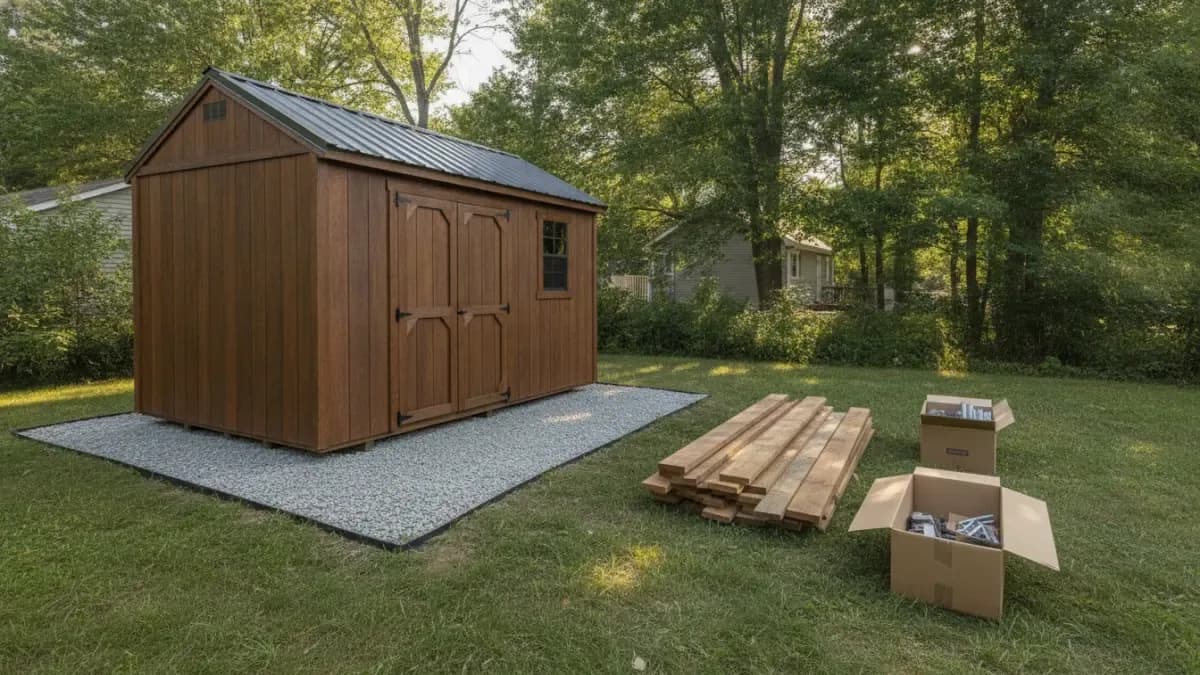
If you are comparing a pre-built shed vs. shed kit, the better buy depends on more than the sticker price. A kit can make sense when you have the time, tools, skills, and interest to build. A pre-built shed is often the better fit when you want finished storage, professional placement, and less construction risk. Here is how to compare the two before you buy. For the broader size, style, and site-planning picture, start with Legacy Structures' complete storage shed buying guide for Upstate New York.
This comparison is for homeowners planning storage, workshop, or equipment space in Upstate New York. It focuses on the work that happens after you place an order: assembly, site preparation, delivery, maintenance, warranty questions, and the time your property is tied up in the project.
What Is the Difference Between a Pre-Built Shed and a Shed Kit?
A pre-built shed is constructed before delivery and arrives as a finished building for professional placement. A shed kit arrives as parts, hardware, and instructions that you assemble on your property. The central difference is who takes responsibility for construction: the supplier or the buyer.
A pre-built shed, sometimes called a prefab or fully assembled shed, moves most construction work off your property. The walls, roof, doors, and other components are completed before the building reaches your yard. You still need a suitable site and a workable delivery route, but you are not responsible for framing, roofing, or assembling every wall.
A shed kit is a do-it-yourself building package. The parts may be cut or prepared in advance, but you still need to organize the pieces, follow the instructions, use the required tools, and complete the assembly. The exact amount of work varies by manufacturer, model, size, and the condition of your site.
| Factor | Pre-built shed | Shed kit |
|---|---|---|
| Construction | Completed before delivery | Completed by the buyer on site |
| Buyer labor | Site planning and delivery preparation | Assembly, tools, cleanup, and site planning |
| Timeline | Placement follows site and delivery coordination | Depends on your schedule, weather, and progress |
| Customization | Choose from available designs and options | Usually limited to the kit design and approved changes |
| Best fit | Finished storage with less hands-on construction | A hands-on project for a capable DIY owner |
Neither choice removes the need for planning. Both options need a suitable location, a stable above-ground base, drainage, and enough room to use the doors. If you are still comparing sizes, styles, and materials, start with the complete storage shed buying guide for Upstate New York. This article narrows the decision to the construction and delivery model.
Pre-Built Sheds: Why Are They the Fastest Path to More Storage?
Pre-built sheds reduce the amount of construction you must manage at home. You choose a building, prepare the site, confirm access, and coordinate delivery and placement. That can be valuable when your priority is usable storage rather than spending several weekends assembling a structure.
The biggest advantage of a pre-built shed is a finished result. You do not have to turn a pile of parts into a weather-tight building before you can use it. That matters when you need a place for lawn equipment, seasonal items, tools, or a workshop and do not want the project competing with work and family time.
Pre-built also makes construction quality easier to evaluate. You can inspect a finished model, ask how it was built, and compare details such as siding, floor decking, doors, roof style, and warranty coverage. With Legacy Structures, product choices include storage sheds, utility sheds, backyard barns, and other portable buildings that can be discussed with a local dealer in Hudson Falls.
- Less assembly risk: You are not responsible for interpreting every construction step or correcting a framing mistake.
- More predictable labor: Your project time centers on site preparation and delivery coordination instead of the entire build.
- Finished appearance: The building arrives as a completed structure rather than a long-term work zone.
- Professional placement: Legacy Structures offers delivery and installation, including leveling up to 2 feet, within its service process.
- Local support: You can discuss the building and property with a local team instead of relying only on a kit manual.
There are tradeoffs. A completed building needs a delivery route that works for its dimensions. Gates, slopes, branches, overhead lines, and tight turns can affect the plan. You also have less freedom to change the structure after construction begins. Select the design, size, doors, windows, and finishes before the order is finalized.
Legacy Structures can help you compare configurations with its 3D shed configurator. You can explore a building's size, style, roof, siding, doors, windows, and colors before discussing pricing. That gives you some of the design control buyers want from a kit without requiring you to build the structure yourself.
Shed Kits: Do DIY Savings Outweigh the Hidden Costs?
Shed kits can be a good fit for a homeowner who enjoys construction, owns the required tools, and has reliable help and time. The lower purchase price may not represent the entire project, though. Add site work, tools, delivery, fasteners, labor, weather delays, and the value of your time before deciding.
The appeal of a shed kit is understandable. You receive a defined package and get to control the assembly process. A kit can be satisfying for an experienced DIYer who wants a weekend project or who needs to work around a narrow delivery route that cannot accept a finished building.
The challenge is that a kit transfers responsibility to you. Before ordering, ask exactly what is included. Some packages may require you to supply tools, a base, additional materials, roofing supplies, paint or stain, and labor. Instructions may be clear, but clear instructions do not remove the need to measure carefully, keep the structure square, and work safely at height.
What should you have before starting a shed kit?
- A level, well-drained site with an appropriate above-ground base
- Enough time to complete the work without leaving materials exposed for an extended period
- Basic construction tools and any model-specific equipment
- At least one capable helper for larger panels, roof work, and safe handling
- A plan for storing parts, removing packaging, and protecting materials from weather
- Confidence that you can follow the instructions and ask for help when a step is unclear
Kit assembly can take longer than expected when the weather changes, a part is missing, the site is not ready, or a step has to be corrected. In Upstate New York, a short outdoor work season and wet spring conditions can make schedule flexibility especially important. A kit is not automatically a poor choice. It is simply a choice that prices your own labor and project management into the total.
What Is the Total Cost Difference Between a Pre-Built Shed and a Kit?
The lowest advertised price is not always the lowest finished-project cost. Compare the building, base, delivery, tools, assembly labor, finish materials, cleanup, warranty, and the value of your time. A pre-built shed may cost more upfront but reduce the number of separate costs and decisions you must manage.
Without a specific kit model and a current quote for a comparable pre-built building, it is not responsible to promise a universal dollar difference. Sizes, materials, roof designs, delivery distances, site conditions, and included services vary too much. Instead, use a complete-cost worksheet.
| Cost or responsibility | Pre-built shed | Shed kit |
|---|---|---|
| Building price | Quoted as a finished building and selected options | Kit package plus anything excluded from the package |
| Site preparation | Usually your responsibility unless separately arranged | Usually your responsibility |
| Delivery | Requires a route for the completed building | May use smaller shipments, but freight and unloading still need planning |
| Assembly | Included in the delivery and installation plan when offered | Your labor or a separate installer |
| Tools and materials | Generally part of the construction process | Confirm tools, fasteners, roofing, finish, and other exclusions |
| Warranty support | Ask what the building warranty covers | Review the kit and component warranties separately |
Legacy Structures publishes current cash and rent-to-own options on its building listings, so buyers can compare a specific building rather than an imaginary average. The storage shed collection and current inventory are useful starting points. Ask which delivery, setup, and payment terms apply to the building you are considering.
Think about opportunity cost too. If assembly occupies several weekends, delays your storage plans, or requires paid help, the kit's apparent savings may narrow. If you enjoy the work and already own the tools, that time may be part of the value. The right answer depends on what you want to buy: a building, a building project, or both.
Which Option Is Smarter for Upstate New York Buyers?
For many Upstate New York buyers, a pre-built shed is the simpler choice when dependable placement, a finished building, and less outdoor construction matter most. A kit can be smarter when the buyer has the skills, help, tools, flexible schedule, and genuine interest in doing the work.
Upstate New York adds practical conditions to the comparison. Hard freezes, freeze-thaw cycles, wet spring ground, snow, and a shorter outdoor work season all make planning important. Neither a pre-built shed nor a kit should be placed on an unplanned surface. The site needs to be evaluated for drainage, access, leveling, and local requirements.
A pre-built option can reduce the amount of time your materials and partially finished structure are exposed to changing weather. It can also make the delivery and leveling conversation more direct. That does not remove your site responsibilities, but it limits the number of construction steps that happen in the yard.
A kit can be practical for a buyer with an indoor or protected staging area, a reliable assembly partner, and enough time to pause when conditions are poor. It may also help when a finished building cannot reach the intended location. Confirm the shipping, unloading, assembly, and material-protection requirements before choosing that path.
For either option, check local zoning, setback, permit, utility, and access requirements before ordering. Rules vary by municipality and property. A local dealer can help you identify planning questions, but your town or village code office is the authority for approvals on your parcel.
Why Do Delivery and Installation Change the Math?
Delivery and installation turn a shed purchase into a property-planning decision. A finished pre-built shed needs a route wide and clear enough for placement. A kit needs a way to receive, store, and move many parts, plus a safe work area. Either option benefits from an early site and access check.
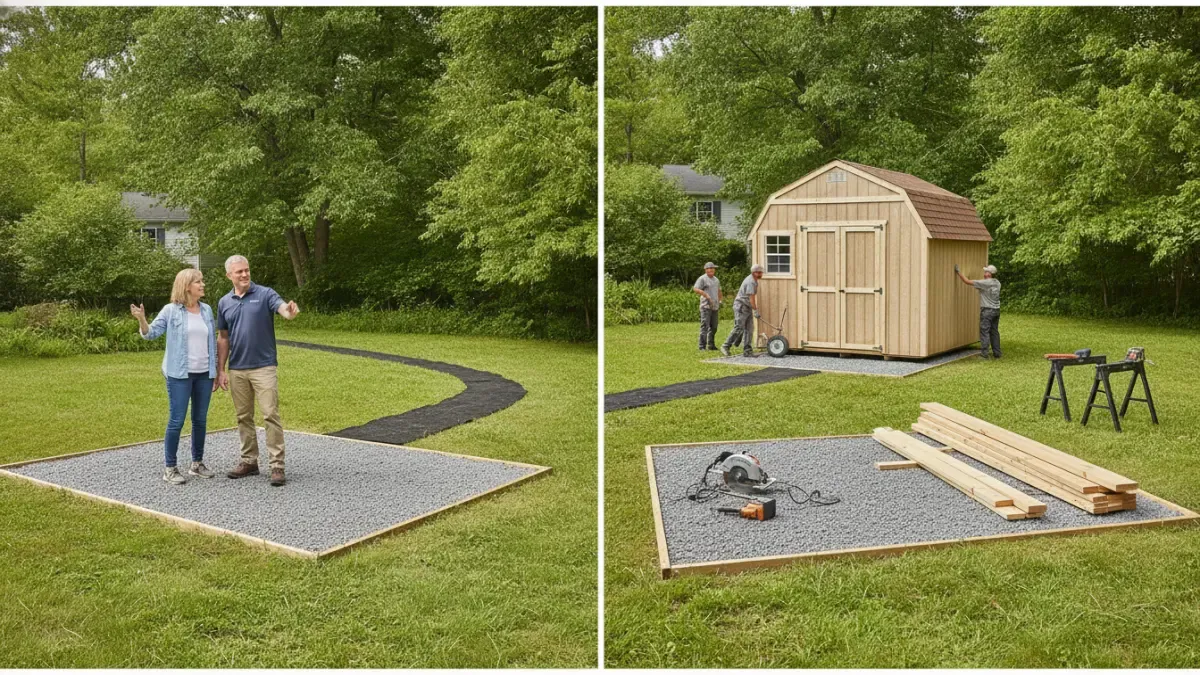
For a pre-built shed, measure the route from the road or driveway to the intended site. Check gates, turns, slopes, trees, fences, overhead obstacles, and the space needed for placement. Do not wait until delivery day to discover that the building cannot be maneuvered into the yard.
For a shed kit, think about more than the truck drop-off. Lumber and panels may arrive in manageable pieces, but you still need a dry place to stage them, a clear assembly area, and room to move completed wall or roof sections. You also need to plan how the building will be kept square and supported during construction.
In both cases, the site should use a suitable above-ground approach such as a gravel pad, blocks, or pressure-treated skids, depending on the building and property. Sheds should remain movable or re-sitable rather than being described as sunk, buried, or frozen into the ground. Read how to prepare the ground for a shed on skids before you finalize the location.
Legacy Structures offers free delivery within 30 miles of Hudson Falls as part of its service area, with additional delivery arrangements available outside that radius. Confirm the current terms, site requirements, and installation scope for your building before placing an order.
How Should You Decide Between a Pre-Built Shed and a Kit?
Choose a pre-built shed when you value a finished result, local guidance, warranty support, and less construction work. Choose a kit when you value hands-on building and have the time, tools, skills, help, and project space to complete it. Compare the full project, not only the package price.
- Define the job: List the equipment, tools, vehicles, or projects the building must support.
- Measure the property: Confirm the footprint, door orientation, setbacks, drainage, and delivery or staging route.
- Price the complete project: Include the building, base, delivery, tools, labor, finishing, and cleanup.
- Value your time honestly: Decide whether construction is a benefit, a burden, or a little of both.
- Compare support: Ask about installation, leveling, warranty coverage, maintenance, and who answers questions after the sale.
- Choose for your climate: Plan around freeze-thaw conditions, spring moisture, snow, and the usable outdoor season.
If you want a completed storage building without taking on the entire assembly project, browse current Legacy Structures options and ask for a building-specific recommendation.
Request the FREE Pricing Guide and compare a pre-built storage shed for your property.
Frequently Asked Questions About Pre-Built Sheds and Shed Kits
Is a pre-built shed better than a shed kit?
A pre-built shed is usually better for buyers who want finished storage with less construction labor and a simpler installation plan. A shed kit may be better for an experienced DIY buyer who wants a hands-on project and has the tools, time, and help to assemble it.
Are shed kits cheaper than pre-built sheds?
A shed kit may have a lower package price because the buyer supplies much of the assembly labor. The complete cost can change after adding site preparation, tools, delivery, finish materials, paid help, and the value of your time. Compare the finished project rather than only the advertised package.
How long does it take to assemble a shed kit?
The timeline depends on the kit, size, site condition, weather, tools, and number of helpers. A small project may fit into a weekend, while a larger or interrupted build can take longer. Ask the kit supplier for model-specific guidance and plan for site preparation before assembly begins.
Do pre-built sheds need site preparation?
Yes. A pre-built shed still needs a suitable, stable, well-drained site and a clear delivery route. Prepare an appropriate above-ground base, confirm local requirements, and review access with the dealer before delivery. The building can be finished before it arrives, but the property still needs to be ready.
Can a shed kit be assembled in Upstate New York?
Yes, but plan around hard freezes, wet spring conditions, snow, and a shorter outdoor work season. Protect materials, choose a well-drained site, and make sure you have enough time and help to complete the structure. If you want fewer weather-dependent construction steps, compare a delivered pre-built shed.