
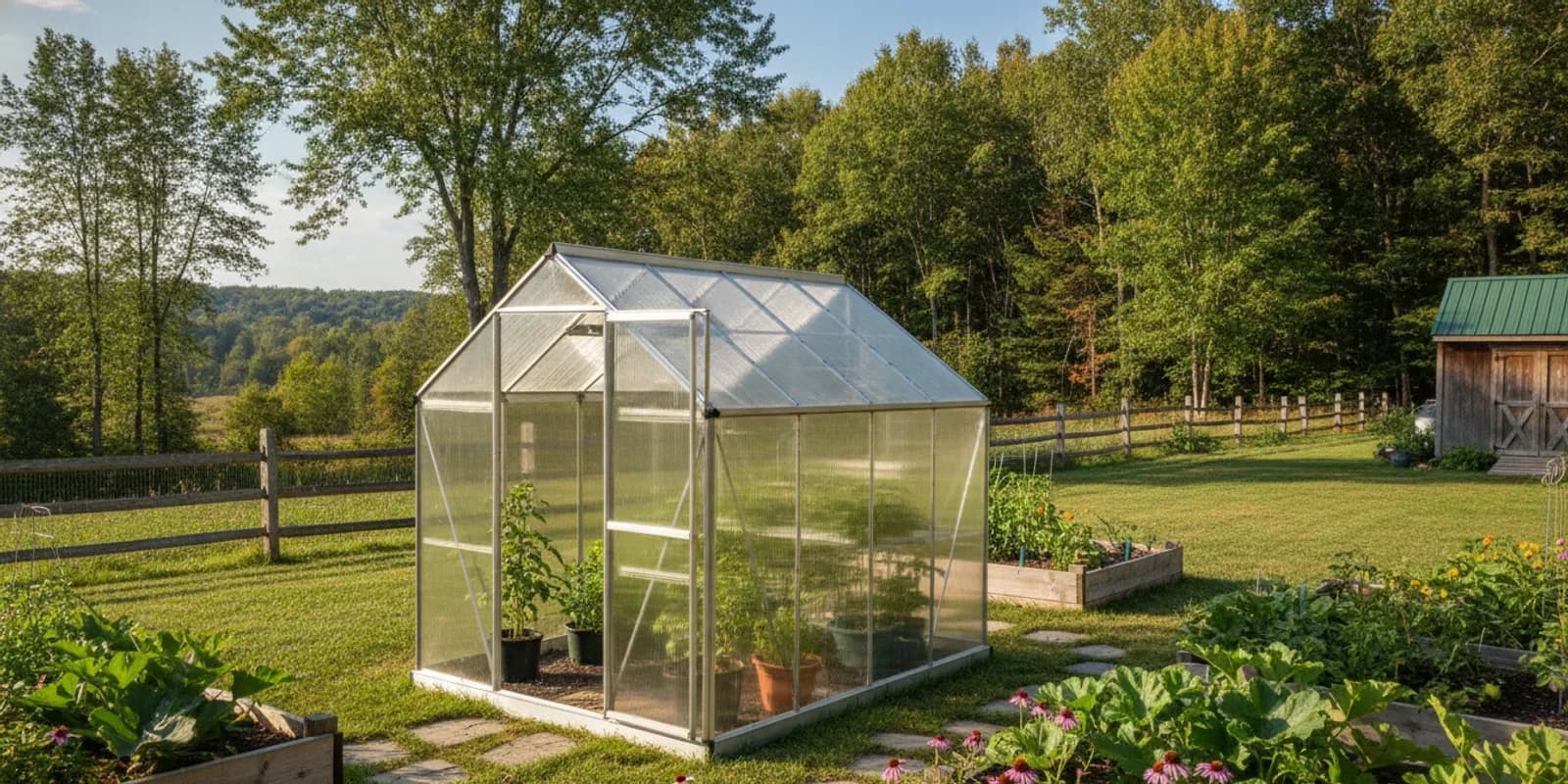
Portable greenhouses give gardeners a way to protect plants and create a dedicated growing space without treating the location as permanent. The right choice depends on what you want to grow, how much room you have, and whether you may need to move or re-site the structure. For Upstate New York buyers, it also helps to plan for changing weather and a shorter outdoor growing season.
What does portable mean for a greenhouse?
Portable can describe a greenhouse that is delivered as a complete building or one that can be moved to a different spot later. It does not necessarily mean lightweight, easy to move by hand, or suitable for frequent relocation. Size, construction, access to the site, and the surface it rests on all affect how practical a move will be.
Think of portability as flexibility in where the greenhouse can sit over its useful life. A gardener might want to place it near the house now, then rethink the layout as planting needs change. A renter may value a structure that does not require a permanent alteration to the property. A small farm may need to arrange growing space around work areas and seasonal routines.
Before comparing models, ask the seller how a particular greenhouse is delivered, set in place, and moved if needed. Do not assume every design has the same moving requirements. The University of Nebraska–Lincoln's overview of greenhouses and controlled environments notes that standalone structures can offer more flexibility in placement and size than other growing arrangements. That is a useful starting point, but the specific building and site determine what is practical.
Which portable greenhouse option fits your growing plans?
Start with the plants and tasks you want the greenhouse to support. A structure for starting seedlings may have different space needs from one intended for longer-term plant care or a larger collection of containers. Make a list of what must fit inside before settling on dimensions.
- Seed starting: Allow space for trays, a work surface, and room to reach plants without moving every container.
- Container growing: Sketch the footprint of the largest pots and leave a clear route for watering and maintenance.
- Season extension: Consider which plants you hope to protect and when you expect to use the greenhouse. A structure alone does not guarantee particular growing conditions.
- Mixed use: If you need both plant space and storage for tools or supplies, decide how much room each use needs. Keep access to plants in mind.
Then consider how much attention you can give the space. More growing area can accommodate more plants, but it also means more surfaces to inspect and more space to organize. A compact greenhouse may be easier to fit beside a home or garden, while a larger freestanding building can provide more layout choices. Choose for the work you intend to do, rather than the maximum footprint that might fit on the property.
Legacy Structures offers greenhouses for sale as part of its portable building selection. Review the available options and note questions about dimensions, configuration, and delivery before deciding which one suits your plans.
How should you compare the main options?
There is no single best greenhouse for every property. Use the comparison below to identify the trade-offs that matter most to you. The table describes planning considerations, not specifications of a particular model; confirm exact features with the seller.
| Option or priority | May suit you when | Plan for |
|---|---|---|
| Compact footprint | You have limited yard space or a focused growing list. | Measure interior working room, door access, and space for the plants you will keep inside. |
| Larger standalone greenhouse | You want room for multiple growing areas or a broader layout. | Check the full site footprint, access for delivery, and how you will organize and maintain the interior. |
| Freestanding placement | You want flexibility to choose a location separate from the home. | Compare sunlight, wind exposure, drainage, access, and the prepared surface at candidate sites. |
| Near-home placement | You expect frequent visits for watering, tending, or checking plants. | Confirm the location works with paths, doors, utilities, and the way you use the yard. |
| Potential future relocation | Your property use may change or the current location may be temporary. | Ask how the exact structure can be moved and what preparation, equipment, or access a move would require. |
Use the table as a shortlist, then compare actual models. A building with a generous footprint may still be a poor fit if the delivery route is blocked or there is no practical place to prepare it. Conversely, a smaller option can work well if its layout supports the jobs you plan to do.
Where should you place a portable greenhouse?
Walk the property at different times of day and look at the site from the greenhouse's planned position. Consider these points before committing:
- Sun and shade: Notice how nearby trees, buildings, and fences affect light through the day and across the seasons. Think about whether growth conditions will suit the plants you intend to keep there.
- Wind exposure: Open areas may be more exposed than a sheltered garden. Ask what the manufacturer or seller recommends for the model and location; do not assume that every structure handles exposure the same way.
- Drainage: Avoid a spot where water routinely collects. A suitable prepared surface should be level and stable, with site conditions considered before delivery.
- Everyday access: Allow a convenient route for carrying trays, soil, tools, and water. Check that doors and paths remain usable when the garden is busy.
- Delivery access: Identify gates, overhead branches, narrow turns, slopes, and other obstacles. Share these details before arranging delivery so access can be discussed in advance.
- Future use: Consider whether the greenhouse will interfere with mowing, garden beds, parking, or other planned improvements.
Keep the greenhouse on or above the ground on an appropriately prepared surface. If you are comparing a gravel pad, blocks, a deck, or another surface, ask what is suitable for the specific building and site. Do not assume a greenhouse should be sunk or embedded into the ground. For guidance on the dealer's broader building selection, see the current building inventory.
What should Upstate New York buyers plan for?
In the Hudson Falls area, a greenhouse has to fit a climate with distinct seasons. Plan for the conditions you expect the structure to face, but confirm any product-specific limits with the seller or manufacturer. A general description such as “portable” does not answer questions about local exposure or seasonal care.
Think through how you will use the greenhouse when temperatures change. Which plants will be inside during colder periods? Will you use it only during part of the year, or do you intend to maintain it through multiple seasons? What steps will you take to inspect the structure after storms or heavy weather? These questions help you understand both the growing plan and the upkeep involved.
Also consider how the site changes through the year. A location that receives useful sun in spring may be shaded by leaves later. Snow, wet ground, or a narrow access route can affect how easy it is to reach the building and care for the surrounding area. If you are unsure whether a particular site or setup is appropriate, ask before ordering rather than relying on a general rule.
How do you evaluate space and daily use?
It can help to compare your plan with the way you garden now. List the tools and materials you reach for most often, then decide whether they belong inside the greenhouse or nearby. A hose route, storage shelf, or nearby potting area may affect how much floor space you need. Avoid planning an interior so tightly that ordinary care becomes awkward.
If you rent or expect your property needs to change, clarify what permission is needed before placing any structure. Check your lease or speak with the property owner, and review any local rules that may apply. A building described as portable may still need a planned site, delivery access, and a suitable surface. Portability alone does not replace permission or site planning.
For a household with several gardeners, ask who will use the greenhouse and when. A clear path and predictable storage locations can make the space easier for everyone to maintain. If you intend to grow different plants through the year, note how the layout could change without blocking access. These small decisions help prevent a greenhouse from becoming a crowded storage area instead of a useful growing space.
Draw a simple plan before choosing a size. Mark the greenhouse outline, door position, work area, and the route you expect to use. Inside the outline, place the largest trays, pots, or benches you anticipate using. Add space to stand and reach plants. A plan on paper often reveals bottlenecks that are hard to see when comparing dimensions alone.
Next, think about routine tasks. Where will supplies go? Can you reach the plants at the back without moving the front row? Is there enough room to carry a watering can or work comfortably? Will the door open into an unobstructed path? The best layout is one that makes regular care manageable.
Be realistic about future expansion. It may be tempting to choose a size based on every possible use, but a larger structure needs an appropriate site and a plan for the additional space. If you are between sizes, compare the interior layout and the actual needs of your plants, not only the overall exterior dimensions.
How can you test your layout before you order?
Use a quick mock-up to see whether the greenhouse footprint works in the real space. Mark its outside dimensions on the ground with stakes, string, or a garden hose. Include the direction the door will face and leave room for the door to open and for a person to pass. Walk around the outline with a tray or watering can to check that the route feels workable.
Then test the interior plan. On paper, draw the approximate usable area and arrange the largest items first: benches, large pots, seed trays, and any work surface. Add smaller plants after those fixed pieces are placed. Leave an aisle to reach the plants you will tend most often. If you plan to bring in soil or remove containers, think through the actual path rather than assuming you can rearrange things later.
Compare at least two possible locations if the property allows it. For each, note sunlight at different times, drainage after rain, how far it is from water access, and whether a delivery route is clear. A simple checklist can prevent one attractive feature, such as convenient access from the kitchen, from overshadowing a problem like persistent shade or a tight turn in the delivery path.
Finally, check the mock-up against the dimensions and setup guidance for the specific building. A ground outline helps you judge the footprint, but it cannot confirm interior space, structural suitability, or moving requirements. Ask the seller to clarify any detail that affects your plan before you settle on a location or model.
What questions should you ask before choosing?
Get clear answers about the particular greenhouse you are considering. These questions can help you compare options consistently:
- What are the outside dimensions and the usable growing area?
- How is the greenhouse delivered, and what does the delivery crew need to access the site?
- What type of prepared surface does this model require?
- What should I know about placing the greenhouse on my property and keeping it level?
- Can this specific building be relocated later, and what would that involve?
- Which materials, doors, and other features are included in the selected configuration?
- What care or inspection does the manufacturer recommend for the structure and its materials?
- What warranty applies, and where can I read its terms?
- Are there local property rules or approvals I should check before delivery?
Write down the answers and compare like with like. If one seller describes an included feature and another treats it as an option, note that difference. Confirm any price, delivery arrangement, warranty, and configuration for the exact building rather than relying on a general description.
How should you prepare for delivery?
Once you have a likely location, make a simple site and access checklist. Measure the intended footprint and the route to it, including the narrowest gate or turn. Look above and around the path for branches, wires, fences, parked vehicles, or other obstacles. If access is tight, share measurements and clear photos with the dealer so the delivery requirements can be discussed before scheduling.
Confirm what site preparation is expected and who is responsible for it. Ask whether the chosen surface is appropriate for the exact greenhouse and whether it needs to be ready before delivery. Clarify how the building will be positioned and what the crew can do at the site. These details help avoid last-minute changes and give you a realistic picture of the work involved.
It is also useful to plan the immediate area around the structure. Keep the route to the entrance clear, decide where garden supplies will go, and consider how you will maintain the surface around the building. If you may want to relocate the greenhouse in the future, ask what would need to be undone or prepared at the new location. Practical questions now make it easier to judge whether the option is truly flexible for your situation.
How can you make the final choice?
A practical choice balances growing needs, property fit, and the effort involved in setup and care. Before you decide, check that you can answer yes to the following:
- The greenhouse has enough usable space for the plants and tasks I have in mind.
- I have identified a suitable, accessible location and considered sun, drainage, and exposure.
- I understand how delivery and site preparation will work for this particular model.
- I have asked whether future relocation is possible and what it would require.
- I have confirmed the model's features, terms, and care recommendations directly.
For a local conversation about available structures and site questions, contact Legacy Structures. It can be helpful to have your measurements, a few photos of the proposed location, and a list of intended uses ready.
Call Legacy Structures at 518-544-2889 to discuss your greenhouse plans.
Frequently asked questions
Can a portable greenhouse be moved later?
Possibly, but portability does not mean every model can be moved easily or frequently. Ask about the exact building, its setup, and the access and equipment a move would require before you buy.
How much space do I need for a portable greenhouse?
It depends on the plants, containers, and work area you need. Measure the site and sketch the interior layout, including space to enter, reach plants, and move supplies. Confirm usable dimensions for the model you are considering.
Where is the best place to put a greenhouse?
Look for a practical location with suitable light, drainage, access, and room for delivery. Consider how trees, buildings, weather exposure, and seasonal changes affect the site. Discuss model-specific placement guidance with the seller.
Can a portable greenhouse be used in Upstate New York?
Gardeners can consider greenhouse options in Upstate New York, but the intended season of use and local site conditions matter. Ask about the selected structure's features and care recommendations, and plan for the weather it will encounter.
What should I confirm before ordering?
Confirm dimensions, configuration, delivery access, surface preparation, warranty terms, and any local property requirements you need to check. Ask whether the particular structure can be moved if that may matter later.
Taking time to compare these details helps you choose a portable greenhouse that fits both your growing plans and your property.