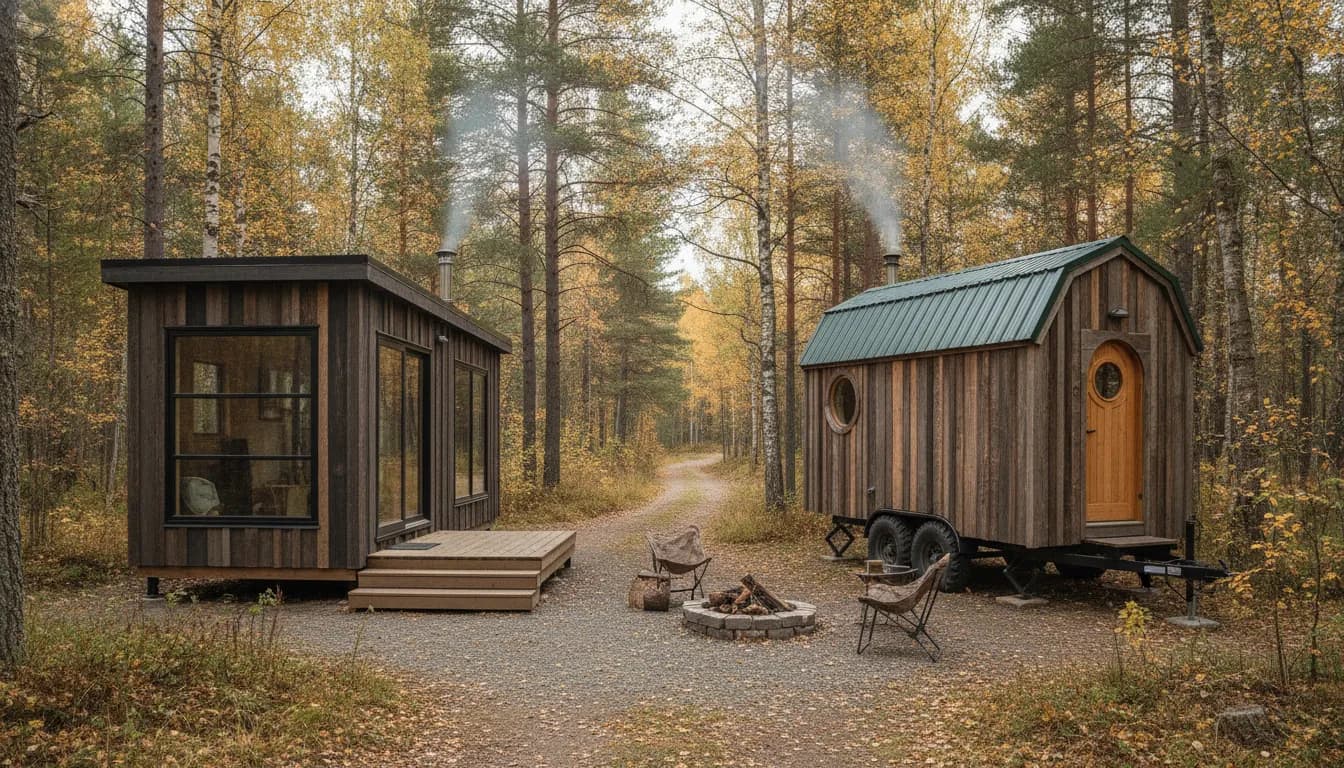
The portable cabin vs tiny house choice depends on several key factors like your total upfront cost, the build standards used, and the local zoning rules for your land. Portable cabins are high-quality guest rooms built on skids with prices from $5,000 to $30,000, while custom tiny houses for full-time living often cost between $30,000 and $80,000. While tiny houses on wheels offer movement, they face complex zoning laws and higher loan hurdles that simple, high-quality portable cabins from Legacy Structures easily avoid. Portable cabins from Legacy Structures use durable LP siding and have simple permit needs. Making them a great choice for Hudson Falls home owners who need fast and affordable space.
Browse our portable cabin inventory now or call (518) 544-2889 for a free price quote and site consultation.
You must know how these structures are built and the rules they follow before you decide which one fits your land. We will start by answering the question, What Is a Portable Cabin? The path to finding your perfect backyard addition starts with the basics.
Portable Cabin Vs Tiny House: What Is a Portable Cabin?
A portable cabin is a small, prefab building set on a wooden frame called a skid. These units are built at a factory and then moved to your land with a flatbed truck. Unlike a standard house, these cabins do not need a deep concrete base. Most owners set them on a flat bed of stone or blocks. This makes them a great pick for people who want a fast, easy space without the mess of a big build.
How Portable Cabins Differ from Tiny Houses
When you look at a portable cabin vs tiny house, the main change is how you use them. A tiny house is often built on a trailer with wheels so it can move on the road like an RV. They are made mostly for full-time living. In contrast, a portable cabin is an accessory structure that sits on skids. These cabins work best for guest rooms, home offices, or lake camps where you do not need to move the unit often.
Portable cabins offer more room for the price. While a tiny house has a narrow width for road laws, a cabin can be wider and taller. This gives you more head room and a more open feel. You can find these portable cabins in Upstate New York in many sizes and styles to fit your needs.
Multi-Use Spaces for Your Land
One of the best things about these buildings is that you can use them in many ways. Many people in our area use them as quiet art studios or backyard workshops. They also make great hunting cabins or guest suites for family visits. Since they are easy to move with a truck, you can take your building with you. This is helpful if you ever sell your land and move to a new spot.
Top Build Quality and Local Craft
At Legacy Structures, we build our cabins to last for years. We use Mennonite craft and top parts in every unit. Our team uses 2x4 studs spaced 16 inches apart. We also use 5/8-inch treated floor decking and ring-shanked nails that do not pull out over time. You can choose between water-sealed T1-11 wood or LP SmartSide siding to match your style.
Every building comes with a 5-year warranty. This is much longer than the one-year or two-year deals you find at most other shops. If you live within 30 miles of our Hudson Falls home, we will give you free shipping. Our crew will also level your cabin up to two feet at no extra cost. This ensures your doors and windows stay straight and work well for years to come.
What Is a Tiny House?
A tiny house is a small home built for full-time living. These homes are usually less than 500 square feet. They aim to make life simple while providing a high quality of life. Unlike storage sheds, a tiny house includes everything needed for a home. This includes a kitchen, a bathroom, and a bed area. People often choose them to lower their costs. As Stephen Kanagy, owner of Legacy Structures, notes, they focus on living well in a small space. Many people look at portable cabins in Upstate New York as a way to start this lifestyle.
Tiny Houses on Wheels
Many tiny houses sit on trailer frames. These are called tiny houses on wheels, or THOWs. This design lets you move your home. For these homes to travel on roads, they must meet size rules. Most states require them to be no more than 8.5 feet wide. This width limit keeps the inside space narrow. THOWs use light materials to keep the weight low. This makes them easy to tow with a truck. You can find more tips on our blog for more guidance as you plan your small home.
Stationary Tiny Houses
Some tiny homes sit on a firm base. These houses do not move and stay in one spot. They often feel more like a small traditional home. Because they stay put, they can be a bit wider than THOWs. But they face strict rules from local towns. Many towns in the state of New York require homes to be a certain size. This is often 600 square feet or more. Before you build, check with your local office to see what is allowed on your land.
The Cost of Tiny Living
The cost to build a tiny house can change. A professional build usually costs between $30,000 and $80,000 or more. You can save money by doing the work yourself. But kits still cost about $30,000. Getting a loan for these homes is also hard. Most banks do not lend money for homes under $50,000. If the house is on wheels, it is seen as personal property. This means you may need a special loan. If you want a cheaper path, look at our no-credit-check rent-to-own program for other building types.
Portable Cabin vs. Tiny House: Cost Comparison
Choosing between a portable cabin and a tiny house starts with a look at your budget. While both paths offer a simpler way to live, the price tags differ quite a bit. Choosing portable cabins in Upstate New York is often the most cost-effective move for local buyers. These structures provide a solid, finished space without the high cost of a custom home build.
Purchase Price Differences
Portable cabins are built in a shop and then moved to your yard as a single unit. This helps keep the price down. Most units cost between $5,000 and $30,000. In contrast, tiny houses cost much more. They often range from $30,000 to $80,000 or more. This higher price comes from their custom build and parts like full plumbing and wiring.
| Cost Category | Portable Cabin | Tiny House |
|---|---|---|
| Cash Price | $5,000 - $30,000 | $30,000 - $80,000+ |
| Financing | Rent-to-Own | Very Hard to Get |
| Monthly Cost | $124 - $860 | Varies by Loan |
| Delivery | Free (30 miles) | $1,000 - $5,000 |
| Warranty | 5-Year Plan | 1-2 Year Standard |
Financing and Monthly Payments
It is easy to buy a cabin from Legacy Structures. Our no-credit-check rent-to-own program gives you instant approval. You can pay as little as $124 to $860 per month for a term of 36 to 48 months. Tiny house loans are very hard to find. Most banks will not lend money for these homes because they are often seen as personal property rather than real estate.
Delivery and Setup Costs
The total cost of a tiny house includes more than the build. You must pay to move it and set it up. These fees can add $1,000 to $5,000 to your bill. Legacy Structures gives you free delivery within 30 miles of Hudson Falls. This covers areas like Washington, Warren, and Saratoga counties. Stephen Kanagy is our owner. He makes sure each building is set up and leveled right. This helps your building last longer and saves you money on setup costs.
Warranty and Long-Term Value
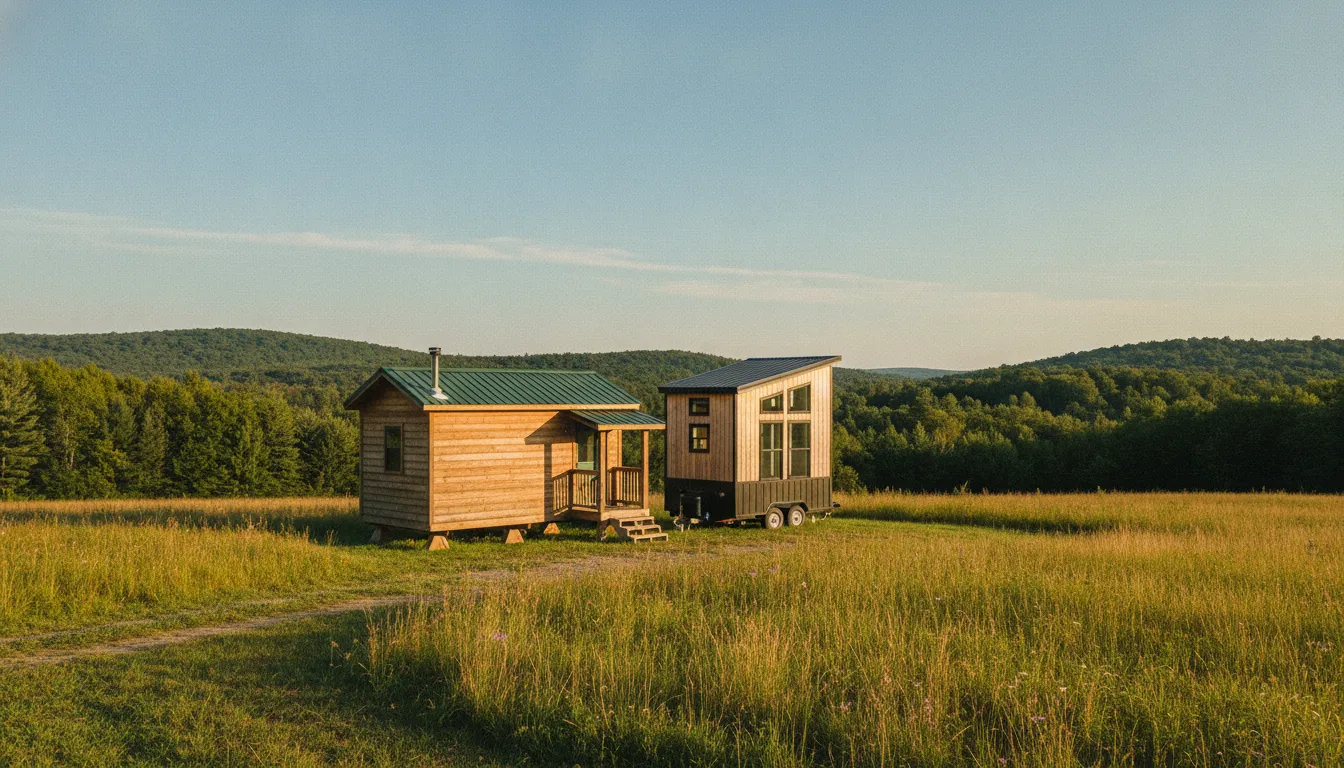
A portable cabin from Legacy Structures is a long-term asset. We offer a 5-year warranty on all our buildings. This is much better than the 1-2 year standard you find with most tiny house builders. By choosing a cabin, you get a strong building that holds its value over time. Our local Mennonite craft work makes sure that your building stays safe for many years to come.
Construction Quality and Materials
The big gap between a portable cabin and a tiny house is the build. Most tiny houses on wheels must stay light to be towed on the road. This means they often use thin frames and RV-grade parts to keep the weight low. But a portable cabin is built like a house. It uses heavy parts meant to stay in one place and last for a long time.
Heavy Duty Frames and Nails
Legacy Structures builds every cabin with 2x4 studs. These are set 16 inches apart. This is the same frame used in most homes in our area. We use ring-shanked nails to hold the frame as one. These nails have small ridges that grip the wood. They do not pull out over time. This strong frame helps the building hold its shape in the heavy snow of the North Country.
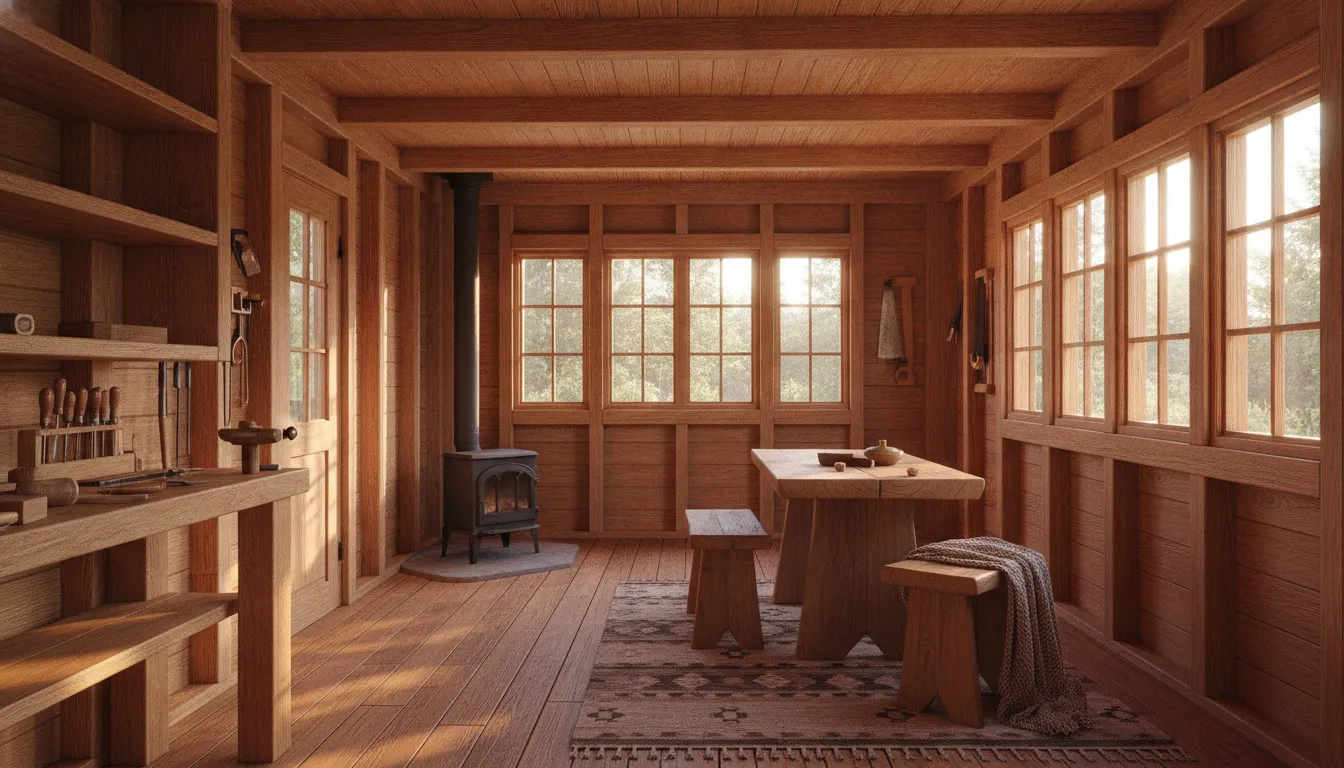
Tiny houses often use smaller studs or wider gaps to save weight. This makes them easier to tow, but the walls are less stiff. A portable cabin is built to handle the wind and weight of New York winters. You can see this strength in our log cabin options. We use thick wood there for even more power. Our build includes:
- Full 2x4 studs spaced 16 inches on center
- Double studs under every siding seam for extra strength
- Galvanized ring-shanked nails that resist rust and pulling
- Pressure-treated floor skids that handle wet ground
Strong Siding and Floor Boards
We finish our cabins with T1-11 or LP SmartSide siding. These boards stop rot and bugs better than the thin siding on many tiny homes. The floor is also a top focus. We use 5/8 inch treated floor boards to stop sagging or water harm. This base creates a solid feel under your feet that you will not find in an RV build.
The New York State building rules have strict goals for homes. Using high-quality wood and thick siding helps meet these local laws. Portable cabins offer a much tougher shell than a tiny house on wheels. This quality means your cabin stays dry and warm in any weather.
Long Lasting Warranty Help
Most tiny house firms only give a one or two year warranty. Legacy Structures gives a full 5-year warranty on every building. This is more than twice the trade standard for these sheds. We stand behind our local skill because we know our cabins are built well. We use the best tools and parts to make sure you are happy.
When you buy a cabin in Hudson Falls, you want to know it will last. Our use of coated nails and treated wood helps the building survive the wet ground and cold air. This focus is why a portable cabin holds its value better than a mobile tiny home. You get a building that feels like a real home from the floor to the roof.
Zoning, Permits, and Regulations
Choosing between a portable cabin and a tiny house involves more than just picking a floor plan. The legal path for each is very different. For most land owners, the simple rules for a portable cabin are a huge plus. Stephen Kanagy, owner of Legacy Structures, notes that these cabins are usually seen as accessory buildings. This helps you skip the many permit steps needed for a new house.
Zoning Hurdles for Tiny Houses
Tiny houses face many zoning walls that can stop a project fast. Most towns in New York have strict codes for what counts as a home. Many areas want a house to have at least 600 square feet of floor space. Since a tiny house is much smaller, it may not meet the legal bar for a home. This often forces owners to ask for special rules. These can be slow and cost a lot of money.
If you choose a tiny house on wheels, the rules get even harder. These units must often follow New York State residential codes or RV safety rules. Finding a legal spot to park a tiny house can be tough. Many towns in Washington and Warren counties do not allow living in an RV on a private lot. You must also check for Homeowners Association (HOA) rules. Many neighborhoods ban small or mobile homes.
The Simpler Path for Portable Cabins
Portable cabins offer a more flexible way for land owners. Because they are seen as accessory buildings, they often serve as guest rooms, offices, or studios. This group usually leads to a much faster way to get approval. In many parts of Upstate New York, a portable cabin in Upstate New York can be added to a lot with a simple permit. This saves you from the long list of checks that a tiny house build needs.
Foundation and Setup Advantages
How a structure sits on the ground also changes the legal view. A tiny house often needs a full slab or a costly trailer. Portable cabins are built on pressure-treated skids. This design means they can sit on gravel pads, blocks, or piers. Since they are not fixed to the earth with a lasting base, they are easier to move if your needs change. This status is a main reason why they are easier to fit into local plans.
Before you buy, you should always visit your town hall. Rules in Saratoga or Essex counties can vary by town. But the path for a portable cabin is almost always shorter. You get the space you need without the stress of a full home build. For more help with your project, you can check our blog for more guidance on local rules.
Which Option Is Right for You?
Choosing between a portable cabin and a tiny house depends on how you plan to use the space and what you can afford. Both offer great ways to live small, but they serve different needs. Use these steps to find the best fit for your property in the Adirondack region.
Define your primary use
First, decide if you need a full-time home or a flexible space. Tiny houses work best as permanent dwellings because they often include built-in kitchens and baths. Portable cabins are more versatile. You can use portable cabins in Upstate New York as guest houses, home offices, or hunting camps. If you do not need to live in the building year-round, a cabin is often the more practical choice.
Set your project budget
Cost is a major factor when you pick a small structure. Most portable cabins fall in the $5,000 to $30,000 range. In contrast, custom tiny houses often cost between $30,000 and $80,000. For covered storage instead of living space, side gable barns provide a budget-friendly option starting at even lower price points. For many people, a cabin provides a better return on investment. You get a sturdy building without the high price tag of a full-scale tiny home.
Review zoning and local rules
Zoning laws in New York can be strict for tiny homes. Many towns require a minimum square footage for a legal house. Tiny houses on wheels must also meet RV codes to stay on a lot. Portable cabins are often seen as accessory structures. This classification can make the permit process much faster and simpler. Always check with your local building office before you buy.
- Decide on mobility needs. Think about how often you might move the building. Tiny houses on wheels are built to be towed on the road. Portable cabins sit on skids and move with a flatbed truck. If you plan to keep the building in one spot for years, a cabin is more stable.
- Consider financing options. Traditional loans are hard to get for tiny homes under $50,000. Legacy Structures offers a no-credit-check rent-to-own program for portable buildings. This makes it easy to get the space you need with low monthly payments.
- Evaluate your timeline. Custom tiny houses can take many months to build. A portable cabin from Legacy Structures can be delivered and installed in just a few weeks. We even include professional leveling so your building is ready to use right away.
Final recommendation
For most homeowners who need extra room or a vacation spot, a portable cabin is the smartest path. It is more affordable, easier to permit, and faster to set up. If you need a simple storage fix, you can also look at backyard barns and storage solutions. For flexible space in the Hudson Falls area, a cabin from Legacy Structures offers the best value. According to the U.S. Census Bureau, housing costs continue to rise, making these affordable options a great choice for many families.
Frequently Asked Questions
How much does a portable cabin cost compared to a tiny house?
Buying a portable cabin is often much cheaper than building or buying a tiny house. Most portable cabins range from $5,000 to $30,000 and come ready for use. But tiny houses usually cost between $30,000 and $80,000. This price gap exists because tiny houses include plumbing, full kitchens, and high-end home finishes. You can check our portable cabins in Upstate New York to see current costs for many sizes and styles.
Do portable cabins need a permanent foundation for installation?
No, most portable cabins do not require a fixed concrete foundation. They are built on heavy skids that allow them to sit on gravel pads or concrete blocks. This makes the setup much faster and easier than a tiny house on a foundation. Proper family-owned by Stephen Kanagy service includes expert 2-foot leveling during delivery. This ensures your building stays stable and level on your site without the high cost of a poured slab.
Can a portable cabin be moved to a new location later?
Yes, portable cabins are designed to be moved. Since they sit on skids rather than a foundation, an expert driver can load the building onto a flatbed truck. Tiny houses on wheels are easier to tow behind a car, but they must be narrow to fit on the road. A portable cabin can be wider and have more room because it is moved as a wide load. This makes it easy for owners who may move their home or business.
Is it possible to finance a portable cabin with no credit check?
Yes, you can get a portable building through a no-credit-check rent-to-own program. This option allows you to make low monthly payments instead of paying the full price upfront. Legacy Structures offers terms for 36 or 48 months with fast approval for all customers. There are no penalties for paying off the balance early. This program makes it easy for you to get the extra space you need for a work room, office, or shop without a bank loan.
Ready to find the best portable cabin for your land?
Picking between a cabin and a tiny house is a big step for your land and your wallet. If you wait to start your project, costs for wood and metal could go up and delay your build by months. Starting your cabin build today means you can use our easy permit path and avoid the long waits of custom home building. You can soon have a well-made space for a home office, a guest suite, or a tool shop right in your own yard. Our local team builds each unit to last with the best wood and metal parts. You can learn more about us and our work on our about us page. We make the drop off and setup easy so you can start using your new space right away.
Ready to start? Call (518) 544-2889 to get your free pricing guide and explore portable cabin options.