
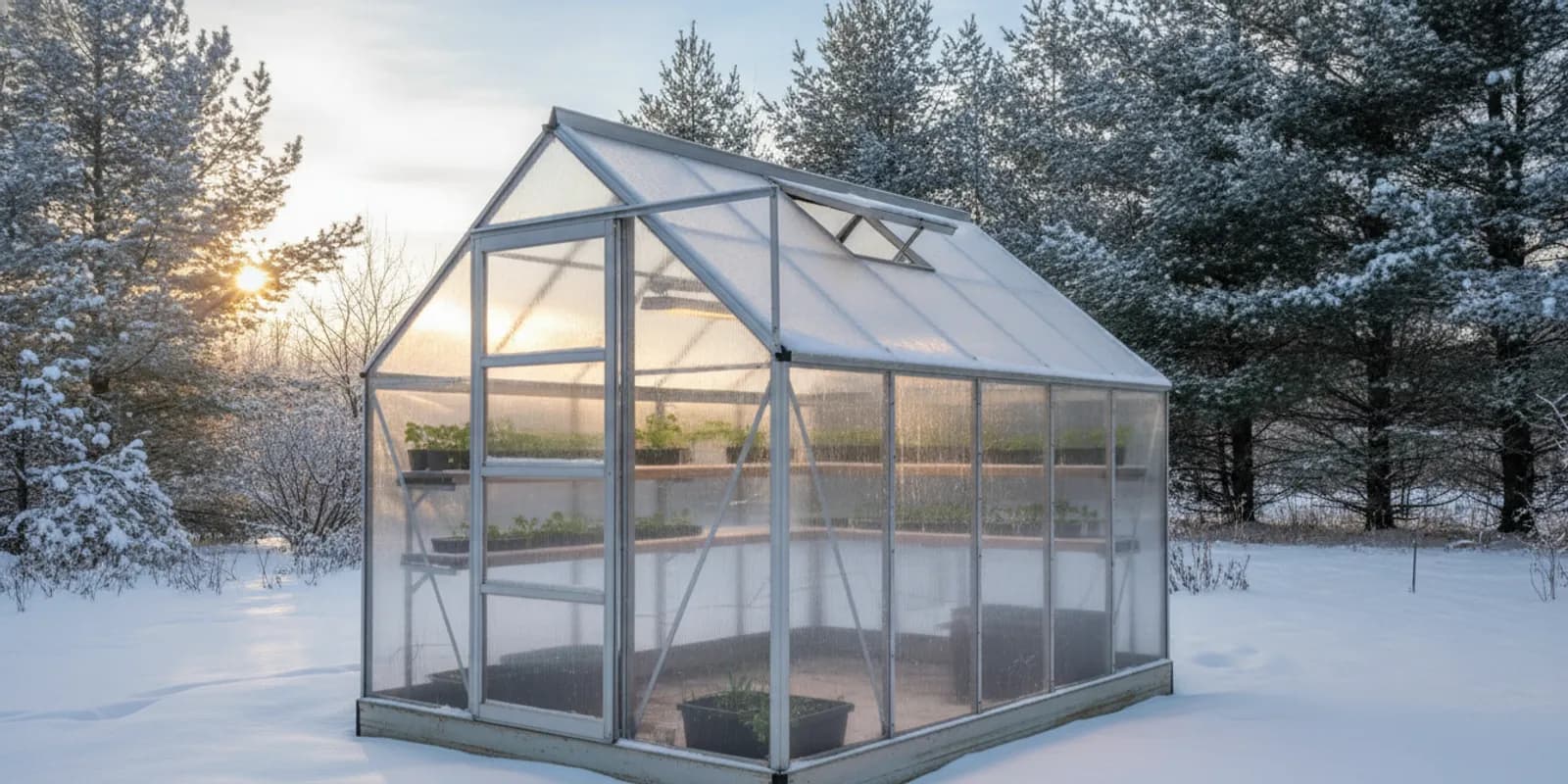
A polycarbonate greenhouse can make a practical growing space when you want durable, lightweight glazing and a structure that can handle changing weather. For Upstate New York buyers, the material is only one part of the decision: panel construction, frame strength, site conditions, ventilation, and the growing season you want all matter. Use this guide to compare the trade-offs before choosing a greenhouse.
Talk with Legacy Structures about greenhouse options
What is a polycarbonate greenhouse?
A polycarbonate greenhouse uses panels made from a strong, transparent thermoplastic instead of glass or flexible film. The panels are installed in a frame and form the roof and, in many designs, the walls. The term describes the glazing material; it does not tell you everything about the greenhouse’s frame, panel thickness, ventilation, or overall construction.
Polycarbonate panels can be solid or multiwall. Solid panels have one continuous layer. Multiwall panels have two or more thin faces joined by internal ribs, leaving air spaces between them. Those air spaces can help reduce heat loss compared with a single layer, but the actual performance depends on panel design, thickness, installation, and the rest of the structure. Check the manufacturer’s specifications for the exact product rather than relying on a generic label.
That distinction matters when you compare a greenhouse online or on a display lot. Two structures may both be called polycarbonate greenhouses, yet have different panel configurations and frames. Ask for the panel specification and care instructions in writing, then compare them with your intended use and local conditions.
Why do gardeners consider polycarbonate panels?
Shoppers often look at polycarbonate because it offers a different balance of light transmission, weight, impact resistance, and insulation than other glazing choices. There is no one material that is best for every garden. Your choice depends on whether you value a bright growing environment, a longer seasonal window, low-maintenance operation, or a lower initial cost.
- Light: Panels pass daylight into the growing space. How much light gets through and how it is diffused depend on the panel type, color, surface, and age.
- Panel construction: Multiwall panels have internal air spaces and a different insulation profile from single-layer glazing. Ask what configuration is included.
- Weight and handling: Polycarbonate is generally lighter than glass, but panels still need proper support and installation according to the maker’s instructions.
- Weather exposure: The product’s stated impact and weather performance should be checked against the conditions it is designed to handle. No panel makes a structure immune to damage.
- Maintenance: Panels need periodic inspection and gentle cleaning. Follow the care guide so that cleaning does not scratch or damage a protective surface.
For regional context, a greenhouse in Hudson Falls may face cold nights, snow, wind, and substantial seasonal changes. A panel’s advertised qualities do not replace a sound frame, suitable placement, drainage, and a plan for managing heat and airflow. Treat the greenhouse as a complete structure, not just a set of panels.
How do polycarbonate, glass, and film compare?
Use this table as a starting point, not a substitute for product specifications. Panel thickness, frame design, installation, and manufacturer guidance can change the result. Prices are not listed because they vary by size, features, and model.
| Glazing choice | Potential advantages | Trade-offs to check | Questions to ask |
|---|---|---|---|
| Polycarbonate | Lightweight panels are available in solid and multiwall designs; multiwall construction can add an insulating air space. | Light transmission and insulation vary by panel. Surface care and replacement availability matter. | Is it solid or multiwall? What thickness and UV protection are specified? How are edges and seams finished? |
| Glass | Offers a familiar clear appearance and can provide strong light transmission, depending on the glass and structure. | Weight, breakage risk, frame requirements, and installation details need attention. | What type of glass is used? Is the frame designed for its weight and the local weather? |
| Polyethylene film | Can be a simple, flexible glazing option for some greenhouse designs. | It may need periodic replacement and careful tensioning; performance depends on film grade and construction. | What is the expected maintenance routine? How is the film secured and replaced? |
Think of the comparison as a way to find the right questions, not to declare a universal winner. A homeowner who wants a sturdy, contained space for starts and potted plants may weigh upkeep differently from a gardener planning to grow through much of the year. Consider the complete structure, including door placement, roof pitch, ventilation, and the support provided for the glazing.
What should you check in a cold climate?
Cold weather puts attention on the full greenhouse system. A panel can contribute to heat retention, but it cannot create heat or guarantee a frost-free interior. Temperatures inside an unheated greenhouse can still fall low enough to damage plants. Decide what plants you plan to grow, when you want to use the space, and whether you expect to add a safe heat source before selecting a structure.
Ask for panel details, not just a material name
Request the panel thickness, whether it is single-wall or multiwall, any stated insulation information, and the manufacturer’s guidance for snow, wind, cleaning, and replacement. If the seller cannot verify a specification, do not assume it from a photograph or the word “polycarbonate.” A greenhouse maker’s documentation is the useful comparison point.
Also ask which face of the panel should face outward if the product has a UV-protective side, and how that side is identified during installation. Follow the maker’s instructions. Reversing a protected surface or using an incompatible cleaner may shorten the useful life of a panel.
Consider snow, wind, and water movement
Snow and wind loads are structural questions. Ask what conditions the greenhouse is designed for, how the frame and panels are supported, and what the owner is expected to do after heavy snowfall. Do not assume a particular roof shape or panel type removes the need for routine observation. Keep doors, vents, and drainage paths clear, and follow the manufacturer’s instructions for snow management.
Choose a location where water can drain away rather than collect around the building. Consider exposure to prevailing wind, nearby trees, roof runoff from the house, and whether branches could fall onto the structure. These practical site details can affect ease of use and maintenance regardless of glazing material.
Plan for ventilation and temperature swings
On sunny days, a closed greenhouse can warm quickly, even when outdoor air is cool. Ventilation helps manage excess heat and humidity. Before you buy, check whether the greenhouse has vents, where they are located, and how they open. Consider whether you can reach and operate them easily, including when plants fill the interior.
In the shoulder seasons, plan how you will protect plants from temperature swings. A greenhouse may extend the growing season, but it is not the same as a heated room. Make decisions based on the needs of your plants and the greenhouse’s actual features, not a promise of year-round growing.
How do you compare panel quality and upkeep?
Panel clarity is only one part of a good comparison. Look at construction, fit, and access to care information. If you are comparing models in person, inspect the panels and frame from inside and outside. Ask how panels are retained, how edges are protected, and whether replacement panels can be obtained if one is damaged later.
- Check the specification sheet. Record panel type, thickness, UV treatment, and any stated load limits or care requirements.
- Look at joints and edges. Ask how the panel ends, channels, and seams are protected from water and debris, and how the system allows for expansion and contraction.
- Ask about cleaning. Use only approved methods and products. Avoid abrasive materials unless the maker specifically allows them.
- Inspect the frame. Panel performance depends on a suitable frame and correct support. Ask what materials and support spacing the design uses.
- Get warranty terms. Confirm what the warranty covers, how long coverage lasts, and any maintenance or installation conditions that apply.
Do not compare warranties by the number of years alone. Check whether coverage applies to the panels, frame, or both, and what events or maintenance failures are excluded. Keep the product paperwork and installation instructions with your records.
Which size and layout fit your growing plans?
Start with what you want to grow and how you will move through the greenhouse. Measure the area for benches, pots, shelving, and a walkway. Include room to open doors fully and reach vents. A greenhouse that appears large enough on paper can feel cramped once work surfaces and mature plants are in place.
Make a short inventory before looking at models:
- List the plants and supplies you expect to keep inside.
- Estimate the number and width of benches or shelves you need.
- Leave a clear route for carrying trays, watering, and routine cleaning.
- Decide whether tall plants need more headroom or a particular roof shape.
- Check the doorway width against the largest item you plan to move inside.
Consider your routine as carefully as the growing area. Can you reach every bench without stepping over plants? Will water and supplies be convenient to bring in? Can you open windows or vents when the interior is warm? A simple layout sketch can reveal access problems before the structure is delivered.
Browse the current greenhouse options from Legacy Structures to see the product destination for local shoppers. You can also check the broader building inventory for available structures. Availability and specifications can change, so confirm the details for the particular model you are considering.
Where should you place a greenhouse?
Look for a reasonably level, accessible spot with useful daylight and a plan for drainage. Avoid placing the greenhouse where roof runoff pours onto it or where water regularly pools. Think about how the building will relate to your home, garden, hose or water source, and paths used in wet or snowy weather.
Before settling on a location, check local rules and any property restrictions that may apply. Requirements can differ by municipality and property. If you rent, get permission before making plans. For the greenhouse’s base and setup, follow the supplier’s installation guidance and keep the structure positioned as designed; do not assume a single site-preparation method fits every property.
For a greenhouse on a small property, take measurements and mark the intended footprint. Walk around the marked area to check access and door clearance. On a larger lot, consider visibility, wind exposure, and the distance you are willing to travel each day to water plants and check temperatures.
What should you ask before choosing a model?
A few direct questions can help turn a product comparison into a clear decision. Bring the answers back to your priorities: growing season, space, maintenance, and weather exposure.
- What glazing material and panel construction does this model use?
- What are the exact panel dimensions, thickness, and UV-protection details?
- What care, cleaning, and seasonal inspection does the manufacturer recommend?
- How are the roof, frame, panels, doors, and vents supported and secured?
- What snow and wind guidance applies to this specific greenhouse?
- Which features are included, and which are optional?
- What is covered by the warranty, and what conditions apply?
- What site preparation, delivery access, and installation details should I plan for?
Write down the model name and answers so that you can compare like with like. If one greenhouse has a multiwall panel and another has a different glazing configuration, the material name alone will not make it a fair comparison.
How can you make a final choice?
Use a short decision process. First, choose your primary use: starting seedlings, growing seasonal vegetables, protecting plants, or maintaining a longer growing period. Next, identify the greenhouse dimensions and layout that fit your site and daily routine. Then compare panel specifications, frame details, ventilation, maintenance, and warranty information across the models that fit.
Give each item a simple rating—essential, preferred, or optional. For example, easy-to-open vents may be essential for a sunny location, while a particular appearance may be a preference. This keeps a decorative feature from overshadowing a structural or practical need. Revisit the list after you receive the written product details.
What should you prepare before visiting a dealer?
Bring useful measurements instead of relying on a rough impression of the available space. Note the width and length of the proposed area, nearby obstacles, and the route a delivery vehicle or installation crew would need to use. Take photographs from several angles. Include the path from the road to the site, overhead branches, gates, and any narrow turns. These details help you ask practical questions about access and placement early.
Make a basic floor plan for the greenhouse. Mark the door, benches, shelves, and a walkway. Decide whether you will use containers, seed trays, or beds, and leave room to reach plants without moving everything around. Think about supplies as well: potting mix, watering cans, hand tools, and trays need a place that does not block ventilation or the entrance. The plan does not need to be an architectural drawing; a measured sketch is enough to identify tight spots.
Ask about water and power only if they fit your intended setup. You may need to carry water or use a hose, and any electrical equipment requires safe, suitable installation. Do not assume utilities are included with a greenhouse. Ask what is part of the building package and what must be planned separately with qualified help. The answer can affect where you place the structure and the total work involved in getting it ready.
How should you plan for routine care?
Set expectations for seasonal upkeep before you buy. A greenhouse needs attention to vents, doors, panel surfaces, and drainage. At the start of a growing season, check for dirt and debris, make sure openings move freely, and look for signs of wear or damage. After storms or heavy snow, follow the manufacturer's inspection guidance. Keep plants and stored materials from blocking doors, vents, and walkways.
Plan how you will manage temperature and humidity during the hours you cannot be present. If the model uses manual vents, consider whether someone can open and close them when the weather changes. If you plan to add equipment, first confirm that it is appropriate for the greenhouse and follow its safety instructions. Do not assume that a larger greenhouse will be easier to manage: more interior space can also mean more plants to water, more surfaces to clean, and more air to ventilate.
Finally, keep a folder with the specification sheet, warranty terms, assembly or installation instructions, and care recommendations. Record the model and panel details. This makes it easier to follow the correct maintenance steps and to identify compatible replacement parts later. A clear paper trail is especially useful when comparing a few structures with similar names but different glazing or features.
If you are shopping locally, you can review more about Legacy Structures and the company’s approach, then confirm the greenhouse’s specific features directly. For general gardening and growing information, the USDA website is a starting point for government resources. It does not replace the manufacturer’s specifications for a greenhouse or its panels.
Call Legacy Structures at 518-544-2889 to discuss greenhouse options and your site needs.
Contact Legacy Structures about a greenhouse
Frequently asked questions
Is a polycarbonate greenhouse suitable for Upstate New York?
It can be an option, but suitability depends on the complete structure, including panel specifications, frame, ventilation, and the maker’s weather guidance. Compare the greenhouse with your site and intended use, and ask what snow and wind instructions apply to the exact model. Polycarbonate glazing alone does not guarantee winter performance.
Do polycarbonate panels keep a greenhouse warm?
Some panel designs, especially multiwall products, include air spaces that can help reduce heat loss compared with a single layer. Actual performance varies by product and installation. An unheated greenhouse can still become cold enough to harm plants, so check the specifications and plan for the plants you intend to grow.
How do I clean polycarbonate greenhouse panels?
Follow the manufacturer’s care instructions. Use only recommended cleaning methods and products, and avoid abrasive tools or chemicals unless they are specifically approved. Regular gentle cleaning and inspection can help you spot dirt, damage, loose fittings, or blocked drainage.
Is polycarbonate better than glass for a greenhouse?
Neither is best for every buyer. Polycarbonate is available in lightweight solid and multiwall configurations, while glass offers a different appearance and light profile but requires a frame suited to its weight. Compare the exact panel product, structure, installation needs, upkeep, and warranty before choosing.
What information should I bring when asking about a greenhouse?
Bring the planned location and its measurements, your preferred size, the plants you want to grow, and any questions about site access or weather exposure. Ask for the model’s panel and frame specifications, ventilation details, care guidance, warranty terms, and delivery or installation requirements.
A careful comparison helps you choose a greenhouse that fits your space and growing plans, rather than relying on the glazing label alone. Confirm the specific product details before you make your decision.