
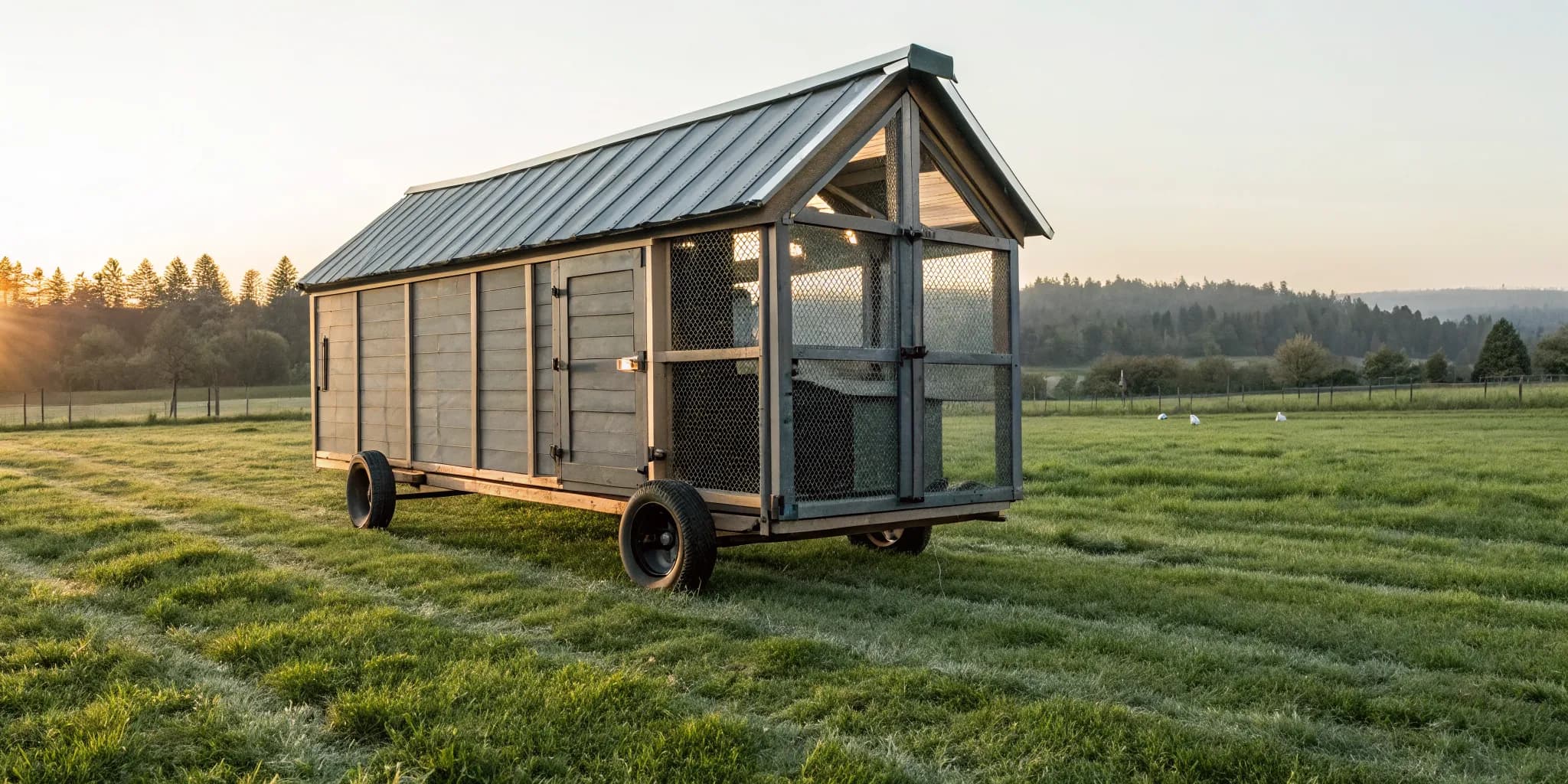
When you first hear the term “chicken tractor,” you might picture a hen driving a tiny farm vehicle. The reality is much more practical but just as clever. A moveable chicken tractor is simply a coop on wheels or skids, designed to be shifted across your yard. This gives your flock the safety of an enclosure with the benefits of free-ranging. As you move the structure, your chickens scratch and dig, tilling the soil and eating weeds, acting like tiny "tractors" for your lawn. This guide breaks down what a moveable chicken tractor is, why it’s a fantastic choice for many backyard chicken keepers, and what key features to look for when buying or building one.
Key Takeaways
- Benefit Both Your Flock and Your Yard: A moveable coop provides your chickens with fresh ground for better health and a varied diet. In return, they naturally till, fertilize, and weed your lawn, preventing the muddy runs common with stationary coops.
- Prioritize Practical Mobility: The biggest mistake is choosing a tractor that's too heavy or awkward for your specific terrain. A coop's mobility is its main feature, so look for a lightweight design with good wheels that you can move easily by yourself every day.
- Choose Between Convenience and Customization: Buying a pre-built model offers immediate use, professional craftsmanship, and a warranty. Building your own gives you complete control over the design, but it requires careful planning, the right tools, and an awareness of common DIY pitfalls.
What Is a Moveable Chicken Tractor?
If you're exploring the world of backyard chickens, you’ve probably heard the term “chicken tractor” and pictured a tiny farm vehicle driven by a hen. The reality is just as clever but a lot more practical. A chicken tractor is simply a moveable coop, often with an open floor, that houses your flock while allowing them to forage on fresh ground. The name comes from the “work” the chickens do as you move the structure across your yard. They scratch and dig, naturally tilling the soil, eating weeds and bugs, and leaving behind fertilizer, much like a tiny tractor preparing the land.
This design gives your chickens the best of both worlds: the freedom to enjoy fresh grass and dirt every day and the safety of a secure enclosure that protects them from predators. Unlike a stationary coop with a fixed run that can quickly turn into a muddy, barren patch of dirt, a moveable coop keeps your yard looking great and your chickens happy and healthy. Our chicken coops are designed with this principle in mind, offering a sturdy, safe home for your flock that you can easily relocate. It’s an ideal setup for anyone who wants to give their chickens a free-range lifestyle without the associated risks of letting them roam completely unprotected. You get peace of mind, and they get a stimulating, clean environment.
Why Choose a Portable Coop?
Choosing a portable coop comes down to a few key benefits for both your chickens and your property. First, it’s fantastic for your flock’s health. Giving them daily access to new ground means they can forage for a diverse diet of grass, seeds, and insects, which keeps them active and entertained. This constant rotation also prevents the buildup of droppings in one spot, which significantly reduces the risk of parasites and disease spreading through your flock.
Second, your yard will thank you. A chicken tractor allows your flock to act as a natural lawn care crew. They’ll mow the grass, eat pesky weeds, and provide an even layer of nitrogen-rich fertilizer wherever they go. By moving the coop regularly, you prevent any single area from being overgrazed and destroyed, maintaining a lush, healthy lawn instead of a muddy chicken run.
How Do Moveable Tractors Work?
The concept behind a moveable tractor is beautifully simple. Most designs, including our high-quality chicken coops, are built on skids or equipped with wheels that make them easy to shift. Each day, or every few days, you simply pull or push the coop to an adjacent patch of fresh grass. Your chickens get a new area to explore, and the spot they just left gets a chance to rest and regrow.
This process creates a healthy cycle for your land. The chickens clear out weeds and pests, lightly till the soil, and deposit fertilizer. You can even use this method to move the tractor into a vegetable garden after you’ve harvested to let the flock clean up leftover plants and bugs. It’s an efficient system that turns your chickens into productive partners in your backyard ecosystem.
What to Look For in a Moveable Chicken Tractor
Finding the right moveable chicken tractor is about more than just looks. It’s about creating a safe, comfortable home for your flock that also works for you and your property. The best tractor is one that balances your chickens' need for space and security with your need for easy mobility and durability. Before you decide, think about a few key features that separate a great coop from a frustrating one. Considering the size, materials, wheel design, and safety features will help you choose a tractor that keeps your chickens happy and your backyard chores simple.
Sizing Up Your Flock's Needs
The first step is to match the coop size to your flock. A common rule of thumb is to provide at least three to four square feet of coop space per chicken for roosting at night. Overcrowding can lead to stress and health problems, so it’s always better to go a little bigger if you can. Think about your future plans, too. If you think you might add more chickens next year, getting a slightly larger coop now will save you from having to upgrade later. The goal is to find a well-made chicken coop that gives your flock enough room while still being easy for you to move around your yard.
Choosing Durable, All-Weather Materials
A chicken tractor is your flock’s primary defense against the elements, so it needs to be tough. Look for coops built with high-quality, weather-resistant materials that can stand up to sun, rain, and snow. Treated wood is a classic and sturdy choice, offering great insulation. The key is ensuring the construction is solid, with a waterproof roof that keeps the interior dry and shaded. A well-built tractor not only protects your chickens but also lasts for years, making it a worthwhile investment. We stand behind our construction with a 5-year warranty that covers any defects in materials and workmanship.
Checking for Easy Mobility and Wheel Design
The "moveable" part of a chicken tractor is its main feature, so don't overlook the mechanics of how it moves. The right wheels and handle design can make all the difference. Consider your property’s terrain. Large, sturdy wheels are great for navigating bumpy or uneven ground, while smaller wheels might be fine for a flat, smooth lawn. Make sure the coop has comfortable, well-placed handles that give you enough leverage to lift and pull it without straining. A tractor that’s a struggle to move will likely stay in one place, defeating its purpose.
Prioritizing Predator-Proof Features
Protecting your flock from predators is a top priority. While no coop is completely impenetrable, a good design can deter most threats. Look for tractors that use hardware cloth with small mesh openings on all windows and vents, not flimsy chicken wire that raccoons can tear through. Latches should be complex and secure, preventing clever animals from opening them. Because a tractor’s mobility can sometimes make it vulnerable to animals digging underneath, check that the frame sits securely on the ground. A solid frame and strong materials are your best defense against unwanted visitors.
Ensuring Proper Ventilation and Shelter
Good airflow is essential for a healthy flock. Proper ventilation helps remove moisture and ammonia, preventing respiratory illnesses. Look for a coop with vents located near the roofline, which allow warm, stale air to escape without creating a draft on your roosting chickens. Besides ventilation, the tractor must provide adequate shelter. This includes a dry, cozy area with roosting bars for sleeping and private nesting boxes for laying eggs. A well-designed coop that supports the health of your flock will also be easier for you to maintain, creating a better environment for everyone.
Exploring Your Chicken Tractor Options
Once you’ve decided a moveable chicken tractor is right for you, your next big choice is whether to buy a pre-built model or build one yourself. There’s no wrong answer here; the best path depends entirely on your budget, how much time you have, and how comfortable you are with a hammer and saw.
Buying a professionally built coop offers convenience, quality assurance, and peace of mind. These structures are designed by experts who understand what chickens need to stay safe and what owners need for easy maintenance. They arrive ready to use, saving you valuable time and potential frustration. On the other hand, taking the do-it-yourself route can be a rewarding project that gives you complete control over the design and features. You can find countless plans and kits online to get you started, allowing you to create a coop that perfectly fits a specific corner of your yard or includes unique features.
Ultimately, you're choosing between the immediate gratification of a durable, ready-to-use home for your flock and the personal satisfaction of a hands-on project. We’ll look at both paths so you can figure out which one aligns with your goals for your backyard and your chickens.
Legacy Structures Chicken Coops
If you want to skip the guesswork and get a high-quality coop delivered right to your yard, a pre-built model is the way to go. Our chicken coops are designed to make raising chickens easier and more enjoyable. We focus on using durable, high-quality materials that can stand up to New York weather, keeping your flock safe and secure through every season. Plus, every coop is built with practical features like easy-access nesting boxes and doors that make daily cleaning a simple task.
We stand behind our craftsmanship with a 5-year warranty, so you can feel confident in your investment. Choosing a Legacy Structures coop means you get a reliable, predator-proof home for your chickens without spending your weekends on a construction project.
Considering DIY Kits and Plans
For those who love a good project, building your own chicken tractor can be an incredibly fulfilling experience. The DIY route allows you to tailor every aspect of the coop to your specific needs and backyard layout. You can find a wide variety of plans online, from simple A-frame designs to more complex structures with integrated storage. This flexibility is a huge plus, as you can make adjustments to a basic plan to better suit your flock or terrain.
However, it’s important to be realistic about the work involved. While moving a tractor is usually easy, it can become a hassle on rocky or hilly ground, so your design needs to account for your landscape. Building a coop requires the right tools, materials, and a bit of patience, but the end result is a structure you built with your own two hands.
How Much Do Moveable Chicken Tractors Cost?
Figuring out the cost of a moveable chicken tractor is a lot like pricing out any other major purchase. The final number can vary quite a bit depending on what you’re looking for. You can find options ranging from a few hundred dollars for a simple DIY project to several thousand for a high-end, pre-built model. The key is to match your budget with your flock’s needs and your own long-term goals.
Generally, the price reflects the quality of materials, the size of the coop, and the convenience of the design. A lower price tag might mean you’ll be putting in some sweat equity, while a higher investment can get you a durable, feature-rich tractor that’s ready to use the day it arrives. It's helpful to think about not just the upfront cost, but the total value over time. A cheaper coop might need repairs or a full replacement sooner, while a sturdier one can last for a decade or more with minimal upkeep. Before you start shopping, it’s a good idea to have a clear picture of your non-negotiables, like the number of chickens you plan to house and the level of predator protection you need. This will help you focus your search and find the best value for your money. Let’s break down the typical price ranges so you know what to expect.
Budget-Friendly Options (Under $500)
If you’re just starting out or have a very small flock, you can definitely find a solution for under $500. This price point almost always involves building the tractor yourself from a set of plans or a basic kit. These are typically smaller A-frame or simple tractor-style coops made from standard lumber and wire. While they get the job done, they may not have the longevity of more expensive models and might require more frequent maintenance. This is a great route if you’re handy and want to get your feet wet without a big upfront investment.
Mid-Range Tractors ($500-$2,000)
This is the sweet spot for many backyard chicken keepers. In the $500 to $2,000 range, you’ll find a wide variety of sturdy, well-designed chicken tractors. These models often come pre-built or in easy-to-assemble kits with higher-quality materials designed to withstand the elements. You can expect more thoughtful features like easier-to-clean layouts, more secure nesting boxes, and better mobility. According to some estimates, this price range covers everything from robust DIY projects to professionally built coops, giving you plenty of options to consider. This is a solid investment for a growing flock and for anyone who wants a reliable coop without starting from scratch.
Premium Models (Over $2,000)
For those who want the best for their flock and a structure built to last, premium models are the way to go. Starting at $2,000 and going up from there, these chicken tractors are all about quality, durability, and convenience. They are professionally constructed from top-tier materials and often include smart features like integrated runs, easy-access egg collection doors, and superior predator-proofing. Our high-quality chicken coops fall into this category, offering a permanent solution that provides ultimate safety and comfort for your flock. Think of it as a long-term investment that saves you time and worry for years to come.
What Influences the Final Price?
So, what exactly makes one chicken tractor more expensive than another? It really comes down to four key factors. First is size; a coop built for five chickens will naturally cost less than one designed for 20. Second, the materials used play a huge role. A tractor built with pressure-treated lumber and a metal roof will have a higher price tag than one made of basic pine and chicken wire. Third is the complexity of the design. A simple, straightforward coop is more affordable than one with multiple compartments and intricate features. Finally, any extra add-ons, like automatic doors or built-in feeders, will also increase the cost.
Should You Buy or Build a Chicken Tractor?
Deciding between buying a pre-built chicken tractor and building one yourself is a big step. One path offers convenience and professional quality, while the other provides a rewarding hands-on project. Let's walk through the key considerations for each option to help you figure out what’s best for you, your flock, and your backyard.
The Pros of Buying a Pre-Built Coop
Let’s be honest, life gets busy. The biggest advantage of buying a pre-built coop is that it saves you a ton of time and effort. A professionally made tractor arrives ready to use, letting you skip the weekends spent measuring, cutting, and assembling. Companies that specialize in these structures have perfected their designs for durability, security, and ease of use. You can trust that features like predator-proof latches and proper ventilation are already built in. Plus, you get the peace of mind that comes with quality craftsmanship. Our chicken coops, for example, are built with high-quality materials designed to withstand New York weather and keep your flock safe and comfortable from day one.
What to Know Before You Build
If you love a good project, building your own chicken tractor can be incredibly satisfying. Before you start, however, a solid plan is your best friend. You’ll need to think carefully about the right size for your flock, ensuring it’s well-made and, most importantly, easy for you to move. Start by sketching out a design or finding reliable DIY plans online. This will help you create a detailed list of materials and tools, which prevents last-minute trips to the hardware store. A good plan also helps you create a realistic budget and timeline. Taking the time to plan thoroughly is the best way to make sure your finished tractor is a success.
Common DIY Mistakes to Avoid
Building a chicken tractor can be a fun challenge, but a few common mistakes can turn your project into a headache. The biggest issue is often overbuilding. It’s tempting to make it extra sturdy, but using materials that are too heavy will make the tractor nearly impossible to move, defeating its purpose. Another pitfall is not considering your specific terrain. Wheels that glide over a flat lawn might sink in mud or get stuck on rocky ground. Finally, don’t underestimate predators. Using flimsy chicken wire instead of strong hardware cloth or weak latches can put your flock at serious risk. Thinking through these potential issues beforehand will save you a lot of trouble later.
Essential Tools and Materials for Building
To build a functional and durable chicken tractor, you’ll need the right gear. You don’t necessarily need a professional workshop, just some basic tools. A typical project requires a drill, a saw, a measuring tape, a staple gun, and wire cutters. For materials, you’ll need lumber for the frame, hardware cloth for secure ventilation, and a durable material for the roof to provide shelter from sun and rain. You can often use recycled or reclaimed wood to keep costs down. The most critical components are the wheels, so choose a set that can handle your yard’s terrain. Having all your tools and materials gathered before you begin makes the entire process much smoother.
The Pros and Cons of Moveable Chicken Tractors
Deciding between a mobile chicken tractor and a stationary coop can feel like a big commitment, but it really comes down to your property, your flock, and your long-term goals. A moveable coop offers incredible flexibility, while a fixed coop provides unmatched stability. Let's walk through the benefits and drawbacks of a chicken tractor so you can figure out if it’s the right choice for you and your feathered friends.
How They Benefit Your Yard and Chickens
The biggest win with a chicken tractor is the fresh grazing it provides for your flock. By moving the coop regularly, you give your chickens constant access to new grass, weeds, and bugs, which makes for happier birds and more nutritious eggs. This rotation is also fantastic for your yard. Your chickens act as a natural lawnmower and fertilizer service, trimming the grass and enriching the soil as they go. You can even use a tractor in your vegetable garden between seasons to have the chickens clear out old plants and prepare the beds for the next planting. It’s a simple system that benefits everyone involved, creating a healthier environment for your flock and your land.
Potential Downsides to Consider
While chicken tractors are designed to be moved, the reality of moving them can sometimes be a hassle. If your property is rocky, uneven, or has steep hills, dragging a coop around every few days might be more work than you bargained for. The key is to move it often, because leaving it in one spot for too long can create bare patches in your lawn or noticeable piles of droppings. Another common issue is weight. Some DIY or overly-built tractors are so heavy they become a real chore to relocate. When you design your coop, it's important to balance durability with a lightweight design that you can actually manage on your own.
When a Stationary Coop Is a Better Fit
A moveable tractor isn’t the perfect solution for every situation. If you live in an area with harsh weather or a high number of predators, a stationary coop is often a better choice. These permanent structures are typically larger and built from heavier materials, offering superior protection from the elements and determined animals. While they require a fixed run, they provide a stable, secure home base for your flock. If you have the space and prefer a set-it-and-forget-it setup, a sturdy, well-built stationary structure, like one of our chicken coops, gives you peace of mind and a permanent fixture in your backyard homestead.
What Size Chicken Tractor Do You Need?
Picking the right size for your chicken tractor is one of the most important decisions you’ll make. It’s a balancing act. You need enough space to keep your flock healthy and happy, but the structure also needs to be small and light enough for you to actually move it around your yard. If it’s too big and heavy, you’ll find yourself leaving it in one spot, which defeats the whole purpose of having a tractor in the first place.
Think about it this way: the perfect size gives your chickens room to roam without giving you a backache. Before you start shopping, it’s a good idea to have a clear number in mind for your ideal flock size, both now and in the near future. This will help you filter your options and find a coop that works for your chickens, your property, and your daily routine. Let’s break down exactly how to figure out the right dimensions for your needs.
How Much Space Does One Chicken Need?
When it comes to chicken comfort, space is everything. A cramped coop can lead to stress, pecking, and health issues. A good rule of thumb is to provide at least 2 to 3 square feet of indoor coop space per chicken. This is their sheltered area for roosting at night and laying eggs.
For the outdoor run, which is the enclosed area they'll spend their days in, you’ll want to provide much more room. Plan for at least 8 to 10 square feet of run space per chicken. This gives them enough room to scratch, forage for bugs, and dust bathe. Keep in mind that these are minimums for standard-sized breeds; larger birds like Orpingtons or Jersey Giants will appreciate a bit more elbow room.
Calculating the Right Size for Your Flock
Once you know the space requirements, the math is pretty simple. Just multiply the square footage needed by the number of chickens you have (or plan to have). For example, if you’re starting with a flock of six standard-sized chickens, you’ll want a tractor with at least 12 to 18 square feet of coop space and 48 to 60 square feet for the run.
I always suggest planning for a slightly larger flock than you currently have. It’s common for chicken keepers to add a few more birds the following year, and buying a coop that you’ll outgrow quickly is a frustrating mistake. Having a few different sized chicken coops to choose from makes it easier to find one that fits your long-term plans.
Finding the Sweet Spot: Mobility vs. Space
Here’s where theory meets reality. While a huge tractor might seem great for your chickens, it can be a nightmare to move. The biggest mistake I see people make is getting a tractor that’s too heavy or awkward for their property. If your yard is hilly, bumpy, or has rocky patches, moving a heavy, oversized coop every day will get old fast.
The goal is to find the sweet spot between ample space and practical mobility. A well-designed tractor is built with lightweight yet durable materials and has a smart wheel design that makes moving it feel less like a chore. Before you commit, be honest with yourself about how much weight you can comfortably pull across your specific terrain. It’s better to have a slightly smaller coop that you move consistently than a giant one that becomes a permanent fixture.
How to Maintain Your Moveable Chicken Tractor
A moveable chicken tractor is a fantastic tool for raising a healthy flock and improving your soil, but like any piece of equipment, it needs regular care. Consistent maintenance keeps your chickens safe, ensures the tractor is easy to move, and protects your investment for years to come. The good news is that a little bit of upkeep goes a long way. By building a few simple tasks into your daily and seasonal routines, you can prevent major problems and keep your coop in top condition.
Starting with a well-built structure makes all the difference. A high-quality chicken coop is designed for durability and ease of cleaning, which simplifies your maintenance tasks from day one. Think of it as setting yourself up for success. With the right coop and a solid routine, you’ll spend less time on repairs and more time enjoying your happy, healthy chickens.
Your Daily Maintenance Checklist
A few minutes each day is all it takes to keep your chicken tractor running smoothly and your flock thriving. Your first stop should always be the moving parts. Wash chicken litter off the wheels and any other moving components every day. If you let it build up, it can harden and make moving the tractor a real chore. While you’re there, do a quick visual check of the coop for any signs of damage. Finally, handle the basics: refresh your flock’s food and water, collect any fresh eggs, and spot-clean the bedding to keep things fresh. This simple daily routine prevents bigger issues down the road.
Prepping Your Coop for Every Season
Your maintenance tasks will shift slightly as the seasons change. In the spring, perform a deep clean to clear out any winter buildup and check for damage from snow or ice. Summer is all about ventilation; make sure vents are clear to keep your flock cool. In the fall, prepare for colder temperatures by checking for drafts and adding a deeper layer of bedding for insulation. During the winter, your main job is to protect the coop from harsh weather. Keep moving parts free of ice and ensure your flock’s water source doesn’t freeze. The open design of most tractors helps prevent major debris issues, but you still need to clear it out regularly to keep everything functional.
Tips to Make Your Tractor Last for Years
Long-term durability starts with choosing the right model. A well-designed coop simplifies upkeep and supports the health of your flock from the very beginning. Beyond that, regular inspections are key. A few times a year, check all the hardware, including latches, hinges, and wheels, and tighten anything that’s loose. It’s also a great idea to touch up any paint or sealant to protect the wood from moisture and sun. Investing in a structure that comes with a solid 5-year warranty gives you peace of mind, knowing your coop is built to withstand the elements and the test of time.
Common Mistakes When Choosing a Chicken Tractor
Picking out a chicken tractor is an exciting step, but it’s easy to get sidetracked by a cool design and overlook the details that matter day-to-day. A little foresight can save you a lot of future frustration and ensure you invest in a coop that truly works for you, your flock, and your property. Many first-time buyers focus on the size and look, which are important, but they forget to consider the tractor as a piece of farm equipment they'll be interacting with every single day. Think of it this way: you wouldn't buy a lawnmower without considering the size of your lawn or how easy it is to push, right? The same logic applies here. A chicken tractor that is perfectly suited for a small, flat backyard might be a complete disaster on a rolling acre with uneven ground. Similarly, a design that looks charming online might be built with materials that won't survive a single season of harsh weather, or it might have a moving mechanism that requires more muscle than you have. These practical considerations are what separate a good purchase from a frustrating one. By keeping these potential missteps in mind, you can find a tractor that isn’t just a house for your chickens, but a functional and enjoyable tool for your homestead.
Forgetting to Consider Your Terrain
That beautiful, level pasture you see in product photos isn’t everyone’s reality. Before you fall in love with a specific model, take a hard look at your own yard. As the experts at Reformed Acres point out, even easy-to-move chicken tractors "can be a hassle if your terrain is rocky, very uneven, or super hilly." A heavy wooden coop that glides on flat ground can become an immovable anchor on a slope or a bumpy field. Think about the path you'll take each day. Are there hills, dips, or muddy spots? Consider a lighter-weight model or one with larger, sturdier wheels if your property isn't perfectly flat. Our chicken coops come in various designs, giving you options to match your specific landscape.
Choosing Style Over Durability
It’s tempting to pick a coop based on looks alone, but a flimsy but cute tractor won’t hold up to a determined raccoon or a rough New York winter. Durability should always come first. A well-built coop is a safe coop. Check for solid construction, like pressure-treated lumber for any part that touches the ground, and high-quality roofing that can handle heavy rain and snow. The best coop is one that keeps your flock safe and lasts for years, not one that just looks good for a season. A company that stands behind its work with a strong 5-year warranty is usually a good sign you’re getting a structure built to last.
Ignoring How You'll Actually Move It
This is one of the biggest and most common regrets. In theory, all tractors are mobile, but as one chicken keeper wisely noted, "in practical daily use, they are not easy to move." Think honestly about the daily task of moving the coop. Will you be doing it alone? Do you have the physical strength to pull it every day, even when you're tired? Look closely at the moving mechanism. Simple drag ropes can be tough on your back, while wheelbarrow-style handles or a dolly system can make the job much easier. Understanding the basics of a good chicken tractor includes finding a design that you can move without a daily struggle.
How to Research and Compare Chicken Tractors
Once you’ve decided a chicken tractor is the right fit for your flock, it’s time to start shopping. With so many options out there, from DIY plans to pre-built models, doing a little homework upfront will help you feel confident in your choice. While product descriptions give you the basic specs, the best information often comes from people who are already using these coops day in and day out. Looking at reviews, forums, and customer feedback helps you understand how a tractor performs in the real world. You’ll learn about the little details that make a big difference, like how easy it is to move across wet grass or how well it stands up to a windy storm. This research isn’t about finding the “perfect” tractor, because that doesn’t exist. It’s about finding the one that’s perfect for your property, your flock, and your daily routine. Think of it as gathering intel before making an investment in your backyard farm. By learning from others' experiences, you can avoid common pitfalls and choose a coop that will serve you and your chickens well for years. The following steps will help you gather the insights you need to make a smart purchase.
Where to Find Honest Reviews
A great place to start your research is with websites and publications that specialize in homesteading and poultry care. These sources often provide unbiased overviews of different coop styles and their functions. They break down the essential features without trying to sell you a specific product, giving you a solid foundation of knowledge. For example, some experts offer a complete rundown of the facts on chicken tractors, explaining how they work and why they are beneficial for small-scale chicken keepers. These expert reviews help you learn what to look for and what questions to ask as you compare different models.
Tapping into Poultry Community Forums
No one knows the pros and cons of a chicken tractor better than the people who move one every single day. Online poultry forums and social media groups are goldmines of firsthand experience. In these communities, you can ask specific questions and get honest answers from a whole flock of fellow chicken enthusiasts. For instance, in one discussion about the pros and cons of different tractor types, a user pointed out that many DIY tractors are overbuilt and too heavy to move easily. This is the kind of practical, real-world advice that you won’t find in a product manual.
Reading Between the Lines of Customer Feedback
Customer feedback on blogs and product pages can reveal a lot about a tractor’s performance, but it’s important to read carefully. A five-star review is nice, but the details are what truly count. For example, one homesteader noted that while using a chicken tractor is great on flat ground, it can be a major hassle on rocky or hilly terrain. This kind of insight helps you match a tractor’s design to your own backyard. Similarly, it’s wise to pay attention to discussions about safety. While many coops are marketed as secure, experienced owners will tell you that almost no coop is fully predator proof. This reminds you to check for vulnerabilities like weak latches or gaps in the wire.
Related Articles
- Should You Use a Chicken Tractor?
- How to Maintain and Clean Your Mobile Chicken Coop
- What to Do & Not Do When Building a Chicken Tractor
- Chicken Tractor Basics
- Chicken Coop Cost Guide
Frequently Asked Questions
How often do I really need to move the chicken tractor? The ideal schedule is to move the tractor every day or every other day. This gives your chickens constant access to fresh grass and bugs while preventing them from overgrazing one spot. The exact timing depends on your flock size and the season; a larger flock will need to be moved more frequently. The goal is to keep them on clean ground and prevent a buildup of droppings, which is key for both their health and the health of your lawn.
Will a chicken tractor ruin my lawn? Quite the opposite, a chicken tractor can actually improve your lawn when used correctly. The key is consistent movement. By rotating the tractor to a new patch of grass every day or two, you allow the chickens to lightly till, weed, and fertilize an area without destroying it. The spot they just left gets a chance to rest and regrow, often coming back greener and healthier than before. It’s a stationary run, not a mobile one, that typically creates a muddy, barren patch of dirt.
Is a chicken tractor safe enough for my flock, especially from predators? A tractor's safety depends entirely on its construction quality. A well-built model is a formidable defense against predators. You should look for structures that use strong hardware cloth with small mesh on all openings instead of flimsy chicken wire. Secure, complex latches are also essential to outsmart clever animals like raccoons. A solid frame that sits flush with the ground helps prevent predators from digging underneath, providing a secure home for your flock.
Can I use a chicken tractor during a cold New York winter? Yes, you can absolutely use a chicken tractor in the winter with a few adjustments. Look for a well-insulated model that is free from drafts but still has good ventilation high up near the roof. During colder months, you can add a deep layer of bedding (like straw or pine shavings) to the floor for extra warmth. The main challenge is keeping the structure from freezing to the ground, so you’ll want to be diligent about moving it, even if it’s just a few feet.
I'm worried a tractor will be too heavy for me to move alone. What should I look for? This is a very valid concern, and the answer lies in smart design. The ease of moving a tractor has less to do with its size and more to do with its mechanics. Look for models with large, sturdy wheels that can handle uneven ground without sinking. The placement of the wheels and the design of the handles are also critical. A wheelbarrow-style lift system, for example, provides excellent leverage and makes moving the coop a much more manageable task for one person.