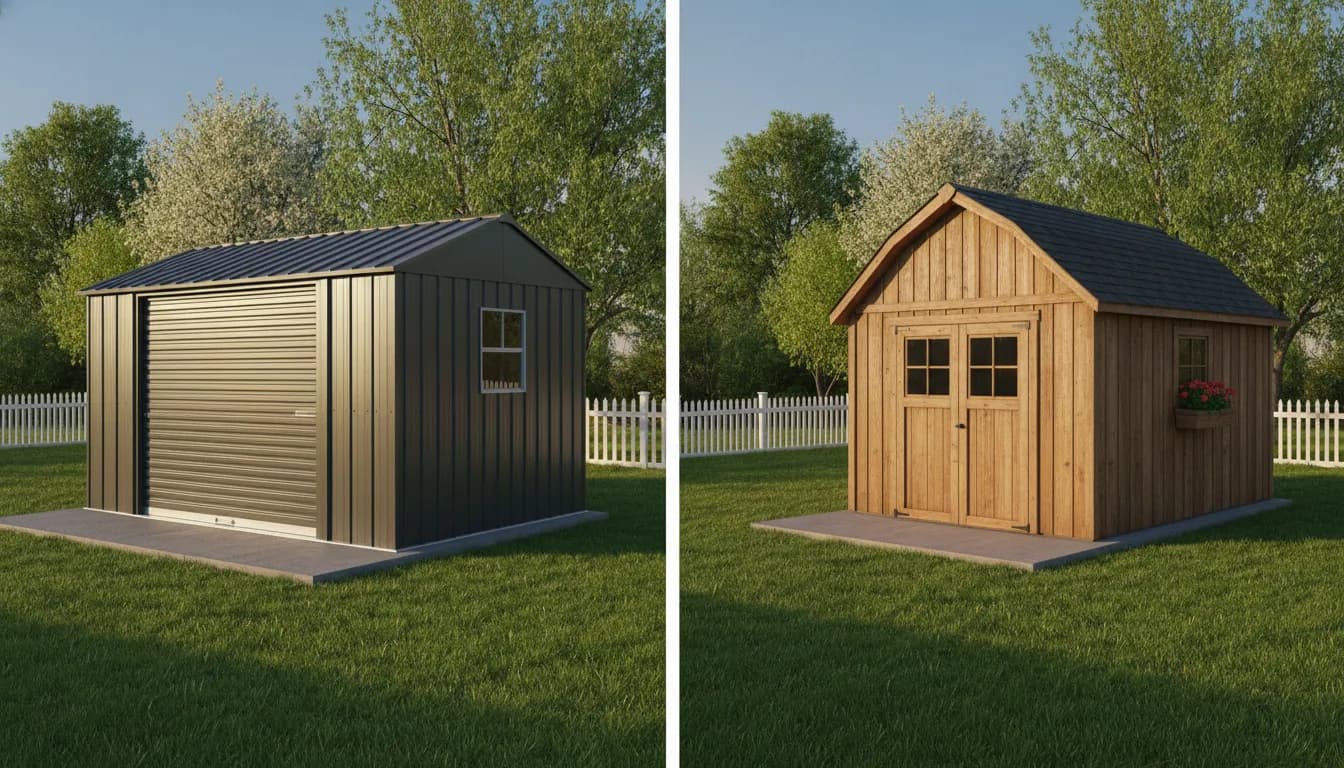
A backyard shed in upstate New York must survive heavy snow and humid summers without rotting or rusting. Choosing the right material keeps your tools dry and your investment safe for years.
Deciding between metal vs wood storage sheds comes down to budget versus long-term value. Metal sheds cost less and need minimal upkeep. Wood sheds offer better insulation, more customization, and a 5-year warranty from Legacy Structures that far exceeds industry standards.
Call (518) 544-2889 for a free pricing guide and compare costs for both metal and wood sheds built for the local climate.
Every homeowner faces the challenge of picking the right material to keep their equipment safe through all four seasons. This guide breaks down the strengths and trade-offs of each option so you can make a confident choice for your property.
Metal vs Wood Storage Sheds: Pros, Cons, and Key Features
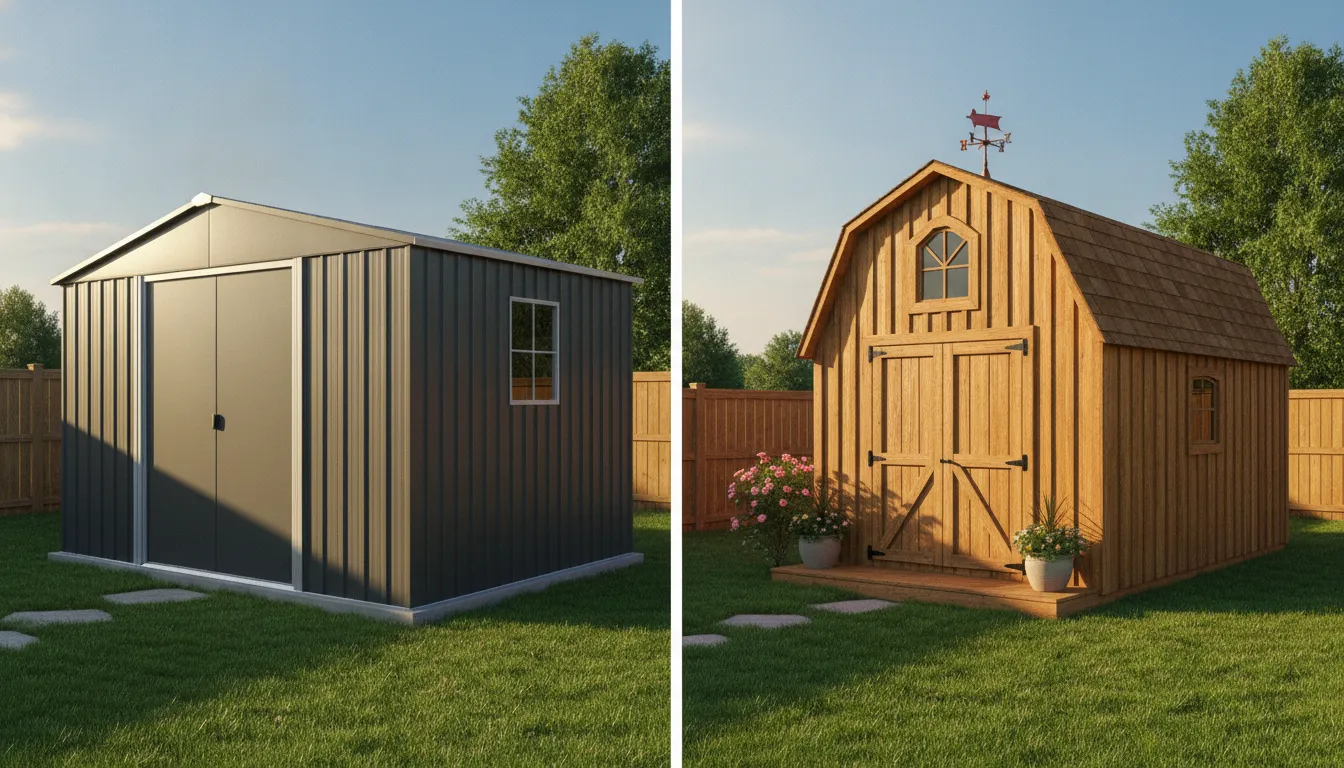
Metal storage sheds offer a simple, low-cost way to store tools and outdoor gear. These buildings typically use 29-gauge steel siding with 36-inch on-center stud framing, keeping costs down while providing reliable protection from rain and snow. You can find durable metal and wood storage shed options that fit a tight budget without sacrificing basic quality.
Pros of Metal Sheds
- Low initial cost. Steel sheds start at about $5 per square foot, making them more affordable than wood options that start near $7 per square foot, according to industry pricing data.
- Minimal maintenance. Metal does not rot, warp, or attract termites. You will never need to paint or seal it. A simple wash now and then keeps it looking clean.
- Fire resistance. Steel and aluminum do not burn, which adds a layer of safety for storing fuel, chemicals, or equipment near your home.
- Long lifespan with care. A quality metal shed can last 10 to 25 years or more when the coating stays intact and the site is well-drained.
- Quick installation. Many metal sheds come as prefabricated kits that go up faster than custom wood builds.
Cons of Metal Sheds
- Condensation issues. Metal surfaces can collect moisture on the inside walls during humid weather, potentially damaging stored items if ventilation is poor.
- Limited customization. Most metal sheds come in fixed sizes with standard doors and no option for lofts, windows, or extra headroom.
- Denting risk. Hail, falling branches, or accidental impacts can dent steel panels, and repairs are not always straightforward.
- Poor insulation. Metal transfers heat and cold easily, making these sheds very hot in summer and cold in winter without added insulation.
- No engineer certification. Standard metal buildings rarely carry an engineer seal for high wind or snow loads, which matters in the local climate.
Wood Sheds: Pros, Cons, and Key Features
Wood storage sheds offer timeless appeal and superior structural strength. They blend into your property naturally and provide the kind of workspace that a metal building cannot match. At Legacy Structures, wood or metal backyard barn designs are handcrafted with premium materials that stand up to the elements year after year.
Pros of Wood Sheds
- Superior aesthetics. Wood sheds complement your home and landscaping. You can paint or stain the siding to match your house exactly.
- Customizable design. Add lofts for extra storage, dormers for natural light, larger doors for vehicle access, or extra windows for ventilation. Explore portable garage options for even more space.
- Better insulation. Wood naturally regulates temperature. A wood shed stays cooler in summer and warmer in winter, making it usable as a workshop or hobby room.
- Engineer certification available. Many wood models come with an engineer seal, which is important for areas with heavy snow loads like Washington and Warren counties.
- 5-year warranty. Legacy Structures backs its wood buildings with a five-year warranty that far exceeds the typical one- to two-year coverage on metal sheds.
- Higher resale value. A well-built wood shed adds perceived value to your property and appeals to future home buyers.
Cons of Wood Sheds
- Higher initial cost. Quality wood construction starts around $7 per square foot, and custom features add to the investment.
- Regular maintenance needed. You must paint or stain the exterior every two to three years to prevent moisture damage and rot.
- Pest vulnerability. Without proper treatment, wood can attract termites, carpenter ants, or rodents looking for shelter.
- Longer build time. Custom wood sheds take more time to construct than prefabricated metal kits, though the wait results in a stronger building.
Metal vs Wood Shed Cost Comparison
Understanding the full cost of each option helps you make a smart investment. The purchase price is only part of the equation.
Initial Purchase Price
Metal sheds win on upfront cost. Basic steel sheds start at about $5 per square foot. Wood sheds start at about $7 per square foot. However, research on steel versus wood residential framing shows that light-gauge steel framing can cost about 12 percent more than wood when you factor in the frame, not just the skin.
Long-Term Ownership Costs
- Metal sheds: Almost zero maintenance cost. No painting, no sealing, no pest treatments. Occasional washing is all you need.
- Wood sheds: Moderate recurring cost. Expect to paint or stain every 2-3 years at roughly $100-$300 per treatment depending on size. However, the 5-year warranty from Legacy Structures protects against structural defects that would otherwise be expensive out-of-pocket repairs.
- Repair costs: Metal dents are difficult and expensive to repair. Wood dents and scratches can be sanded and painted quickly at low cost.
Home Value Impact
A wood shed that matches your house can increase your property value by improving curb appeal and providing usable square footage. Real estate agents note that finished sheds with electricity and insulation recoup a higher percentage of their cost at resale. Metal sheds are seen as utilitarian and typically do not add measurable value beyond the storage function itself.
| Factor | Metal Shed | Wood Shed |
|---|---|---|
| Initial Cost (per sqft) | About $5 | About $7 |
| Typical Lifespan | 10-25 years | 20-40+ years |
| Warranty | 1-2 years | 5 years (Legacy Structures) |
| Annual Maintenance | None | Moderate (paint/seal) |
| Customization | Low | High (lofts, windows) |
| Home Value Impact | Minimal | Positive |
| Insulation | Poor | Good |
| Engineer Certification | Rare | Available |
Durability and Maintenance: Which Shed Material Lasts Longer?
Your shed endures rain, snow, wind, and sun through every season. Both materials offer solid performance, but they handle the elements in very different ways.
How Metal Sheds Hold Up
- Rot and pest resistance. Metal does not rot, warp, or attract termites. This is the biggest advantage over wood.
- Rust risk. Scratches in the paint coating can lead to rust that spreads over time. Quality sheds use galvanized or coated steel to slow this process.
- Condensation. Without proper ventilation, moisture collects on interior metal surfaces during humid conditions. A vapor barrier or ventilation ridge can help.
- Impact damage. Hail and falling branches can dent metal panels. Unlike wood dents, metal dents are difficult to repair without replacing the entire panel.
How Wood Sheds Hold Up
- Natural insulation. Wood handles temperature swings better than metal. It stays cooler in summer and warmer in winter without added insulation.
- Structural strength. Legacy Structures uses 5/8-inch treated floor decking and ring-shanked galvanized nails that resist pulling loose over decades of freeze-thaw cycles. The water-sealed T1-11 or LP SmartSide siding sheds rain and snow effectively.
- Maintenance requirement. You should paint or stain the exterior every 2-3 years. This protects the wood from moisture and gives you the chance to update the color.
- Longevity with care. A well-maintained wood shed can last 30 to 40 years or longer. The 5-year warranty from Legacy Structures covers structural defects during the critical early years.
Climate-Specific Considerations for Upstate New York
The Hudson Falls region receives heavy snowfall and humid summers that test both materials. Metal sheds need a steep roof pitch to shed snow loads effectively. Wood sheds naturally handle temperature swings better and can be built with roof trusses engineered for local snow loads. Some wood models include engineer certification for extra confidence. No matter which material you choose, proper site preparation and professional installation make a significant difference in longevity. For warranty details, review our warranty information and ask about the five-year coverage on all wood structures.
Which Shed Material Is Best for Your Property?
The right choice depends on how you plan to use the space and how long you intend to stay in your home. Both materials serve well, but they suit different priorities.
When to Choose a Metal Shed
Metal sheds work best for homeowners who need quick, low-cost storage for lawn equipment, garden tools, or seasonal decorations. If you do not plan to spend time inside the shed and want a set-it-and-forget-it solution, metal delivers reliable protection with almost no upkeep. They are also a good fit for rental properties or short-term housing situations where minimizing upfront cost matters most. Rent-to-own options with no credit check make storage accessible regardless of your financial situation.
When to Choose a Wood Shed
Wood sheds shine when you want a building that adds beauty and value to your property. If you plan to use the space as a workshop, home office, or hobby room, the natural insulation and customizable interior make wood the clear winner. Homeowners who plan to stay in their homes for the long term benefit most from the durability. 5-year warranty, and ability to add lofts or extra windows down the road. The local Mennonite craftsmanship at Legacy Structures ensures each building is built with attention to detail that mass-produced metal sheds cannot match. Learn more about Legacy Structures and our commitment to quality construction. Explore portable cabin options if you need a heated, insulated space for year-round use. If raising chickens is on your mind, check out our chicken coops for sale — built to keep your flock safe through every season.
Making the Final Decision
Ask yourself these questions before deciding:
- What is the primary use for the shed? Basic storage or active workspace?
- How long do you plan to stay in your current home?
- Do you need the shed to match your house aesthetically?
- Is insulation important for your intended use?
- Would you benefit from the 5-year warranty coverage?
If you answered yes to customization, long-term use, or insulation, wood is the better investment. If you need quick, affordable storage with no maintenance, metal will serve you well. Legacy Structures offers both options, including metal lofted barns that combine the low maintenance of metal with the extra storage of a loft design. For more ideas, use our 3D shed builder to design your custom building online.
Frequently Asked Questions
Is it cheaper to build a shed out of wood or metal?
Metal sheds are cheaper upfront, typically starting around $5 per square foot compared to about $7 for wood. However, research on steel versus wood framing costs shows that steel framing can cost about 12 percent more than wood framing. When you factor in the longer lifespan and warranty protection, the cost gap narrows over time.
How long do metal vs wood storage sheds typically last?
Metal sheds can last 10 to 25 years with proper care, provided the paint coating stays intact and rust does not develop. Wood sheds can last 30 to 40 years or longer when maintained with regular painting or staining. The 5-year warranty from Legacy Structures covers structural defects during the early years, giving you confidence in your investment.
Which shed material is better for insulation?
Wood is naturally better at regulating temperature. It stays cooler in summer and warmer in winter without added insulation. Metal sheds transfer heat and cold easily, making them uncomfortable as workspaces unless you add insulation. If you plan to use your shed as a workshop, hobby room, or home office, wood is the better choice.
Do metal storage sheds require less maintenance than wood?
Yes, metal sheds require significantly less maintenance. They never need painting, staining, or pest treatments. A simple wash with water keeps them clean. Wood sheds need painting or staining every 2-3 years to protect against moisture. However, wood dents and scratches are much easier to repair than metal damage.
Can I customize a metal shed after purchase?
Customization options for metal sheds are very limited. Most models come in fixed sizes with standard door placements. Adding windows, lofts, or shelving requires significant modification that may void the warranty. Wood sheds offer much more flexibility for both initial design and future modifications.
Ready to Get Your Free Pricing Guide and Find Your New Shed?
Making the right choice between metal and wood starts with the right information. A free pricing guide gives you the numbers you need to compare your options with confidence. Acting now ensures you get the best spot in our build queue before the busy season fills up.
Ready to explore custom shed options for your property? Call (518) 544-2889 to talk to a portable building expert at Legacy Structures. We are family-owned and led by owner Stephen Kanagy. We offer free delivery within 30 miles and rent-to-own with no credit check. Let us help you build the perfect storage solution for your Hudson Falls property. Contact Legacy Structures today to get started.