Metal buildings can provide practical space for tools, equipment, seasonal items, or a dedicated workshop. But the right choice depends on more than the exterior material. Metal lofted barns and metal utility sheds have different layouts, and Upstate New York weather makes site planning and access important. This guide explains how to compare the options, set realistic cost expectations, and choose a building that fits your property.
Talk with Legacy Structures about your building plans
What does “metal building” mean for a backyard or property?
For a homeowner or landowner, a metal building is an outbuilding with metal exterior components, selected for a particular storage or work need. The phrase can describe different footprints and roof profiles. It does not, by itself, tell you how much usable room you will have, how the structure is supported, or whether the building is suited to your routine.
Start with the job. A building used for lawn equipment has different access needs from one used as a workshop. A place for bulky seasonal belongings may benefit from a loft, while a building for a riding mower needs a door opening and a clear route from the yard. Name the items or activities first, then compare the styles that can accommodate them.
Legacy Structures includes metal buildings in its broader lineup of portable structures. Its current building inventory is a useful starting point for seeing available models; availability and configurations can change, so confirm the details before making a decision.
Which metal building types should you compare?
Two useful categories to consider are metal lofted barns and metal utility sheds. Both can serve for storage, but the shape and interior arrangement affect how easily you can use the space.
Metal lofted barns
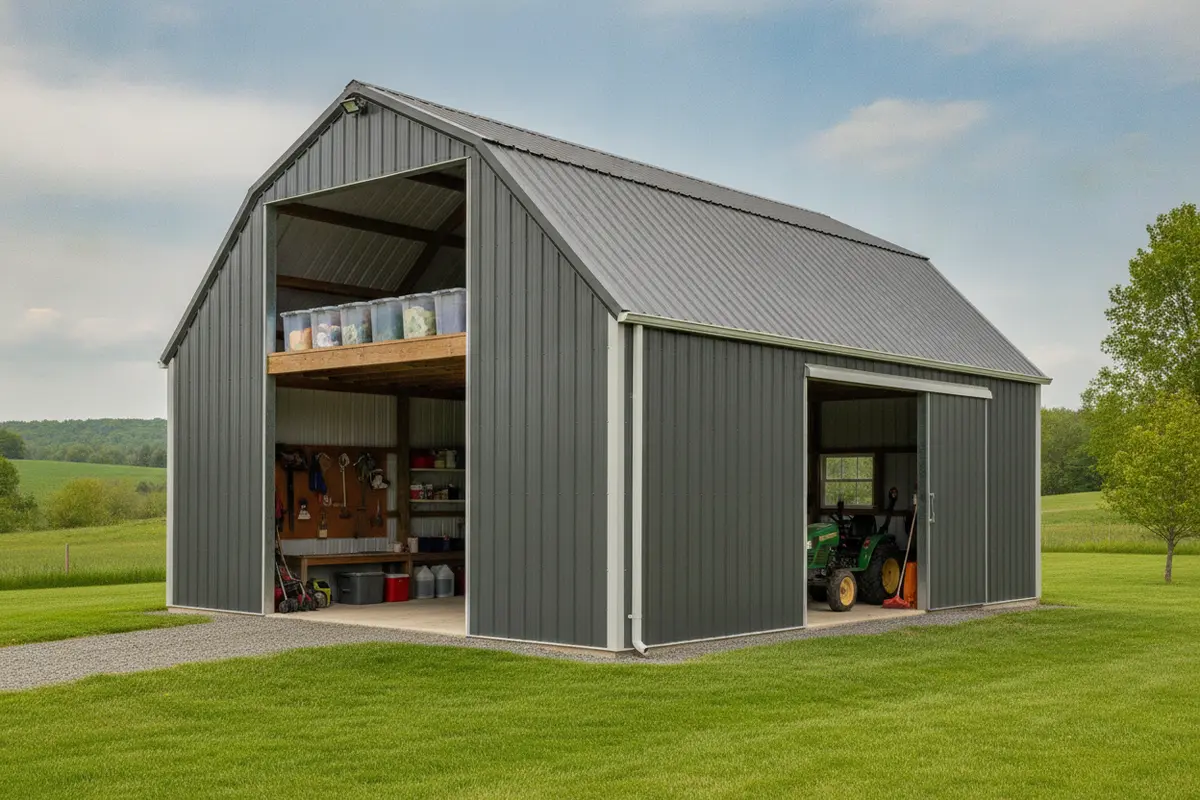
A metal lofted barn combines a barn-style roofline with an overhead loft area. The loft can give you a separate place for lighter, less frequently used belongings, leaving the main floor more open. It can be a practical fit when you want to store boxes, seasonal decorations, or other items above equipment that needs to remain accessible below.
Think through how you will get items into the loft and whether you can safely reach and organize them. A loft is useful only when its access and usable area suit what you plan to store. It also does not replace enough clear floor space for large equipment. For an overview of the broader barn category, see Legacy Structures’ backyard barn options.
Metal utility sheds
A utility shed usually has a straightforward interior suited to everyday storage and general-purpose use. It may be easier to organize for tools, lawn care equipment, and bins that you access often. Plan the door location and clear floor area around the largest item you expect to move in and out.
For smaller tools, wall storage can help keep the floor clear, but do not assume every wall or configuration can take any load. Ask about the model’s construction and appropriate ways to add storage. Browse the storage shed selection alongside the metal models to compare layouts and intended uses.
Choose the layout, not just the label
Roof profile, door placement, floor footprint, headroom, and access can matter as much as the name of the building. A lofted model may make better use of vertical space, while a utility layout may keep frequently used items easier to reach. Compare the actual dimensions and configuration of each model rather than assuming all buildings in a category are identical.
What are metal buildings best used for?
Metal buildings can support several everyday needs when their size and layout match the job. Common uses to consider include:
- Workshop space: A separate area for projects, repairs, or hobbies. Plan for work surfaces, tool storage, lighting, and a path to carry materials inside.
- Equipment storage: A place for lawn and garden equipment, outdoor tools, or property-maintenance supplies. Check the entry opening and turning space for the largest item.
- Seasonal storage: Store outdoor furniture, bins, and belongings used only at certain times of year. A loft may help separate lighter items from the main floor.
- General household storage: Move overflow out of a garage or home while keeping commonly used belongings easy to find.
For a workshop, separate the storage plan from the work plan. Decide which tools need quick access, where a work surface could go, and how you will bring longer materials inside. Leave a clear route so stored items do not block the work area. If you use equipment that produces dust, fumes, or heat, ask what ventilation and safety measures are appropriate; a metal exterior does not answer those questions by itself. Also clarify whether wiring or lighting is part of the building or must be arranged separately.
For equipment storage, check more than the listed footprint. Measure the item at its widest point, account for handles or attachments, and compare that with the clear door opening. Consider whether you need space to park one item while another is inside. This is especially helpful if several family members will use the building or if you plan to store seasonal equipment alongside daily-use tools.
Be specific about what the building will and will not do. A storage shed is not automatically a finished room, heated workshop, or vehicle garage. If you need power, lighting, ventilation, or other features, ask what is included and what would need separate planning. For a different structure type intended for enclosed vehicle space, compare the available portable garage options.
How much do metal buildings cost?
There is no single price that applies to every metal building. Cost depends on size, style, included features, and the details of delivery and placement. A lofted barn and a utility shed can differ in layout and materials, so compare like with like instead of using a single starting price as a reliable estimate for every model.
Legacy Structures’ overall building inventory has listed prices across a broad range, from $2,964 to $59,990, but that range covers different structures and configurations. It is not a quoted price range for every metal model. Confirm current pricing for the exact building, options, and delivery circumstances you are considering.
Think of the total cost as more than the building price. Site work, access preparation, and any features not included in the selected configuration may change what you spend. Do not assume that delivery or setup is included just because it appears in a general description; get the terms for your address and model in writing. If you are comparing a cash purchase with rent-to-own, compare the full scheduled payments, any initial amount due, and the total paid over the term. A manageable monthly amount is not necessarily the lowest total cost.
It also helps to separate must-haves from optional upgrades. A wider door, additional windows, a loft, or a different footprint may add value if they solve a real use problem, but they can also affect the quote. First settle the dimensions and access needs, then ask for the price of the exact configuration. That makes comparisons more useful than looking at two headline prices for buildings with different features.
Use the following checklist when asking for a quote:
- What are the building’s exact outside dimensions and usable interior dimensions?
- Which doors, windows, loft components, and other features are included in the quoted configuration?
- Are delivery and professional installation included for your address, or is there an additional fee?
- What site conditions must be ready before delivery?
- What warranty applies to the particular model, and what does it cover?
Legacy Structures offers free delivery and professional installation within a 30-mile radius of Hudson Falls; delivery beyond that area may be available for a fee. Confirm your address, site access, and the terms for the model you choose. You can also ask about the company’s rent-to-own option and compare its total cost and term with a cash purchase. Avoid comparing only a monthly payment: review the full payment schedule and total amount before choosing.
| What to compare | Metal lofted barn | Metal utility shed |
|---|---|---|
| Space arrangement | Main floor plus overhead loft area | Mostly open, single-level interior |
| Good fit to explore | Seasonal belongings above, equipment or storage below | Frequently used tools and general storage with direct access |
| Planning question | Will you reach and organize the loft comfortably? | Will the doors and clear floor area fit your largest item? |
| Quote details to verify | Dimensions, loft configuration, doors, delivery, installation | Dimensions, door placement, included features, delivery, installation |
| Price approach | Request a current quote for the exact model and options | Request a current quote for the exact model and options |
How should you plan for Upstate New York weather?
In a cold-weather region, think about snow, freeze-thaw cycles, moisture, wind exposure, and the route you will use to reach the building. These conditions affect how you prepare the site and maintain access. They are not a reason to skip model-specific questions about construction, roof design, or warranty coverage.
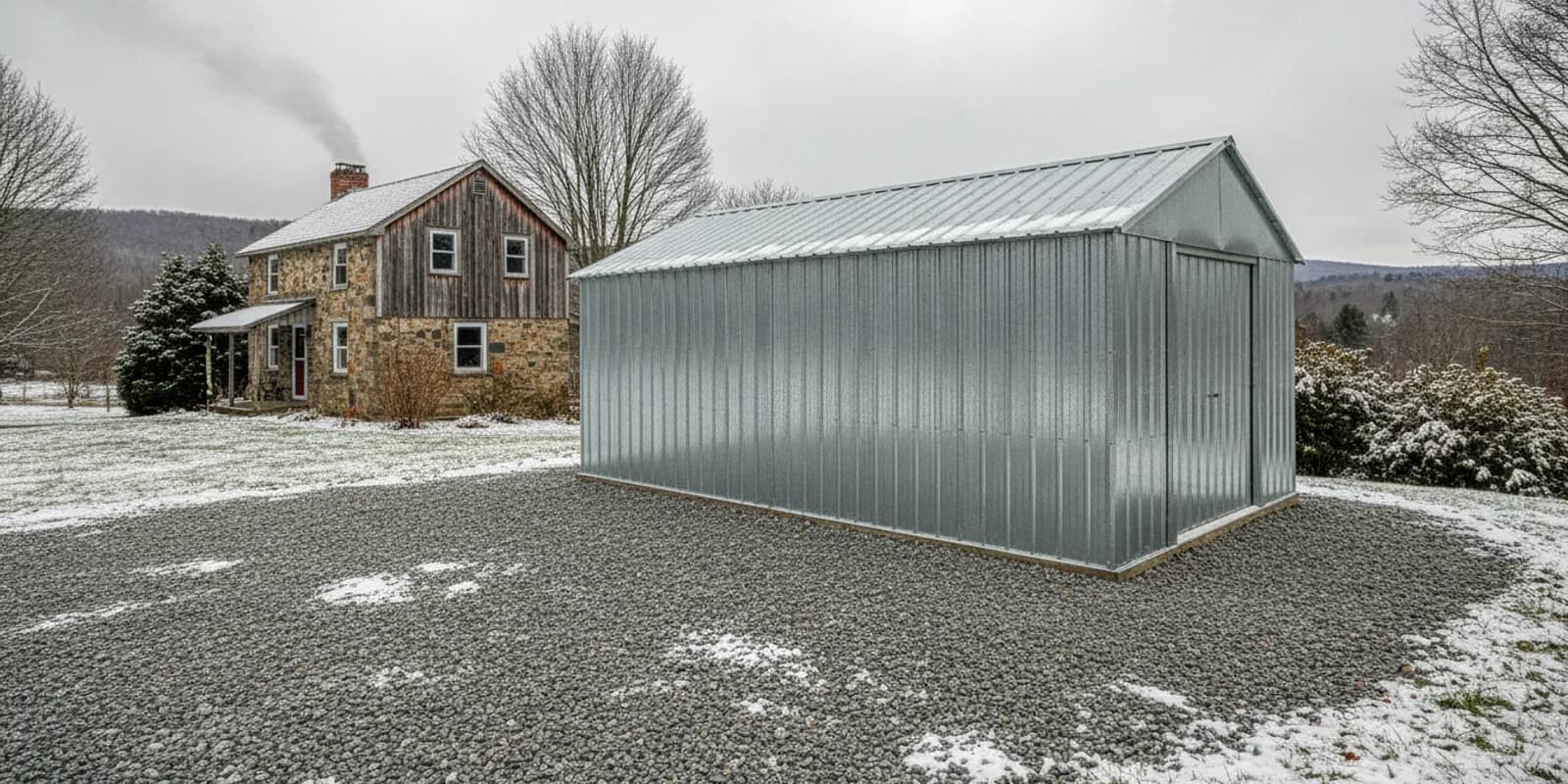
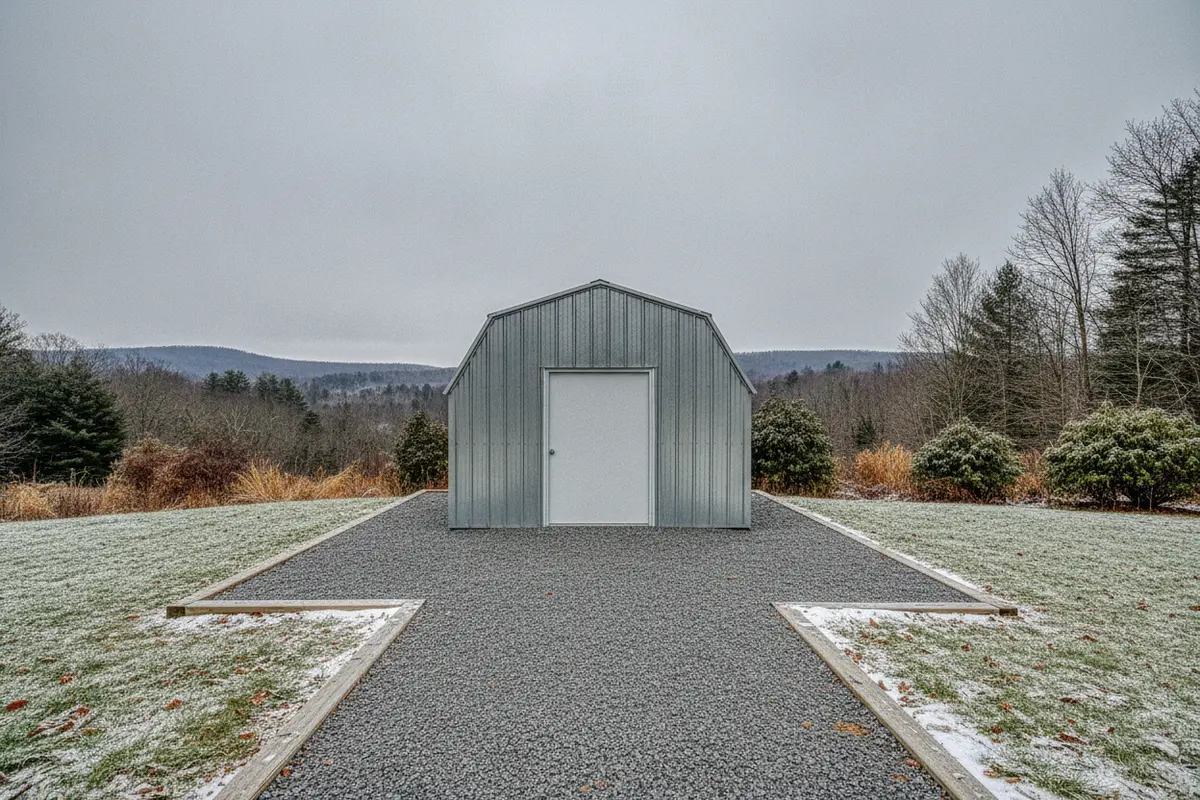
Choose a practical location with room to reach the doors through the seasons. Consider where roof runoff will go and avoid placing the building where water routinely collects. A stable, well-prepared base can help support the structure and make delivery and use more straightforward. Depending on the site and model, preparation may involve a suitable gravel pad, deck, blocks, or skids. Ask Legacy Structures what it recommends for the exact building and site; do not assume one base method suits every property.
Think through winter access as well as the building’s footprint. Where will snow be cleared, and will that leave enough space to open the doors and move equipment? Avoid a location that turns the shortest route into a steep or slippery approach. If you will use the building throughout the year, plan a path you can maintain and keep clear of roof runoff. A convenient location can save effort every time you retrieve tools or bring in supplies.
Plan the building to sit on or above prepared ground, using a placement approach that suits a portable structure and your site. Discuss appropriate measures for the location and exposure with the dealer and follow applicable local requirements. Check the proposed location and any local rules before ordering.
Metal construction alone does not guarantee a warm or dry workspace. If you expect to work inside during winter, ask what insulation, ventilation, and interior finishing are included or available. The Metal Construction Association describes potential benefits such as insulation, reduced air leakage, and high-performance windows and doors in its overview of the environmental benefits of metal construction. Those points do not mean every outbuilding arrives with those features, so confirm the specifics for the model you are considering.
How do you size and position a metal building?
Sketch a simple floor plan before you compare dimensions. Draw the doors, likely shelves or workbench, and the largest equipment footprint. Mark a path from the entrance to the place each item will sit. This quick exercise often reveals whether an apparently generous size will feel crowded once the building is in use. It can also help you see whether a loft is a better way to handle occasional-use belongings than adding floor area.
Leave practical room for opening doors, carrying bulky items, and working around equipment. If you expect to use the building as a workshop, decide where tools and materials will go, and keep a clear route between the entrance and work area. For storage, group belongings by how often you use them: items needed every week should not end up behind seasonal boxes. A little planning can make the same footprint more useful.
Start by measuring the items you need to store, including the space required to maneuver them. A mower or other wheeled equipment needs more than its exact width: leave room to approach, turn, and move it through the doorway. For a workshop, mark out the footprint of benches and tools, then leave a usable aisle.
Before selecting a footprint, walk the proposed site and note trees, fences, slopes, overhead obstructions, drainage, and the path from the driveway. Think about delivery access too. A building may fit on paper but be difficult to place if the delivery route is narrow or blocked. Review the location with the dealer before ordering.
Use Legacy Structures’ inventory listings to compare available buildings and ask about dimensions and options that are not clear from the listing. If you are planning a custom look or layout, its 3D shed builder tool can help you explore design choices before purchase.
What should you confirm before ordering?
A focused conversation can prevent mismatched expectations. Bring a list of your intended uses, the size of your largest item, photos of the proposed site, and the approximate delivery route. Then ask for specific answers about the model rather than relying on a broad category description.
- What are the exact dimensions, door opening, and interior clearance?
- For a lofted barn, what is the loft’s usable area and access arrangement?
- Which metal components and other materials are used on this model?
- What site preparation is recommended for your property?
- What is included in the price, and what may cost extra?
- Can the building be delivered to the proposed location, and is installation included for your address?
- What does the warranty cover, and how should the building be maintained?
Legacy Structures offers a 5-year warranty on its buildings, but ask for the terms that apply to the specific model. Review the company information and discuss any questions about construction, installation, and warranty details before you decide.
How can you make the final choice?
Match the building to the items and routines you actually have. A metal lofted barn is worth considering when overhead storage would keep the floor clearer and you can use the loft comfortably. A metal utility shed may suit daily-access tools and equipment when a straightforward interior is the priority.
Then check four things together: the dimensions, the prepared site, the exact included configuration, and the complete delivered cost. If any of those remains uncertain, pause and ask for clarification before comparing offers. A good choice is not simply the lowest quoted number; it is a model that fits your property and makes the intended work or storage easier.
Call Legacy Structures at 518-544-2889 to discuss your metal building
Request the FREE Pricing Guide
Contact Legacy Structures to review models and delivery details
Frequently asked questions
Are metal lofted barns useful for equipment storage?
They can be, if the main-floor dimensions and doorway fit your equipment. The loft can provide separate storage for lighter items, but it does not replace the clearance needed to move larger equipment in and out.
Are metal utility sheds suitable as workshops?
A utility shed can offer a separate work area, but check what the model includes. Ask about lighting, ventilation, insulation, electrical work, and interior finishes rather than assuming a storage building is a finished or heated workspace.
What does a metal building cost in Upstate New York?
Price depends on the exact model, dimensions, features, and delivery and installation details. Legacy Structures’ listed overall inventory prices have ranged from $2,964 to $59,990 across different buildings, so request a current quote for the metal model and configuration you want.
What kind of base should I prepare?
The right preparation depends on the site and building. Ask the dealer whether a gravel pad, deck, blocks, or skids are appropriate, and prepare a stable location that drains well. The structure should sit on or above the prepared ground.
Can Legacy Structures deliver a building outside Hudson Falls?
Free delivery and professional installation are available within 30 miles of Hudson Falls. Delivery farther away may be available for a fee; confirm service and cost for your address before ordering.
Comparing the actual layout, site needs, and complete quote will help you choose a metal building that serves your property through every season.