Choosing a portable building often comes down to one practical question: do you need more room under one roof, or easier access to everything at ground level? The right answer depends on what you store today, how often you reach it, and whether your storage needs may grow.
The best choice in a lofted barn vs storage shed comparison depends on your priorities. A lofted barn adds an overhead storage area, leaving the ground floor available for bulky equipment. While a standard storage shed offers a simpler, more budget-friendly layout for tools, lawn equipment, and everyday items.
Stephen Kanagy, owner of Legacy Structures, helps homeowners across the Hudson Falls area weigh those tradeoffs alongside footprint, access, and long-term value. Start by looking at what makes a lofted barn different, then you can compare its vertical storage advantage with the straightforward practicality of a standard shed.
What Is a Lofted Barn?
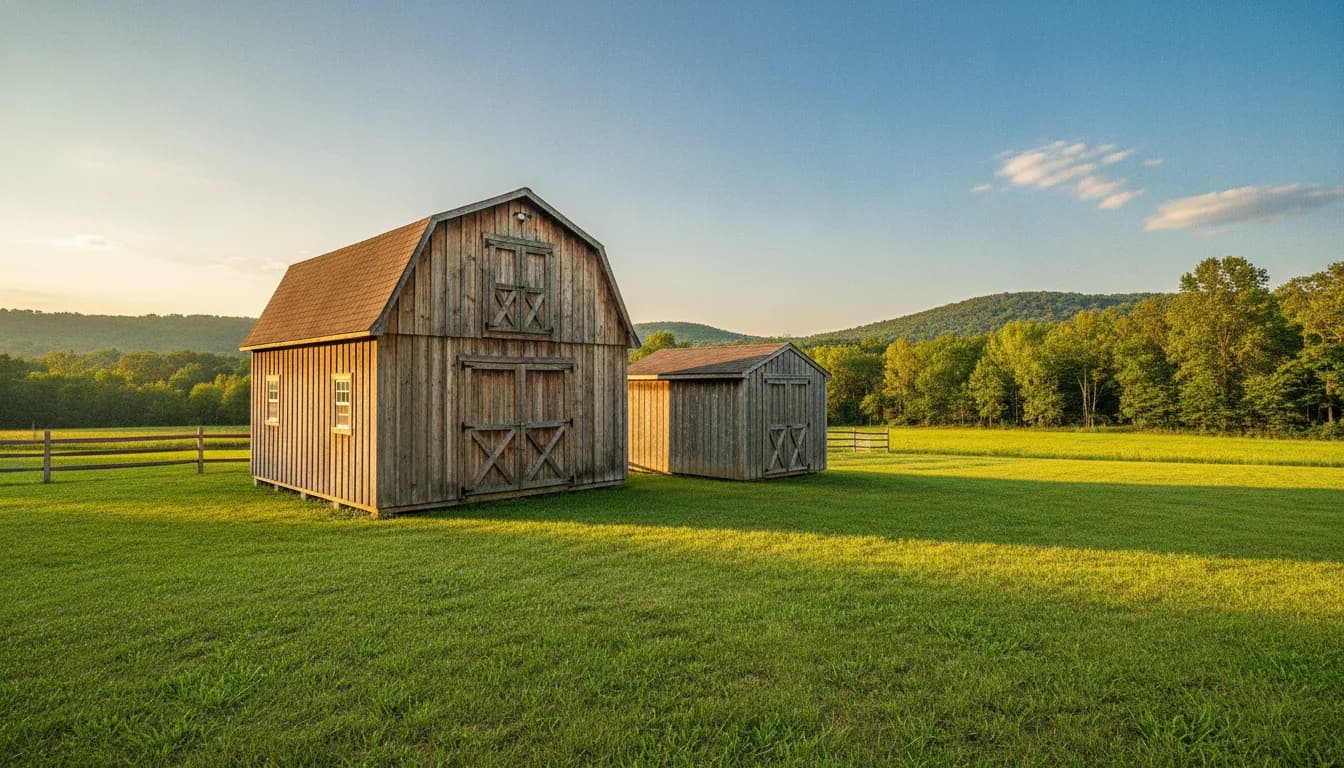
A lofted barn is a portable building designed to turn overhead space into practical storage. Its traditional gambrel, or Dutch barn-style, roof creates room beneath the peak for one or two built-in loft platforms. The main floor remains open for larger items, while the loft gives you a separate place for belongings that do not need daily access.
In a typical design, the loft covers approximately 50% to 75% of the building's footprint. That layout can provide up to 40% more usable storage than a non-lofted building with the same footprint. For homeowners working with limited yard space, building upward can be a more efficient way to add capacity without making the structure wider.
How the space is organized
Think of the ground floor as the active workspace and the loft as the seasonal storage zone. Lawn equipment, workbenches, bicycles, or other bulky items can stay below, while holiday decorations, totes, camping gear, and other less frequently used belongings can move overhead. Because lofted items require ladder or stair access, anything you reach every day should remain on the ground floor.
Common sizes and uses
Lofted barns commonly start at 12x24 feet and go up from there, giving them a larger starting footprint than many standard storage sheds. The extra height and floor area make them useful as a workshop, seasonal storage building, she-shed, or hobby studio. They can also serve as a practical middle ground between a basic shed and a detached garage, with room for both equipment and household storage.
Stephen Kanagy, owner of Legacy Structures, recommends considering both your current storage needs and what you may need in the future before choosing a building. You can review backyard lofted barn options to compare layouts and begin planning a structure built with superior materials and construction.
What Is a Standard Storage Shed?
A standard storage shed, also called a utility shed, is a single-story portable building designed for straightforward, ground-level storage. Its simpler roofline may use an A-frame or single-slope design, creating a practical footprint without the overhead loft found in a barn-style building. For many homeowners, that simplicity makes a shed a budget-friendly way to reclaim space in a garage, basement, or yard.
Common shed sizes range from about 8x10 feet to 12x20 feet. The right size depends on your available yard space and what you need to store. An 8x10 shed may handle routine lawn and garden equipment, while a larger unit can provide room for bicycles. Trash cans, shelving, seasonal containers, and other household items that need to remain easy to reach.
Ground-level access for everyday items
The main advantage is convenience. A mower, trimmer, wheelbarrow, garden tools, or bicycles can be moved directly through the doors without climbing stairs or reaching into an overhead loft. You can also add options such as ramps, shelving, and different door placements to make the interior work better for your equipment and daily routine.
Stephen Kanagy, owner of Legacy Structures, recommends thinking about access as carefully as capacity. Items used every week belong on the floor where they can be reached quickly. A standard shed is often the better fit when your priority is simple organization, a smaller footprint, and a lower initial cost rather than maximum vertical storage.
Delivered assembled and ready to use
Unlike a kit that requires substantial construction at home. A pre-built shed is delivered fully assembled and ready for immediate use, unless you choose to add electrical service or other utilities. Portable buildings may also offer a more predictable cost than projects that combine materials, labor, and site work. Local zoning requirements still vary, so check with your zoning office before ordering.
Legacy Structures offers several practical configurations, including Utility, Single Slope, and Dormer styles. Review the available storage shed styles to compare designs, then use the utility shed sizing guide to estimate the space you need.
Key Differences Between a Lofted Barn and a Storage Shed
Choosing between these two buildings usually comes down to how much storage you need, how often you access it, and how much room you have on your property. A lofted barn uses vertical space for seasonal storage while keeping the ground floor open for larger items. A standard storage shed keeps everything at ground level in a more compact, budget-friendly package.
| Feature | Lofted Barn | Storage Shed |
|---|---|---|
| Roof style | Gambrel or Dutch-style roof with a taller profile | Typically a simpler A-frame, single-slope, or utility roofline |
| Loft space | Overhead loft commonly covering about 50% to 75% of the floor area | No built-in loft, so storage remains on one ground-level floor |
| Typical size range | Often 12x24 feet and larger | Commonly 8x10 through 12x20 feet |
| Best uses | Workshops, studios, seasonal storage, and equipment plus household overflow | Lawn equipment, garden tools, supplies, and items needed for daily access |
| Price range | Higher investment because of the larger structure, added height, and loft platform | More budget-friendly for straightforward storage needs |
| Ideal customer | Someone planning for long-term storage growth or needing separate zones for equipment and belongings | Someone who wants an efficient, accessible building for basic yard and household storage |
The biggest practical difference is storage capacity. A loft platform can cover 50% to 75% of the building's footprint. Creating a separate place for holiday decorations, seasonal clothing, bins, or other items you do not need every day. With the right layout, a lofted barn can provide up to 40% more usable storage than a non-lofted building with the same footprint. That extra cubic capacity is especially useful when yard space is limited but your storage needs are growing.
There is a tradeoff: loft storage is best for lighter or infrequently accessed items because reaching it requires a ladder or stairs. Keep lawnmowers, workbenches, motorcycles, and other frequently used equipment on the ground floor. A standard shed may be the better fit when every item needs quick, ground-level access or when a narrower footprint and lower initial investment matter most.
For a larger footprint and dedicated overhead storage, explore our backyard lofted barn options. If you need a compact building for everyday tools and equipment, compare our storage shed styles. Building costs vary with size, height, floor type, enclosure, and materials, so compare complete designs rather than relying on size alone.
Which One Is Right for You?
Choosing between a lofted barn and a storage shed starts with how you plan to use the building, not just how it looks. Stephen Kanagy, owner of Legacy Structures, recommends thinking through the items you need to store now and the space you may need later.
Do you need vertical storage or easy ground-level access?
A lofted barn is a strong choice when you need to separate seasonal belongings from equipment you use regularly. The overhead loft can hold holiday decorations, totes, camping gear, or other lighter items, while the ground floor remains available for bulkier equipment. This layout adds meaningful storage capacity without requiring a larger footprint. See the available backyard lofted barn options to compare configurations.
A standard storage shed may be the better fit when your priority is quick, ground-level access. Lawn mowers, snowblowers, bicycles, garden tools, and frequently used outdoor gear are easier to load and unload without stairs or a loft ladder. Review the available storage shed styles to find a layout that fits your routine.
What is your budget and available yard space?
Standard storage sheds are generally the more budget-friendly option for straightforward storage needs. They also come in varied footprints that can work well in a narrow or space-constrained yard. A lofted barn may provide more usable capacity for the same general footprint, but its taller profile and loft construction should be considered when you measure the site.
Do not measure only the building area. Account for the delivery route, doors, clearance, and the space needed to use the building safely. Both options require a level surface for dependable placement. Legacy Structures offers free delivery within 30 miles of Hudson Falls, which can help simplify planning for nearby customers.
Match the building to your most likely scenario
- Workshop use: Choose a lofted barn when you want ground-floor work space plus overhead storage for supplies and seasonal items.
- Lawn equipment: Choose a storage shed when daily access, a compact footprint, and simple organization matter most.
- Both needs: Compare both styles. A lofted barn may combine equipment storage and household overflow storage, while a shed may leave more room in your budget or yard.
If you are still weighing lofted barn vs storage shed, use the 3D Shed Builder to visualize dimensions, doors, and design options before making a decision. It gives you a practical way to test how each building could work on your property. Then, contact Stephen Kanagy and the Legacy Structures team for a personalized recommendation based on your site, storage needs, and budget.
Why Building Quality Matters for Both Options
When comparing a lofted barn and a storage shed, storage capacity is only part of the decision. The building also needs to stand up to daily use, changing weather, and the weight of the items you plan to store. At Legacy Structures, both types receive the same careful construction and material standards. As Stephen Kanagy, owner of Legacy Structures, puts it, the goal is simple: "Built With Superior Materials and Construction!"
A floor designed for real storage loads
Each building uses 5/8-inch treated floor decking. That added substance helps the floor handle demanding storage, from lawn equipment and tools to heavier household items. Whether those items stay on the ground floor of a lofted barn or fill a standard shed. A properly built floor gives you a more dependable foundation for everyday use.
Fasteners and siding that protect the structure
Legacy Structures uses ring-shanked galvanized nails, which provide roughly twice the holding power of smooth-shank nails while resisting corrosion. The siding is T1-11 or LP SmartSide, selected for its water-sealed protection and long-term weather resistance. Double studs under siding seams add another important detail, helping secure the joints where panels meet. These construction choices matter on both a lofted barn and a storage shed because weather does not care which roofline you choose.
Craftsmanship and warranty support
Local Mennonite craftsmanship is part of how Legacy Structures builds each portable structure. That hands-on approach supports consistent workmanship across both categories, rather than treating a basic shed as a lower-quality version of a barn. Stephen Kanagy and his team also back their portable buildings with a 5-year warranty. That exceeds the typical 1- to 2-year industry standard and provides added confidence in the quality of your investment. Both types are also eligible for no-credit-check rent-to-own financing with 36- or 48-month terms, so construction quality does not depend on how you pay.
Review the construction details from Legacy Structures as you compare your options.
Frequently Asked Questions
What is the difference between a lofted barn and a regular shed?
A lofted barn has an overhead storage platform in addition to its ground floor, so it separates seasonal items from equipment and other bulky belongings. A standard storage shed is a single-story building with a simpler roofline and direct ground-level access throughout. Choose the barn when vertical capacity matters, or the shed when straightforward access and a smaller footprint are the priority.
Is a lofted barn worth the extra cost compared with a standard shed?
It can be, if you expect your storage needs to grow or want one building for both equipment and seasonal items. A standard shed is generally the more budget-friendly choice for basic tools and lawn equipment. The right value depends on the building's size, height, floor, materials, and customization, not just the initial price. Rent-to-own options can spread payments without a credit check.
How much additional storage does a lofted barn provide?
The loft commonly covers about 50% to 75% of the building's footprint and can provide up to 40% more usable storage than a non-lofted building with the same footprint. Keep frequently used items on the ground floor, since loft storage requires ladder or stair access. Source: Legacy Structures.
Which building is better for a lawn tractor or other bulky equipment?
Either style can work if the ground-floor dimensions, door opening, and ramp are sized for the equipment. A lofted barn leaves the floor open for bulky items while using the loft for seasonal storage. A standard shed may be easier to navigate when every stored item needs ground-level access. Ask about a ramp and confirm the floor is rated for your equipment before ordering.
Do I need a permit for a lofted barn or storage shed?
Permit rules depend on your municipality, building size, placement, and whether the structure is portable or permanently attached. Contact your local zoning office early in the planning process to confirm requirements, setbacks, and site-preparation rules. This check should happen before delivery, regardless of which building style you choose. Source: Ohio State University Extension.
Ready to Choose the Right Building?
A lofted barn and a standard storage shed can serve different storage needs. So a quick conversation can help you compare the space and features that fit your property. Call 518-544-2889 to discuss your options and request a free custom pricing guide. You can also explore designs with the 3D Shed Builder before you reach out. Then talk through your preferred lofted barn or storage shed with the Legacy Structures team.