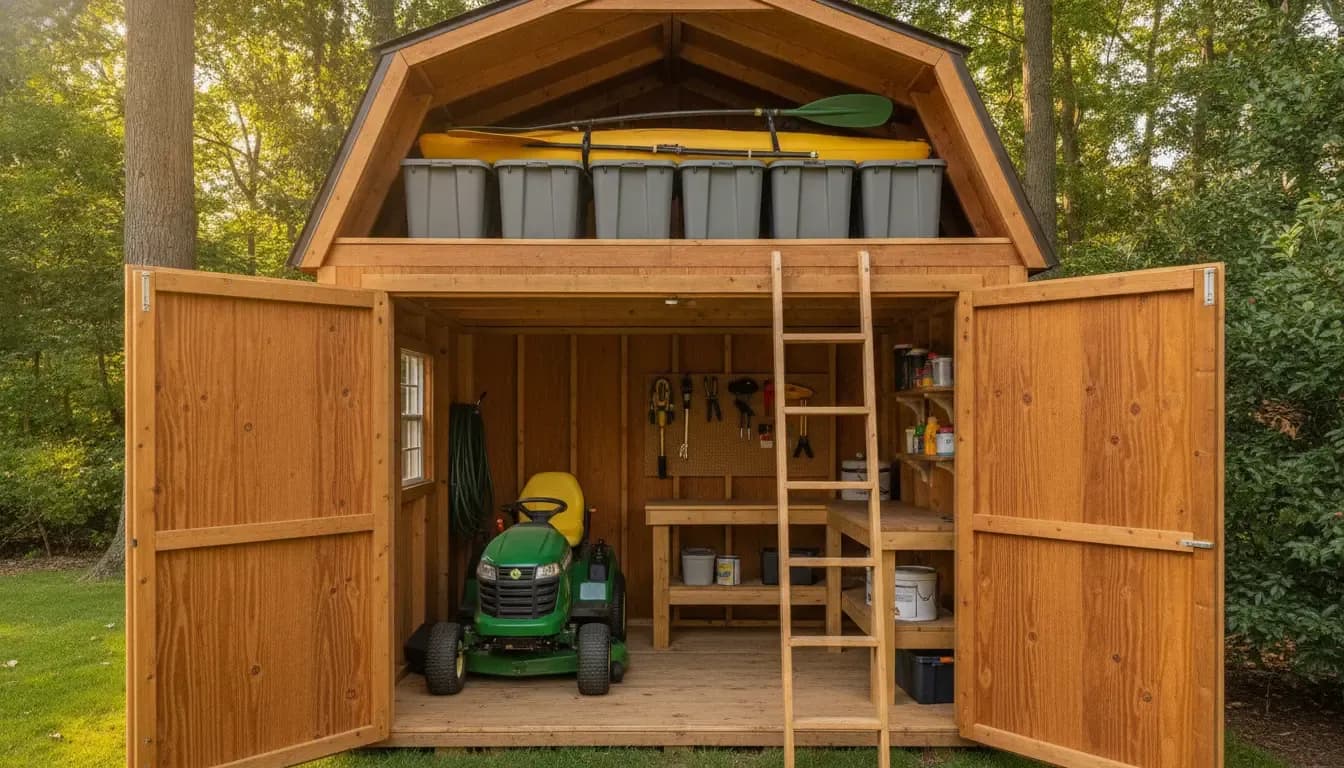
If you are learning how to maximize shed loft storage space, treat the loft as a dedicated zone for lighter, less frequently used belongings while keeping heavy or everyday equipment on the main floor. A clear layout, safe access, and a simple seasonal rotation system can make a lofted shed feel much more useful without expanding its footprint.
Call Legacy Structures at 518-544-2889 to plan a lofted shed layout for your property.
That division is the key to getting more from a loft. Instead of stacking everything wherever it fits, you create a practical system: the main floor handles movement and daily work. And the overhead area handles storage that can wait. The approach is especially helpful for homeowners in Upstate New York who need room for lawn equipment, winter gear, garden supplies, and household overflow.
How to Maximize Shed Loft Storage Space Without Losing Floor Access
A shed loft can significantly increase usable storage by adding an overhead zone without taking more yard space. The main floor stays available for a mower, workbench, or other bulky equipment, while the loft holds lighter seasonal items. The actual capacity depends on the building design, loft size, access, and manufacturer guidance.
The value is not simply the amount of floor area. It is the separation between what you reach often and what you can store out of the way. A lofted barn from Legacy Structures is designed with overhead loft storage, and documented models include up to 8 feet of loft storage. Exact dimensions and usable clearances vary by size and configuration, so plan around the building you are considering.
Start with a quick inventory before you choose bins or shelving. Divide your belongings into three groups:
- Daily access: lawn mowers, snow blowers, wheelbarrows, hand tools, and items you use every week.
- Occasional access: camping gear, garden decorations, spare planters, and project supplies.
- Seasonal or long-term storage: holiday decorations, patio cushions, winter clothing, and keepsakes in suitable containers.
Keep the first group on the main floor. The loft is most useful for the second and third groups, where moving an item down a few times a year is worth reclaiming the floor space below. If you are still deciding which building footprint makes sense, use the complete storage shed buying guide for the larger sizing and buying questions, then use this guide to plan the interior.
Measure the storage problem before you choose the building. Note the length and height of your largest equipment, the width needed to move it through the door, and the open area you need to work safely. Then estimate how many seasonal containers you want overhead. This simple inventory keeps you from giving the loft a job it cannot safely perform.
Leave a usable work zone below the loft. A riding mower, snow blower, or wheelbarrow may need to turn inside the building, and the door path should stay clear even when the loft is full. Overhead storage works best when it improves the main floor instead of creating a second obstacle course. Think in zones: equipment below, occasional items above, and a clear route between the entrance and the items you use most.
What Should You Store in Your Shed Loft?
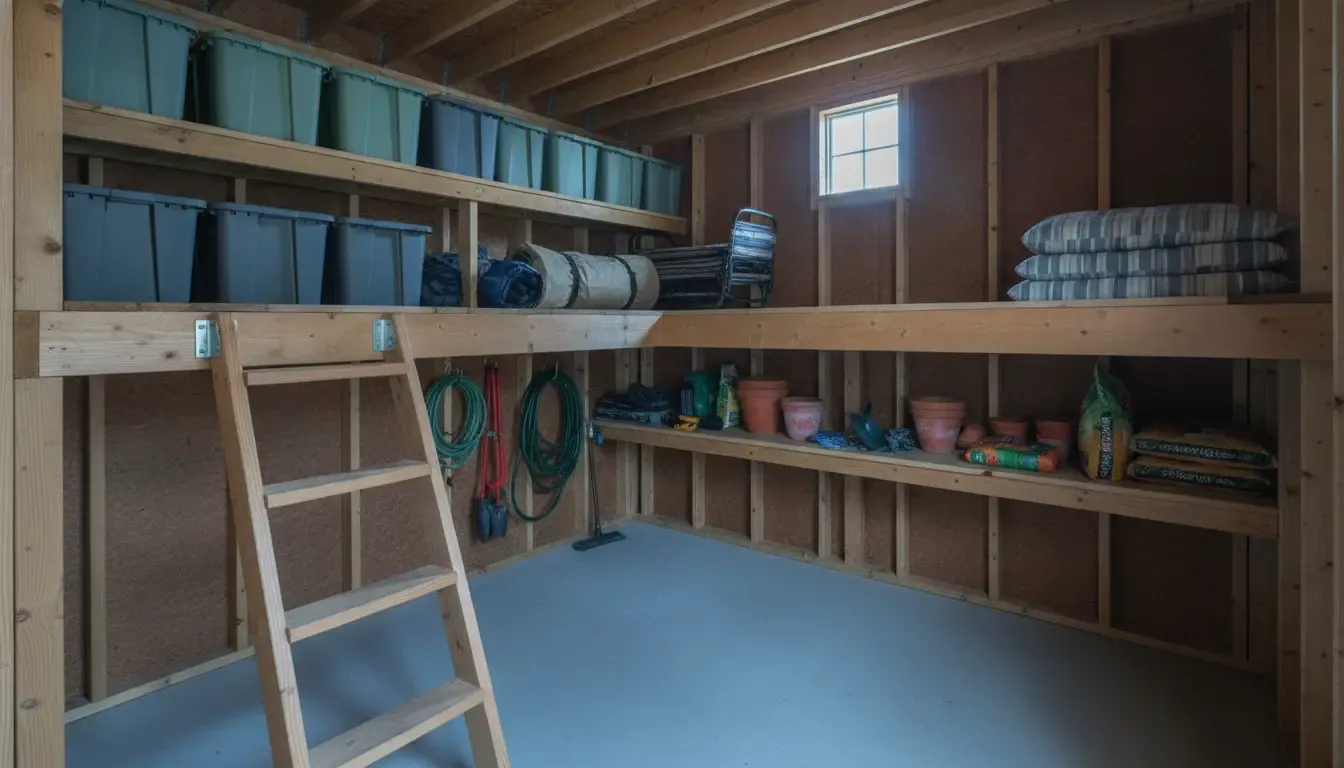
The best shed loft items are lightweight, durable, and used occasionally. Seasonal decorations, empty containers, camping equipment, patio cushions, and spare garden supplies are usually easier to manage overhead than heavy machinery. Keep liquids, dense boxes, and anything you need every day on the main floor.
Use the loft for belongings that benefit from being protected and organized but do not need constant access. Put similar items together so you can retrieve one category without unloading everything else. For example, keep holiday decorations in one zone, camping gear in another, and garden supplies in a third.
| Loft zone | Good candidates | Planning note |
|---|---|---|
| Front or easiest access | Seasonal bins and outdoor cushions | Items you rotate several times a year |
| Side shelving | Empty planters, hand tools, and project supplies | Keep containers stable and easy to identify |
| Rear or higher-use barrier | Lightweight keepsakes and occasional gear | Use only if you can reach it without overreaching |
Do not use the loft as a place for every heavy item you want out of sight. Dense boxes of books, full bags of soil, engine parts, fuel containers, and large power tools belong on the main floor or in another manufacturer-approved location. Keep moisture-sensitive belongings in sealed containers only when the container and the building environment are appropriate for that use.
Before delivery, compare your list with the loft dimensions, floor plan, door opening, and access point. Legacy Structures offers lofted barn options in several widths and lengths, including models with 6-foot-3-inch sidewalls. The right size depends on your equipment and your storage plan, not just the number printed on the outside.
How Much Weight Can a Shed Loft Hold?
There is no universal shed loft weight limit that is safe to apply to every building. Capacity depends on the loft framing, span, supports, materials, spacing, and the specific model. Ask the dealer for the applicable guidance before storing heavy items, and distribute approved loads rather than concentrating them in one spot.
A loft should never be loaded by guesswork. The same-looking building can have different dimensions, framing details, or support arrangements. Ask for model-specific information about the loft floor and explain what you plan to store. A box of lightweight decorations creates a different demand than a dense tool chest or stacked bags of material.
Use these practical precautions:
- Place heavier approved items near supported areas and follow the dealer's instructions.
- Spread containers across the available storage area instead of building one tall, concentrated pile.
- Keep the loft edge and ladder landing clear so items cannot fall into the main work area.
- Inspect for sagging, damaged boards, loose connections, leaks, or moisture before adding storage.
- Do not modify joists, add supports, or enlarge the loft without qualified guidance for the exact structure.
Upstate New York also brings winter conditions that deserve attention. Roof snow and ice loads relate to building design, roof shape, drifting, and weather, not to the storage capacity of the loft alone. The University of Minnesota Extension guide to preventing roof collapse from snow and ice explains why owners should monitor accumulation and warning signs. Discuss local conditions and maintenance expectations with the building dealer.
Loft Access Options: Ladders, Pull-Down Stairs, and More
The best loft access is the option that lets you move a container safely while keeping the doorway and main floor usable. A fixed ladder, removable ladder, or pull-down stair may suit different layouts, but availability varies by model. Confirm the exact access option, landing space, and clearance before ordering.
Access determines what the loft can realistically do. A small ladder works for light totes, but it may be frustrating if you expect to move bulky seasonal containers several times a year. A pull-down stair can make repeated access easier, but it also needs room to operate and may affect the layout below.
Plan the path from the shed door to the loft before you install shelves. Keep the ladder landing free of wheelbarrows, cords, and stored tools. Store the items you reach most often closest to the access point, and use sturdy containers with handles rather than awkward, overfilled boxes. If two people must carry an item, the loft may not be the right storage location.
Use the Legacy Structures lofted barn options and the available lofted barn configurations as starting points, then ask which access and interior features apply to the exact building. A quick conversation before purchase can prevent a layout that looks efficient on paper but is difficult to use.
How Do You Organize Your Loft for Seasonal Rotation?
Organize a shed loft for seasonal rotation by grouping items by season, labeling every container, placing the next season's belongings near the access point, and leaving a clear path. Rotate one category at a time instead of emptying the entire loft, and inspect stored items for moisture or damage as you switch them.
Think of the loft as a small inventory system. Give each zone one job and keep a simple list on your phone or inside the shed, rather than relying on memory. A useful layout might place spring gardening items to one side, summer outdoor gear near the front, fall decorations in the middle, and winter supplies where they can be reached before the first major storm.
- Label containers by category: Use large, plain labels such as "holiday decor" or "camping gear" so the contents are easy to identify from the ladder.
- Face handles outward: Turn bins so they can be pulled forward without reaching over another stack.
- Keep a rotation lane: Leave enough open floor space to move one container safely without climbing across stored items.
- Use a first-in, first-out habit: Return the current season's gear to the same zone after use so the system stays predictable.
- Inspect during every changeover: Look for water intrusion, pests, crushed containers, or damaged items before putting anything back.
Do not block vents, windows, lighting, or the roof structure with storage. If the loft becomes difficult to navigate, the solution may be fewer items, better containers, or a larger building rather than another shelf. For more ideas about choosing a practical building, review the utility shed ideas guide and compare your plan with the storage needs you expect to have in a few years.
Use a simple loft inventory
Write down each container's category and location after you organize the space. A short inventory can be kept on a phone, in a household storage folder, or on a card near the shed entrance. It prevents the common habit of buying another bin because the first one is difficult to find. Review the list when the seasons change, and remove items that have not been used or no longer belong in the building.
Choose containers that match the access route. A shallow tote may be easier to move from a ladder landing than one oversized box, even if both hold the same amount. Keep handles facing outward, avoid unstable stacks, and place the next season's gear where it can be reached without moving everything else. These small decisions are what turn extra overhead space into storage you will actually use.
Download the FREE Pricing Guide from Legacy Structures and compare lofted building options.
Frequently Asked Questions
What is the best way to maximize shed loft storage space?
Separate daily-use equipment on the main floor from lighter seasonal items in the loft. Group items by category, use stable containers, label everything, and leave a clear path around the access point. Confirm the model-specific loft dimensions and load guidance before adding storage.
Can heavy boxes go in a shed loft?
Do not assume that heavy boxes are safe overhead. Shed loft capacity depends on the exact framing, span, supports, and model. Ask Legacy Structures for the applicable guidance, distribute any approved load, and keep dense or heavy equipment on the main floor when in doubt.
What should not be stored in a shed loft?
Avoid storing heavy machinery, dense boxes, fuel, liquids, or anything you need every day in a loft unless the building guidance specifically allows it. Keep the access landing clear and store items that are light, stable, and used only occasionally overhead.
How do I keep a shed loft organized?
Assign each zone a category, label containers, place the next season's items near the access point, and leave a clear rotation lane. Inspect for moisture and damage whenever you change seasonal gear. Returning items to the same zone keeps the layout useful.
Does a lofted barn work for Upstate New York storage?
A lofted barn can be a practical choice for Upstate New York storage when the building, site, access, and maintenance plan fit local conditions. Discuss snow, drainage, delivery, and the above-ground support system with the dealer, and confirm the building's exact options before ordering.
Call 518-544-2889 to talk with Legacy Structures about your shed loft storage plan.