
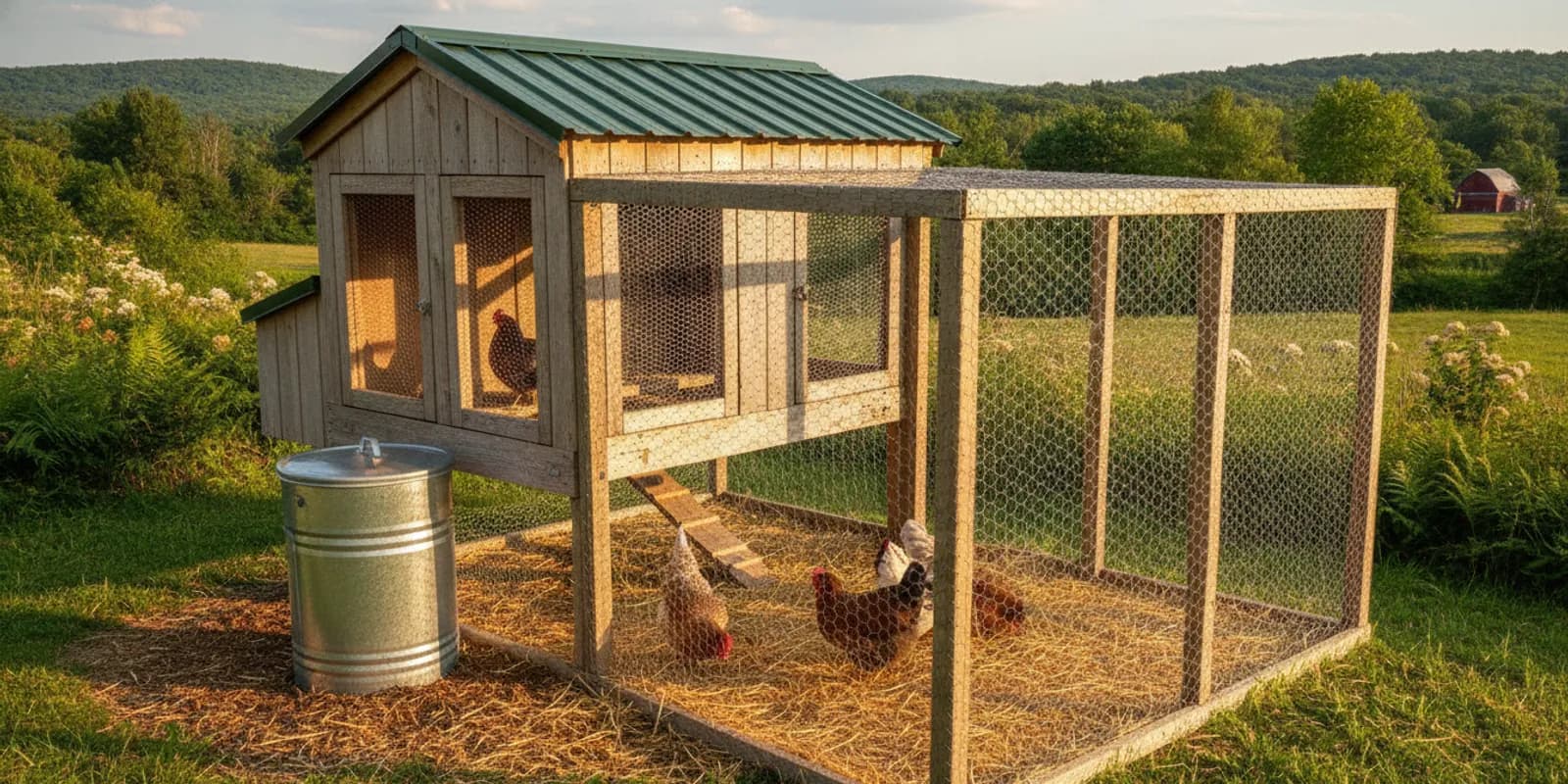
To keep rats out of a chicken coop, remove easy food sources, close gaps with chew-resistant materials, and inspect the building and run regularly. No single step is a guarantee: consistent feed storage and cleanup, paired with a well-maintained coop, make the space less inviting and help you spot problems early.
Call Legacy Structures at 518-544-2889 or explore chicken coops for a practical option.
Why do rats visit a chicken coop?
Rats are drawn to places where food, water, shelter, and a quiet route in are easy to find. Chicken feed is the obvious attraction, but spilled grain, scraps, standing water, litter, and clutter near the coop can all make an area more appealing. A coop that is difficult to enter but surrounded by food on the ground may still attract rodents to its perimeter.
Think of prevention as three connected jobs: make feed harder to reach, keep the surrounding area clean, and block access into the coop and feed storage. If one part is neglected, the other measures may not be enough. In cold Upstate New York weather, check these details through the season; snow, ice, and stored equipment can hide openings or change how rodents approach a building.
Use this daily and weekly checklist
- Put feed away after feeding. Store chicken feed in a sturdy container with a snug, secure lid. Metal containers are generally more resistant to gnawing than thin plastic. Keep bags off the floor and close the container after each use.
- Clean up promptly. Sweep or scoop spilled feed from inside and around the coop. Check under feeders, along the run, and near the feed-storage area rather than only tidying the main floor.
- Manage scraps carefully. Remove uneaten kitchen scraps and spoiled feed instead of leaving them overnight. Keep compost and garbage in secure, closed containers away from the coop where practical.
- Reduce overnight access to feed. If your flock's routine allows, remove or secure feed when the birds are settled for the night. Some keepers use a feeder designed to limit access, but learn its operation and make sure your chickens can use it comfortably before relying on it.
- Keep water and bedding orderly. Repair leaks, avoid persistent wet areas, and remove soiled bedding as needed. Dry, tidy conditions also make it easier to notice fresh droppings or gnaw marks.
- Clear hiding places near the building. Keep grass and weeds managed and avoid piles of lumber, feed bags, or equipment against coop walls. Store supplies so you can see the ground and inspect the edges of the structure.
These habits are useful whether you already have a coop or are comparing options. Legacy Structures offers chicken coops; consider how you will store feed, clean around the building, and reach the doors before deciding where it will sit.
Make feed storage part of the prevention plan
Choose a feed-storage spot that stays dry, is easy to close, and lets you clean up around the container. Keeping a large feed bin directly beside a coop door may be convenient, but it also puts food close to any opening or spill. If you can, keep feed in a separate, secure storage area and carry only what you need for the day's chores. Whatever the location, make sure the lid closes after each use and inspect the surrounding floor for stray grain.
When transferring feed, avoid leaving a bag open while you are distracted by other chores. Close bags between uses and keep them inside a sturdy container where rodents cannot readily chew through the packaging. Do not store feed in a damp place or let spilled grain collect beneath shelves. Rotate through stored feed as appropriate for your flock, and discard feed that is spoiled or contaminated rather than offering it to the birds.
Plan the routine around your actual flock and equipment. Feeders differ, and no one schedule suits every flock or season. Make sure your chickens can reach feed and water in their normal routine while preventing leftovers and spills from being available for long periods. If a feeder is difficult to clean or tends to scatter grain, adjust its position or ask a poultry-care professional about a suitable alternative. Better storage does not replace exclusion, but it reduces an important attraction and makes cleanup easier to verify.
How can you block entry points without closing off ventilation?
Walk around the coop in daylight and look for gaps at doors, corners, wall joints, roof edges, and where utility lines or pipes pass through. Check screens and mesh for bent edges or openings, and inspect the connection between the coop and its run. Rats can use surprisingly small openings, so repair visible gaps rather than assuming a hole is too small to matter.
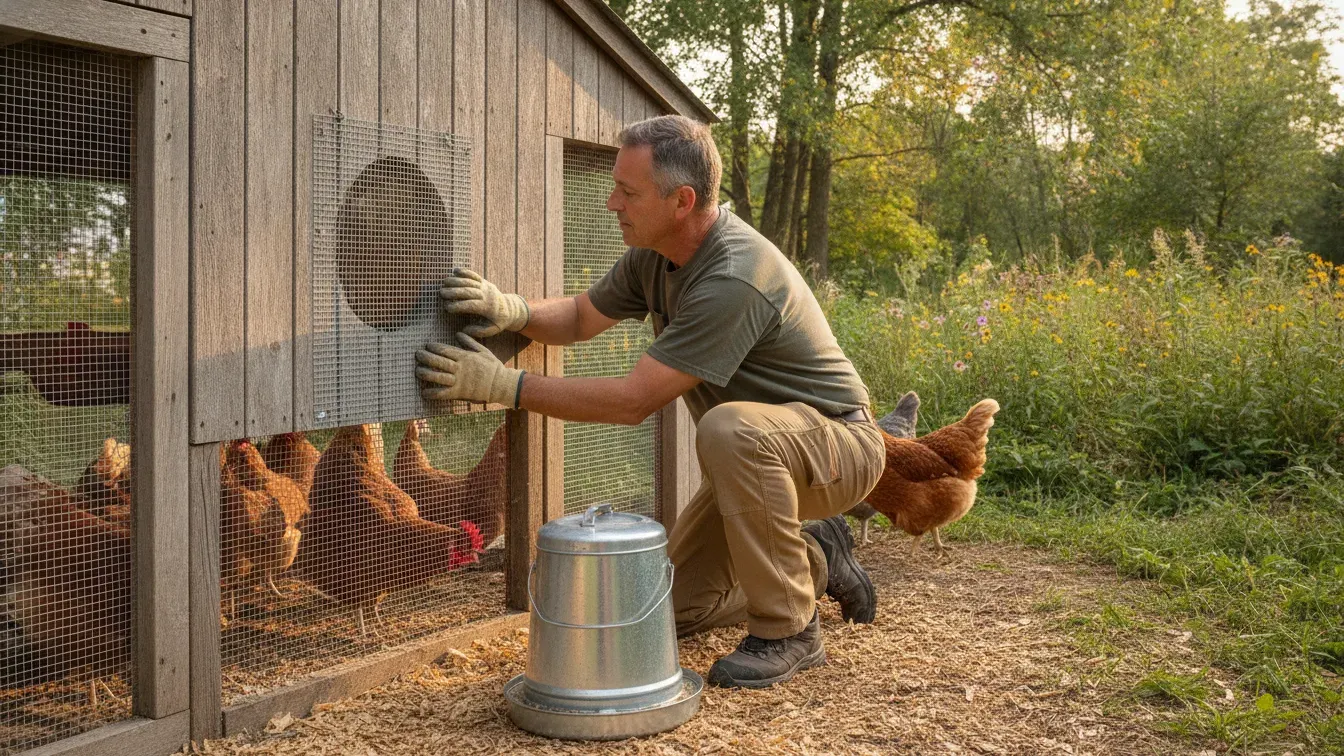
Use durable, chew-resistant materials for repairs. Fine-gauge hardware cloth is a common choice for covering openings, and secure attachment matters: fasten the edges firmly so there is no loose flap or gap around the perimeter. A patch that is only loosely attached may leave a route behind it. For larger repairs or structural damage, ask a qualified builder or pest professional about a suitable fix.
Do not solve a rodent problem by sealing every opening. Chickens need appropriate airflow, and a coop should retain its intended ventilation. Cover openings against animal entry while preserving airflow, and avoid blocking vents with stored items or seasonal coverings. If you are unsure how to protect a vent without restricting it, get advice specific to the coop design.
Pay extra attention to doors. A door that does not close flush may leave a gap at the bottom or side. Adjust the latch, repair a damaged edge, or fit a suitable door sweep or barrier that still allows the door to operate correctly. Recheck after moving the coop, changing a ramp, or adding equipment because these changes can create new access points.
Compare prevention measures
| Measure | What to do | When to check |
|---|---|---|
| Feed storage | Use a sturdy, lidded container; close it after use and clean up spills. | Every feeding; inspect the container regularly. |
| Coop openings | Repair gaps and cover appropriate openings with firmly secured, chew-resistant mesh. | At least weekly and after repairs or severe weather. |
| Run and perimeter | Remove spilled grain, scraps, clutter, and persistent wet spots. | Daily cleanup, with a fuller weekly walk-around. |
| Ventilation | Keep the intended airflow open while screening openings against animal entry. | During each inspection and when preparing for colder weather. |
| Rodent evidence | Look for droppings, gnaw marks, tracks, burrows, or disturbed feed. | Regularly; investigate promptly when signs appear. |
Inspect the coop and run on a routine
A short, repeatable inspection is easier to maintain than waiting until you see a rat. Look along the ground and wall edges, behind stored items, under feeders, around doors, and at the point where the run meets the coop. Check feed containers for chew marks and lids that no longer fit securely. Note what you find so you can tell whether a repair or cleanup step is working.
Signs to take seriously include fresh droppings, gnawing, tracks in dusty areas, disturbed feed, or a visible route along an edge. One clue does not always tell you how extensive the problem is, but repeated or fresh signs warrant action. Avoid touching droppings with bare hands; follow appropriate hygiene guidance when cleaning contaminated areas.
Make the inspection more useful by checking at different times and after changes. A new feeder, a feed spill, a repaired door, or a stretch of snow and thaw can change conditions around the coop. When snow is present, do not let a drift conceal a damaged screen or create a convenient ramp to an opening. Keep access paths clear enough to examine the building safely.
Common prevention mistakes to avoid
Leaving feed out all night: A full feeder can become a predictable food source after the flock has settled. If you remove feed overnight, choose a routine that still gives your hens reliable access during their normal feeding times, and keep water needs in mind. If you use a feeder intended to limit access, observe the birds using it and make sure it is appropriate for your flock rather than assuming it will work automatically.
Putting feed in a container without checking the lid: A container only helps when it closes securely and remains in good condition. Check that the lid seats properly, the container is not cracked, and the storage spot stays dry. Keep the container closed between uses, including during chores when it may be tempting to leave it open for convenience.
Repairing only the hole you first noticed: Rats may travel along edges and exploit more than one weak point. After closing a gap, inspect the full perimeter, doors, vents, corners, and the connection to the run. A quick patch is not complete if its edges can be pushed aside or if another opening remains nearby.
Blocking ventilation to make the coop feel sealed: A coop still needs its designed airflow. Cover a vulnerable opening appropriately rather than stuffing it with material or shutting it off without considering ventilation. A poultry-care professional or the building provider can help if you are uncertain about a vent's purpose.
Cleaning inside but ignoring the outside: Grain in grass, under a ramp, or beside feed storage can keep attracting rodents even when the coop floor looks clean. Make the surrounding area part of your routine. Move stored items enough to see the ground, and keep feed bags and equipment from creating concealed spaces next to the walls.
Adjust checks to the season
In the Hudson Falls area, changing weather makes a regular inspection worthwhile. Before colder weather, verify that doors still close properly, mesh is intact, and ventilation openings are protected without being blocked. Store extra feed in a closed container and make sure the route to the coop remains clear for routine chores. These small steps are easier to complete before winter conditions make repairs more difficult.
During winter, look for new gaps or damage when snow or ice changes access around the structure. Snow can conceal the ground line, hide a hole, or pile against a wall, so clear enough space to inspect safely. After a thaw, check again for disturbed soil, displaced materials, wet bedding, and leaks. In warmer months, keep weeds and stored items from obscuring the perimeter. Seasonal checks do not replace daily cleanup; they help catch changes that a quick feeding routine may miss.
Keep a simple note of findings: date, location of droppings or gnaw marks, feed spills, and repairs completed. If the same sign returns in the same place, revisit the repair and look for a route you missed. This record can also help a pest-control professional understand the pattern if you need additional help.
What if you find signs of rats?
Begin by removing accessible food and water sources, cleaning spills, and inspecting for entry points. Repair gaps with materials appropriate to the location, and continue monitoring for fresh signs. If evidence persists, the problem seems widespread, or you cannot locate the entry route, contact a licensed pest-control professional for an assessment suited to a poultry area.
Be cautious with traps and rodenticides around chickens, pets, children, and wildlife. A product or device that is unsafe or placed carelessly can create additional hazards. If you consider a rodenticide, read and follow the product label and applicable directions; the U.S. Environmental Protection Agency provides information about rodenticides and their safe use. When the right method or placement is unclear, ask a qualified professional rather than improvising.
Do not rely on an owl decoy, scent product, or a single trap as a substitute for securing feed and closing access. Such measures may not address why rodents are present, and their effectiveness can vary. The lasting plan is to reduce attractants, exclude entry, and keep checking for evidence.
Plan for a coop that is practical to maintain
Rat prevention is easier when daily chores and inspections are convenient. Before choosing a location, think through where feed will be stored, how you will carry it, whether you can sweep around the walls, and whether the doors and run are easy to inspect. Avoid placing the coop where vegetation, stacked materials, or difficult access will make regular cleanup a chore.
When comparing designs, look beyond appearance and capacity. Consider door fit, accessible corners, the arrangement of openings, and whether the coop will suit your cleaning routine. You can review current building inventory and learn more about Legacy Structures as you evaluate local options. A building is only part of the prevention plan, but a layout that is straightforward to inspect can help you keep up good habits.
Legacy Structures serves customers from Hudson Falls and offers portable buildings including chicken coops.
See chicken coop options or call 518-544-2889 to discuss a practical setup.
Frequently asked questions
What is the first thing I should do to keep rats out of a chicken coop?
Secure the feed and clean up anything spilled around the feeder. Then inspect the coop and run for gaps. Addressing food access and entry points together is more useful than relying on a single deterrent.
Can chickens eat with a rodent problem present?
Keep feed clean and stored securely, and do not let it remain accessible to rodents. If you find contamination or persistent activity, remove affected feed safely and consult a poultry-care or pest-control professional for advice specific to your situation.
Does hardware cloth keep rats out?
Properly selected and firmly attached hardware cloth can help protect suitable openings, but it does not compensate for gaps around doors, loose edges, or unsecured feed. Inspect the whole coop and repair any route that could bypass the mesh.
Should I use poison near a chicken coop?
Use caution: chickens, pets, children, and wildlife may be exposed if a product is selected or placed improperly. Follow the product label exactly and seek professional guidance when in doubt. Focus first on removing attractants and closing entry routes.
How often should I check for rats?
Clean up feed routinely and make a deliberate inspection at least weekly, as well as after severe weather, repairs, or a change in the coop setup. Check promptly whenever you notice droppings, gnawing, disturbed feed, or other fresh signs.
Call Legacy Structures at 518-544-2889 or view chicken coop options when you are ready to plan a coop that is practical to maintain.