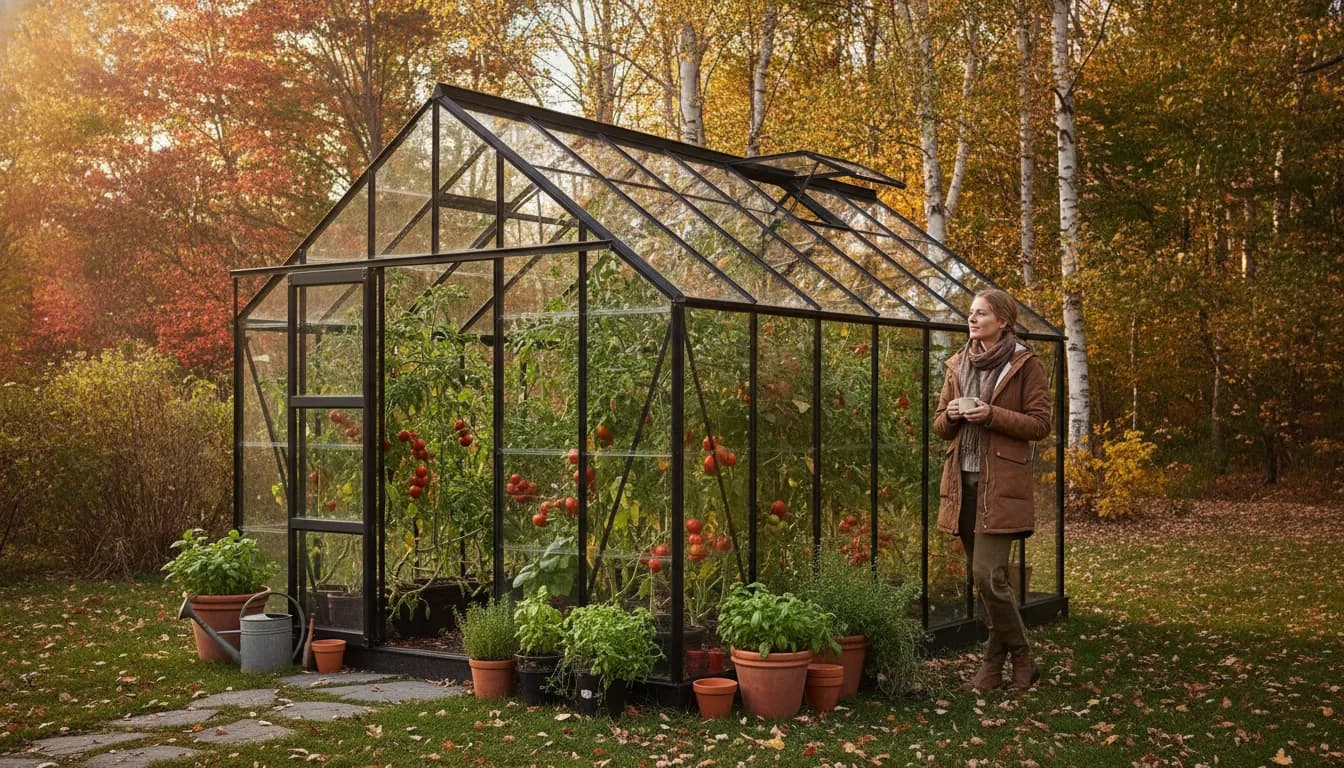
In the Adirondacks and across Upstate New York, a greenhouse has to do more than add a few weeks to the growing season. Its size, materials, placement, and style all affect how well it handles winter weather and how comfortably you can work inside. The right choice starts with your actual growing plans, not a one-size-fits-all model.
To decide how to choose a greenhouse, define what you want to grow and how long you want to grow it. Then compare the space you need, materials suited to local snow loads, and a style that fits your property. A well-planned structure gives you greater control over water, temperature, and ventilation.
Legacy Structures offers customizable greenhouse units, a 3D builder for visualizing your layout, and site-planning guidance for a stable installation. Start by connecting your greenhouse to your growing goals, available space, and the conditions it will face through a cold New York winter.
Request your free greenhouse pricing guide and compare sizes, materials, and styles built for cold-climate New York. Every Legacy Structures greenhouse is backed by a 5-year warranty, so you can plan with confidence.
How to choose a greenhouse that fits your growing goals
The best greenhouse is not necessarily the largest or most elaborate model. It is the one that supports what you actually want to grow. How often you will use the space, and how much time you want to spend managing it. Before comparing frame materials or roof styles, define the job your greenhouse needs to do.
Start by choosing the goal that matters most:
- Seed-starting: If you mainly want to raise seedlings before moving them outdoors, prioritize work space, shelves or benches, reliable ventilation, and convenient access. You may not need a structure designed for winter production.
- Season extension: If your goal is to start earlier in spring and harvest later in fall. Consider the crops you want to protect and the amount of room needed for trays, mature plants, and walking paths. In Upstate New York and the Adirondacks, a well-planned greenhouse can provide valuable protection during unpredictable shoulder seasons.
- Year-round growing: Growing through winter requires a more deliberate plan for insulation, heat, light, ventilation, and snow management. Think about which crops justify the added investment and whether you need room for production, storage, washing, or packing.
- A dedicated hobby space: A greenhouse can also be a personal retreat for gardening, plant collecting, or experimenting with varieties. In that case, comfort, layout, shelving, and room to move may matter as much as total growing capacity.
This purpose-first approach helps you avoid paying for features you will not use while preventing an undersized structure from limiting your plans. A greenhouse is an enclosed growing environment, so you can control water application, temperature, and ventilation more closely than you can in an open garden. Those controls are useful for every goal, but the equipment and layout needed to use them will vary with your intended crops and schedule. Penn State Extension explains the role of greenhouse environmental control in crop production.
Scale also matters if you plan to sell what you grow. Greenhouse production can provide valuable year-round cash flow for small-scale growers, but a production greenhouse should be planned around realistic output, workflow, and available labor. A structure scaled for a few trays of seedlings may become frustrating if you later need room for repeated plantings, harvest staging, or customer orders. Conversely, a large production-oriented unit can create unnecessary heating and maintenance demands for a casual gardener. Greenhouse designs should be scaled to the intended production level, rather than chosen by floor area alone.
Once you know the purpose, sketch a typical day inside the structure. List the plants, containers, benches, tools, and pathways you will need. Legacy Structures offers customizable greenhouse units, and its 3D Shed Builder lets you design your custom greenhouse and visualize the layout before you commit. Use that planning step to test whether the doors, work surfaces, and growing zones fit your routine. Then you can compare size, materials, and style with a clear goal instead of making the decision from appearance alone.
What size greenhouse do you need?
The right footprint gives your plants room to grow without making everyday care feel cramped. Start with what you plan to grow, then account for the space you need to water, prune, harvest, and move supplies. A greenhouse used for a few seed-starting trays has different requirements than one supporting multiple growing rows, elevated benches, or production for a local market.
Legacy Structures offers greenhouse sizes ranging roughly from 8x8 to 14x40, giving growers room to match the structure to both their property and their plans. These options are designed to support different production levels, rather than treating every greenhouse as a one-size-fits-all purchase. You can review our greenhouse models to compare available footprints and configurations.
Measure the growing area first
Before choosing a model, sketch the longest growing rows you expect to use. Include the width of each bed, bench, or container area, then add comfortable walkways between them. A narrow path may fit on paper but become frustrating when you are carrying a tray, pushing a cart, or tending plants at the back of a bed. Leave enough clearance to work without brushing against foliage or damaging stems.
Also reserve space for the things that make the greenhouse useful: a potting surface, shelves, hoses, irrigation equipment, soil, and harvested produce. If you expect to use elevated benches, include their full depth in your layout. Benches can make planting and harvesting easier by reducing the need to bend, but they still need working space around them.
- List the plants and approximate number of containers or rows you want to grow.
- Draw the longest rows or bench sections and measure their combined footprint.
- Add walkways wide enough for comfortable movement and routine maintenance.
- Reserve room for storage, potting, watering equipment, and future additions.
- Compare the completed sketch with the greenhouse footprint, including door access and exterior clearance.
Plan for how your use may expand
Many growers begin with seed starting or a short season extension, then add more varieties, another planting cycle, or winter growing once the structure proves useful. For that reason, starting slightly larger than your immediate minimum can be more practical than replacing a greenhouse later. The best size is not simply the largest structure that fits your yard. It is the footprint that supports your intended production level while leaving enough room to work comfortably.
If you are unsure how the rows, benches, and doors will fit together, use the 3D shed configurator to design your custom greenhouse and visualize the size and layout before making a decision. Seeing the footprint in three dimensions can reveal tight walkways or unused corners that a flat sketch misses.
Greenhouse materials: metal, wood, and vinyl compared
Material decisions affect more than appearance. The frame influences strength, maintenance, and how the structure fits your property, while the glazing controls light, insulation, and winter durability. For an Upstate New York or Adirondack greenhouse, compare each option against your local temperature range, exposure, and expected snow load. The right choice is the one that supports your growing plans without creating avoidable maintenance work.
| Material | Strengths | Cold-climate considerations | Best fit |
|---|---|---|---|
| Metal frame | Clean appearance, strong structural support, and generally low routine maintenance. | Confirm the design is engineered for the site's snow exposure and winter conditions. Metal may conduct cold, so glazing and ventilation choices still matter. | Growers who want a durable, practical frame with a streamlined look. |
| Wood frame | Warm, natural appearance and a traditional look that complements many homes and gardens. | Requires attention to moisture, drainage, and protective maintenance. Site preparation and a level footing are important for long-term stability. | Homeowners who value a natural aesthetic and are comfortable maintaining the frame. |
| Vinyl or PVC | Lightweight, simple appearance, and resistance to some moisture-related concerns. | Evaluate the complete system, including connectors, framing design, and glazing, rather than judging the material alone. Local wind, temperature, and snow conditions should guide the decision. | Smaller projects where light weight and straightforward upkeep are priorities. |
| Glass glazing | Clear, classic appearance and excellent light transmission. | Its weight and breakability make structural support, installation, and snow management especially important. | Permanent installations where appearance and clear views are major priorities. |
| Double-layer poly plastic | Lower installation cost and an air space between layers that can support a practical covering system. | The lower initial cost comes with replacement planning. The plastic may need replacement after three to five years, according to Penn State Extension. | Budget-conscious growers who accept recurring covering maintenance. |
| Hard plastic panels | Durable panel construction with useful light transmission and a more permanent feel than flexible film. | Hard plastic panels tend to withstand snow loads better than double-layer plastic covers during winter storms, as noted by Penn State Extension. | Cold-climate growers who prioritize winter resilience and reduced covering replacement. |
For most cold-climate decisions, start with the conditions your greenhouse must handle, not with a material label. A site that receives heavy snow calls for a structure and glazing system designed around that load. A location with broad temperature swings also needs practical ventilation and temperature management, because even a well-built greenhouse can become too warm when sunlight increases.
Legacy Structures focuses on superior materials and construction, with customizable greenhouse options designed for practical growing spaces. Each greenhouse unit includes a 5-year warranty, giving you added confidence that the structure is backed beyond the initial installation. Review our greenhouse models, then use the design your custom greenhouse tool to compare layouts before choosing a frame and glazing combination.
Which greenhouse style matches your property?
Once you know the size and materials you need, look at how the greenhouse will work with the property around it. The right style should fit your available footprint, receive useful sunlight, leave room for access and maintenance, and stay within your budget. A greenhouse that looks attractive on paper may be frustrating if it blocks a path. Sits in the shadow of a building, or leaves no practical space for doors, vents, and work areas.
Freestanding or attached?
A freestanding greenhouse gives you the most flexibility. It can be positioned away from the house, garage, or tree line to improve sun exposure and create a dedicated growing area. This option is often a good fit when you have an open yard and want to choose the greenhouse location based on light, access, and future expansion.
A lean-to or attached greenhouse uses an existing wall for support and can make efficient use of a narrow property. Its proximity to the house may simplify access in cold weather and place the growing space near utilities. However, the existing structure can affect sunlight, roof runoff, snow management, and ventilation. Review those conditions before choosing an attached design rather than assuming the wall automatically makes the installation easier.
Choose a roof form that fits the setting
Roof shape also affects the way a greenhouse fits your property. A gable roof offers a familiar profile and can suit a traditional home or outbuilding. A sloped or shed roof may work well where the greenhouse needs to sit alongside another structure. A Quonset or hoop style creates a rounded profile that can be practical for an open growing area, provided its appearance and snow-management needs suit the site.
- Open yard: Compare freestanding styles by their sun exposure, walking access, and distance from large trees or buildings.
- Limited footprint: Consider an attached or shed-roof layout, but check the wall, drainage, and ventilation conditions first.
- Cold, snowy property: Give the roof form and covering enough attention to support winter performance, not just the initial purchase price.
Placement is part of the structure, not an afterthought. Legacy Structures provides site evaluation and planning guidance to help identify a practical location. Professional installation includes about 2 feet of leveling, which supports stable greenhouse footing and structural stability. Before committing to a style, use the 3D Shed Builder to design your custom greenhouse and preview how different layouts may work on your property. Then compare the result with our greenhouse models and your available budget.
Why a greenhouse belongs in a cold New York climate
In Upstate New York and the Adirondacks, the growing season can feel short. A greenhouse gives you more usable weeks on both ends of it. You can start plants earlier, protect tender crops when overnight temperatures drop, and continue harvesting after an open garden has slowed down. The benefit is not simply having a covered space. It comes from choosing a structure and placement that work with the local cold, snow, and changing daylight.
Use the sun as your first source of heat
A cold-climate greenhouse does not have to rely on a heater for every degree of warmth. Passive-solar designs use the sun as the primary heat source. The University of Minnesota Extension recommends an east-west orientation with a steeply sloped, south-facing glazing wall to capture more solar energy during the coldest days of the year. This passive-solar greenhouse guidance is a useful starting point when evaluating your property.
Placement matters just as much as the greenhouse itself. Look for the best available sun exposure, especially during the colder months, and account for shade from buildings, trees, and terrain. A level, stable footing also supports long-term performance. Legacy Structures provides site evaluation and planning guidance to help homeowners think through placement before installation.
Plan for warm days and cold nights
Solar gain is helpful in winter, but a greenhouse can heat up quickly when direct sunlight returns. Small passive-solar greenhouses may move from 32 degrees F in the morning to 110 degrees F in the afternoon, according to the cited greenhouse FAQ research. That kind of swing can stress plants, even when outdoor temperatures remain cool. Ventilation is therefore essential. Vents, doors, fans, or other appropriate controls allow excess heat and humidity to escape, while helping reduce conditions that contribute to plant disease. Penn State Extension explains that greenhouse growers control water, temperature, and ventilation inside the enclosed structure. Review its greenhouse production overview for the operating fundamentals.
Thermal mass can help moderate the nighttime drop. In a deep-winter greenhouse, solar-heated air can be drawn underground and stored in insulated soil or rock, then used to provide heat after dark. That is a more deliberate approach than simply placing a small greenhouse in the yard and hoping it stays warm.
Choose durability for the local weather
Cold-climate performance also depends on construction quality. A greenhouse in this region needs to stand up to winter conditions while remaining practical to maintain. Legacy Structures builds greenhouses with superior materials and construction and backs its greenhouse units with a 5-year warranty. That combination gives you a stronger foundation for season extension, whether your goal is starting seedlings, growing vegetables, or protecting plants through shoulder seasons.
When you are deciding how to choose a greenhouse for New York, evaluate sunlight, ventilation, thermal behavior, footing, and durability together. The right design will not eliminate winter, but it can make more of the year productive.
Request your free greenhouse pricing guide and quote to get sizes, materials, and styles matched to your property and growing goals. Use the 3D shed configurator to design your layout, or call us at 518-544-2889 for a personalized recommendation.
Frequently Asked Questions
What are the most common greenhouse mistakes?
The most common mistakes are choosing a size before defining what you will grow. Placing the structure where it receives too little winter sun, and overlooking drainage or level footing. Plan for walkways, benches, ventilation, and future expansion before selecting dimensions. A proper site evaluation and stable, level footing also support long-term structural stability.
Should a greenhouse be located in full sun or shade?
Choose the sunniest practical location, especially where the greenhouse can receive strong winter exposure. Shade can limit passive solar gain and reduce the hours available for plant growth. In a cold-climate design, orientation matters too. The University of Minnesota Extension recommends an east-west position with a steeply sloped, south-facing glazing wall to capture more solar energy on cold days: University of Minnesota Extension guidance.
What size greenhouse do I need?
Size the greenhouse around your growing goals rather than choosing the smallest structure that fits the site. Include space for mature plants, aisles, work areas, storage, and elevated benches if you want easier planting and harvesting. If you plan to start seedlings now and extend the growing season later, modest extra room can prevent an expensive upgrade. A 3D design tool can help you visualize the layout before committing.
What is the best greenhouse material for cold climates?
There is no single best material for every site, but snow load and local temperature ranges should guide the decision. Hard plastic panels generally withstand winter snow loads better than double-layer plastic covers. Double-layer plastic can cost less to install, but it may need replacement after three to five years, according to Penn State Extension: Penn State Extension greenhouse guidance. Compare the upfront cost with winter durability and maintenance needs.
Ready to plan your greenhouse?
Choosing the right size, materials, and style is easier when you can see how the pieces work together. Legacy Structures can help you move from a cold-climate growing plan to a greenhouse that fits your property and goals, with customizable options and a 5-year warranty.
Start by using our 3D builder to design your custom greenhouse, then request your free pricing guide and quote. Our team can walk you through sizes, materials, and site preparation so you build with confidence. Call or text us at 518-544-2889, or download the FREE pricing guide to see what fits your budget before you commit.