
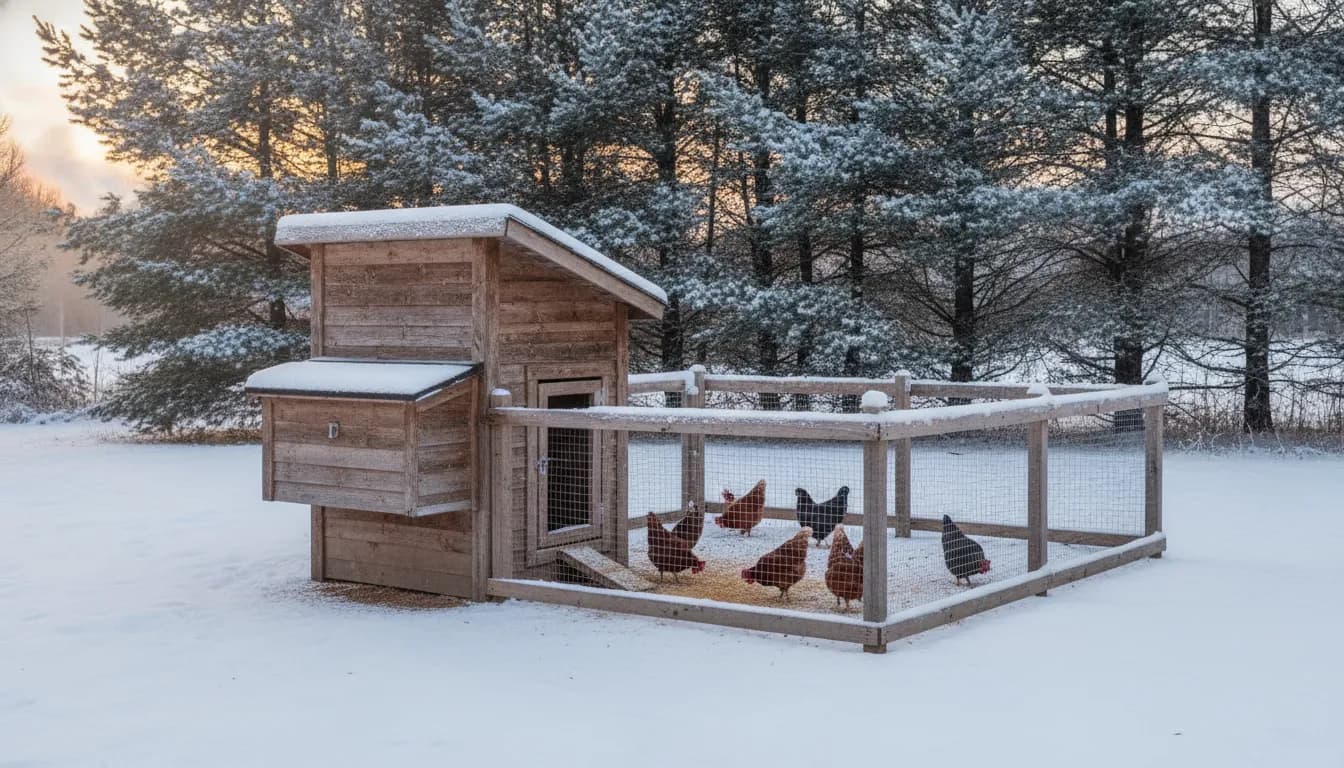
Choosing your first backyard chicken coop is more than picking a cute structure for the corner of the yard. Your hens need enough room to rest, stay dry through Adirondack snow and punishing hard freezes, and stay protected from the predators that wander through Upstate New York neighborhoods.
A well-planned chicken coop matches its interior space and roosting room to the flock, and it uses durable materials suited to cold Upstate New York winters. It also includes ventilation, nesting boxes, elevated wooden roosts, secure doors, and predator protection. Plan the size before you shop, because a coop that feels spacious for a few young birds can quickly feel cramped as the flock grows and winter keeps chickens inside for longer stretches.
This buyer's guide walks first-time owners through practical sizing by flock, the materials that survive hard freezes, and the must-have features that make daily care simpler. By the time you read to the end, you will know what to look for, what to avoid, and how to choose a coop that fits both your birds and your budget.
How Big of a Chicken Coop Do Your Birds Need?
The right size depends on more than the number of birds you bring home. Plan for sleeping space, daytime movement, feeders, nest boxes, and the extra room that helps a flock stay comfortable through an Upstate New York winter. A practical starting point is about 2 to 4 square feet of indoor space per hen. Add extra room in an attached run so the birds are not confined inside when snow, wind, or freezing temperatures limit outdoor time.
Roosting space deserves its own measurement. The University of Minnesota Extension recommends at least 9 inches of roosting space per chicken, with roosts starting at least 12 inches above the floor. That is a minimum, not a reason to pack every bird onto one narrow bar. Chickens need enough room to fluff their feathers, settle without pushing one another off the roost, and retain warmth. Overcrowding can also increase manure buildup and moisture, making winter ventilation more difficult.
Consider your egg goal before choosing a footprint. Cornell Cooperative Extension notes that a first-year hen produces roughly two eggs every three days, or up to about 15 dozen eggs per year. That estimate varies by breed, age, daylight, health, and season, but it gives you a useful way to think about flock size. If your household wants a dozen eggs each week, a small flock may be enough. If you plan to share eggs with neighbors or account for seasonal slowdowns, leave room to add birds later.
Use the square-foot guideline as a planning tool rather than a rigid maximum. A coop that technically fits your current flock may feel crowded once you add a brooder area, storage for bedding, or a temporary separation space for an injured bird. Sketch the placement of roosts, nest boxes, feed, and water before you buy. Clear walking space for cleaning is part of the usable design, especially when winter weather keeps you working inside the coop.
Breed and climate matter, too. Plymouth Rock, Wyandotte, Ameraucana, and Orpington are among the heavier breeds that tend to overwinter well, according to University of Minnesota Extension guidance on cold-weather care. Give a mixed flock a little more room when possible, since larger or more dominant birds may crowd smaller birds away from feed, water, or roosts during winter.
For a compact backyard flock, compare the layout and usable interior space of a custom 8x8 chicken coop before deciding how many birds to keep. In the Adirondack region, that modest amount of extra space can make daily care easier when the run is covered in snow and the flock spends more time indoors.
Why Coop Materials Matter in Upstate New York Winters
In Upstate New York, a chicken coop has to do more than look attractive in October. It must stand through deep snow, sharp wind, repeated freeze-thaw cycles, and wet conditions that can expose weak construction. The materials used in the walls, floor, roof, doors, and roosting areas affect how well the structure protects your flock and how long it remains sound.
Quality wood is a practical choice for a cold-climate chicken coop because it provides a sturdy enclosure and can be sealed carefully around doors, joints, and other openings. Tight construction helps stop uncomfortable drafts, but the coop still needs controlled ventilation so moisture can escape. That balance matters. Excess moisture can create an unhealthy environment, while uncontrolled air leaks can chill birds and undermine the purpose of the enclosure. The University of Minnesota Extension recommends ventilation to control moisture and inspecting for holes and cracks that allow air to flow freely into the coop. Read the cold-weather poultry guidance from the University of Minnesota Extension.
Material selection also matters at the roost. Metal and plastic roosts can retain cold and contribute to frostbite. Wooden 2-by-4 or 2-by-2 boards are a better option, giving birds a stable surface where they can settle together and cover their feet with warm feathers.
A well-built structure should also avoid soggy pressboard in areas exposed to wet snow or condensation. When low-grade panels absorb moisture, they can swell, buckle, and lose their ability to keep the flock protected. Superior materials and tight construction reduce those failure points, but they do not eliminate winter monitoring.
Think of the building as part of your flock's winter care plan. Durable materials, draft control, breathable ventilation, and sound roosts work together to give chickens a dry, secure place to rest when Adirondack weather turns severe.
Wood vs. Metal vs. Plastic: Comparing Chicken Coop Materials
The material you choose affects more than appearance. In an Upstate New York chicken coop, it influences how well the building holds a stable environment, handles snow and moisture, resists predators, and stays manageable through every season. Quality pressure-treated, weatherproofed lumber is the Legacy Structures standard because it offers a practical balance of warmth, strength, and repairability for hard freezes.
| Material | Warmth | Cold and snow durability | Predator resistance | Maintenance |
|---|---|---|---|---|
| Wood | Provides a less conductive, more comfortable enclosure when properly weatherproofed. | Strong construction handles winter conditions well; quality lumber can be repaired or replaced as needed. | Solid walls, secure doors, and reinforced openings provide dependable protection. | Requires periodic sealing, inspection, and attention to moisture or damaged boards. |
| Metal | Conducts cold quickly and can leave birds exposed to a harsher interior surface. | May dent under snow or impact, and cold surfaces can contribute to frostbite concerns. | Strong panels can deter chewing and clawing when seams and doors are securely built. | Generally simple to wash, but dents, rust, and condensation need prompt attention. |
| Plastic or vinyl | Easy to clean, but may feel draftier unless the design is well sealed and ventilated. | Resists moisture, yet some plastics and vinyl can crack in extreme cold. | Can work with sturdy hardware, though flexible panels and weak latches create vulnerabilities. | Low-maintenance and easy to sanitize, with fewer surfaces to repaint or reseal. |
Material alone does not create a winter-ready chicken coop. The interior details matter too. University of Minnesota Extension recommends avoiding metal and plastic roosts because they retain cold and may contribute to frostbite. Wooden 2-by-4 or 2-by-2 boards are a better choice. The same guidance emphasizes that poultry need protection from wind and precipitation, along with ventilation that controls moisture without creating drafts. Read the University of Minnesota Extension's cold-weather poultry guidance before finalizing your design.
For most Upstate New York owners, weatherproofed wood is the strongest all-around choice. It stays warm to the touch, adapts to a practical layout, and stands up to repeated freeze-thaw cycles when built correctly.
Essential Chicken Coop Features to Look For
A well-planned chicken coop should make daily care easier while giving hens a dry, secure place to eat, rest, and lay. Look beyond appearance and inspect the details that affect flock comfort, cleanliness, and winter performance. In Upstate New York, those details matter even more when snow, freezing temperatures, and rapid weather changes put extra pressure on the building.
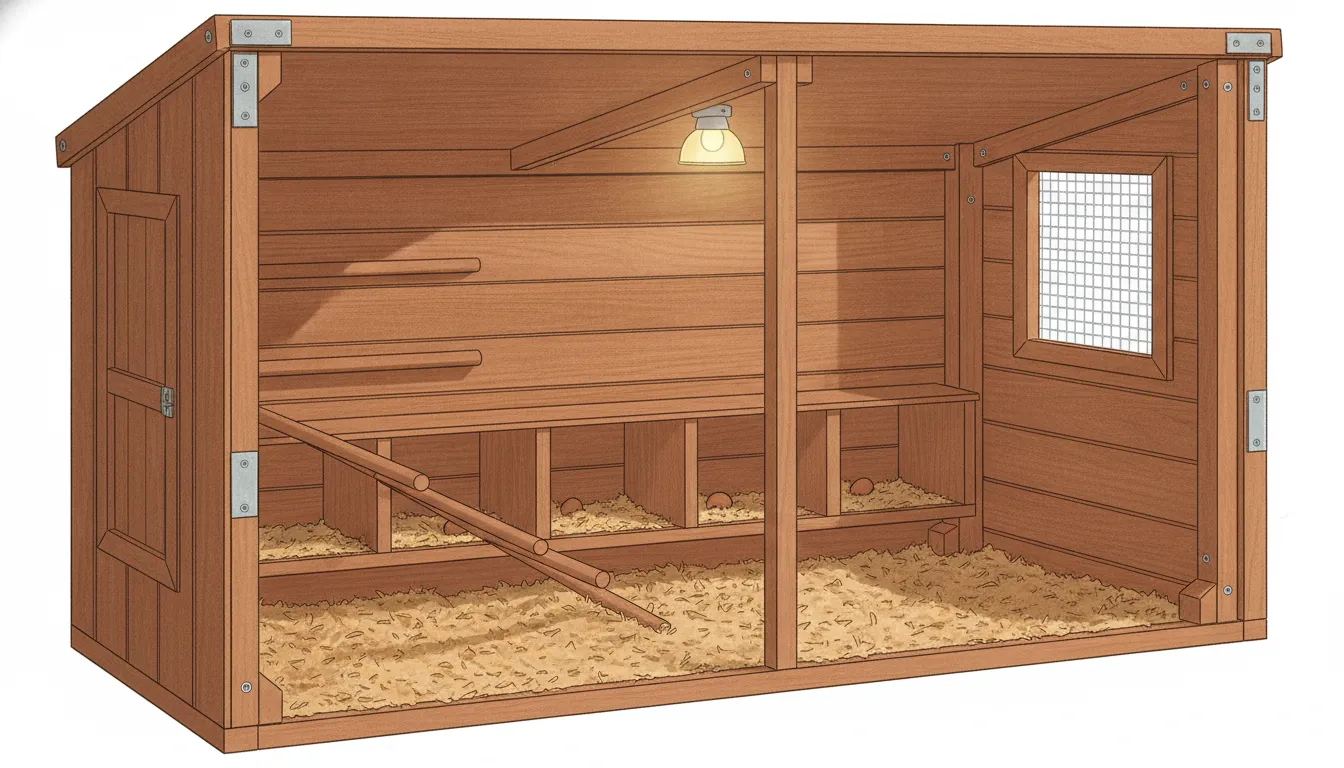
- Well-sized nesting boxes: Plan for boxes about 12 by 12 inches. Larger breeds may need 14 by 14 inch boxes. Allow one box for every three to five hens, with at least two boxes for a small flock.
- Comfortable wooden roosts: Sturdy bars about 1.5 to 2 inches wide give chickens a stable place to perch without sharp edges or excessive wobbling.
- Useful ventilation: Vents should exchange damp air without exposing birds to direct cold drafts.
- Protected openings: Doors, windows, and other openings should close securely and leave no obvious route for predators or blowing precipitation.
- A low-waste feeder: Choose a feeder that limits scratching, spilling, and contamination so feed stays cleaner and your budget goes further.
Nesting boxes sized for your flock
Nesting boxes should be easy for hens to enter, easy for you to clean, and positioned in a calmer part of the coop. Too few boxes can create crowding and encourage hens to compete for the same space. A practical design includes a removable or accessible bedding area and a roof or lip that helps keep bedding in place.
Roosts that support winter comfort
Wood is a sensible choice for roosting bars. The University of Minnesota Extension advises avoiding metal and plastic because those materials can retain cold and contribute to frostbite. It also recommends placing roosts at least 12 inches above the floor and allowing about 9 inches of roosting space per bird. The width matters too: a 1.5 to 2 inch wooden bar lets a hen grip securely while resting with her feet beneath her body.
Ventilation without drafts
Ventilation controls moisture from manure, breathing, and condensation, which helps protect flock health. It should not mean leaving holes or cracks open at bird level. Seal unintended gaps, then use purposeful vents placed where air can leave without blowing directly across the roosts. The University of Minnesota Extension recommends managing manure and providing ventilation to control moisture in cold-weather coops: cold-weather chicken care guidance.
Mastering Predator Protection for Your Backyard Flock
In Upstate New York, a chicken coop has to do more than keep birds contained. It should shield them from wind, precipitation, and predators throughout the year. Raccoons, foxes, coyotes, weasels, opossums, and hawks can all threaten a backyard flock, and each approaches the enclosure differently.
Start with the doors. Choose sturdy doors with locking latches that raccoons cannot easily manipulate. Check the fit around every opening, including corners, roof lines, ventilation areas, and the connection between the coop and run. A small gap may be enough for a weasel, while a loose panel can give larger predators leverage.
Build a run that stops digging and climbing
Chicken wire is designed to contain poultry, not reliably stop determined predators. Use hardware cloth for the run and fasten it securely to the frame. At the perimeter, bury the hardware cloth or extend it outward below ground level to discourage foxes, coyotes, raccoons, and other digging animals. Seal the junction between the run and coop so there is no weak point.
A covered or roofed run also helps protect birds from hawks and other aerial predators. Keep feed stored securely and clean up spills, since food can attract unwanted visitors.
Keep birds off the cold floor
Protection includes winter comfort as well as predator resistance. The University of Minnesota Extension explains that elevated roosts keep chickens off the cold floor, allowing them to rest on their feet and conserve warmth.
Good predator protection is the result of sound construction, secure hardware cloth, covered outdoor space, sealed gaps, and a daily habit of closing and checking the coop:
- Walk the full perimeter and inspect corners, roof lines, and the junction between the coop and run for gaps.
- Confirm every door and window has a locking latch that raccoons cannot manipulate.
- Verify the run is built with hardware cloth that is buried at the perimeter to stop digging predators.
- Check that the run is covered or roofed to protect against hawks and other aerial predators.
- Re-inspect after heavy snow, wind, or a thaw, when shifting ground can reopen weak spots.
Nesting Boxes and Roosting Bars: The Comforts Hens Need
A comfortable chicken coop gives hens separate places to lay eggs and sleep. Those details matter even more during an Upstate New York winter, when birds spend more time inside and cold floors can make ordinary design mistakes harder on the flock.
Size nesting boxes for calm, clean laying
For most hens, plan on nesting boxes about 12 by 12 inches. Larger breeds may be more comfortable in boxes closer to 14 by 14 inches. One box for every three to five hens is a practical starting point, with at least two boxes for a small flock.
Choose wooden roosts that help hens stay warm
Roosting bars should be wide enough for a hen to grip comfortably without wrapping her feet tightly around a narrow dowel. Wooden roosts about 1.5 to 2 inches wide work well. Avoid metal or plastic perches in a cold-climate chicken coop because those materials retain cold and may contribute to frostbite.
Install roosts at least 12 inches above the floor and allow at least 9 inches of roosting space per bird. These are minimum measurements, not a reason to pack birds tightly together.
Raising Chickens in Cold Climates: Winter Care Basics
Upstate New York winters put extra demands on both the flock and the chicken coop. Good winter care is not about sealing birds into a warm, stuffy room. It is about reducing moisture, blocking wind, keeping essentials available, and watching each bird for signs that it is struggling.
Start with ventilation. Moisture from manure, breathing, and spilled water needs a way out, because damp air increases the risk of frostbite and respiratory problems. Fresh air should move above the birds rather than blowing directly onto them. Dry, deep bedding can add insulation, but remove wet areas promptly.
Water is another daily responsibility. Chickens should always have free access to fresh, clean water, even when temperatures are below freezing. Check waterers at least morning and afternoon during cold weather. Watch for huddling, holding one foot against the breast, or puffing up feathers, which can signal cold stress.
Frequently Asked Questions
How much space does each chicken need in a coop?
Plan on about 2 to 4 square feet of indoor space per hen, then allow room for roosts, nest boxes, feed, water, cleaning access, and winter comfort.
What is the best chicken coop material for cold weather?
Quality weatherproofed wood is a practical all-around choice for Upstate New York. It is sturdy, less conductive than metal, repairable, and adaptable to a practical layout.
How many nesting boxes do I need?
One box for every three to five hens is a practical starting point, with at least two boxes for a small flock. Larger breeds may be more comfortable in boxes closer to 14 by 14 inches.
How do I keep predators out of a chicken run?
Use hardware cloth, secure it to the frame, extend it at the perimeter to discourage digging, use raccoon-resistant latches, seal gaps, and cover the run against aerial predators.
Browse ready-to-ship chicken coops at Legacy Structures.
Call 518-544-2889 to talk through sizing and features.
Legacy Structures builds chicken coops with superior materials for the cold Upstate New York climate. Every structure is backed by a 5-year warranty. If you prefer flexible payments, ask about our rent-to-own program with no credit check. Call today or request your free pricing guide to start planning your coop.