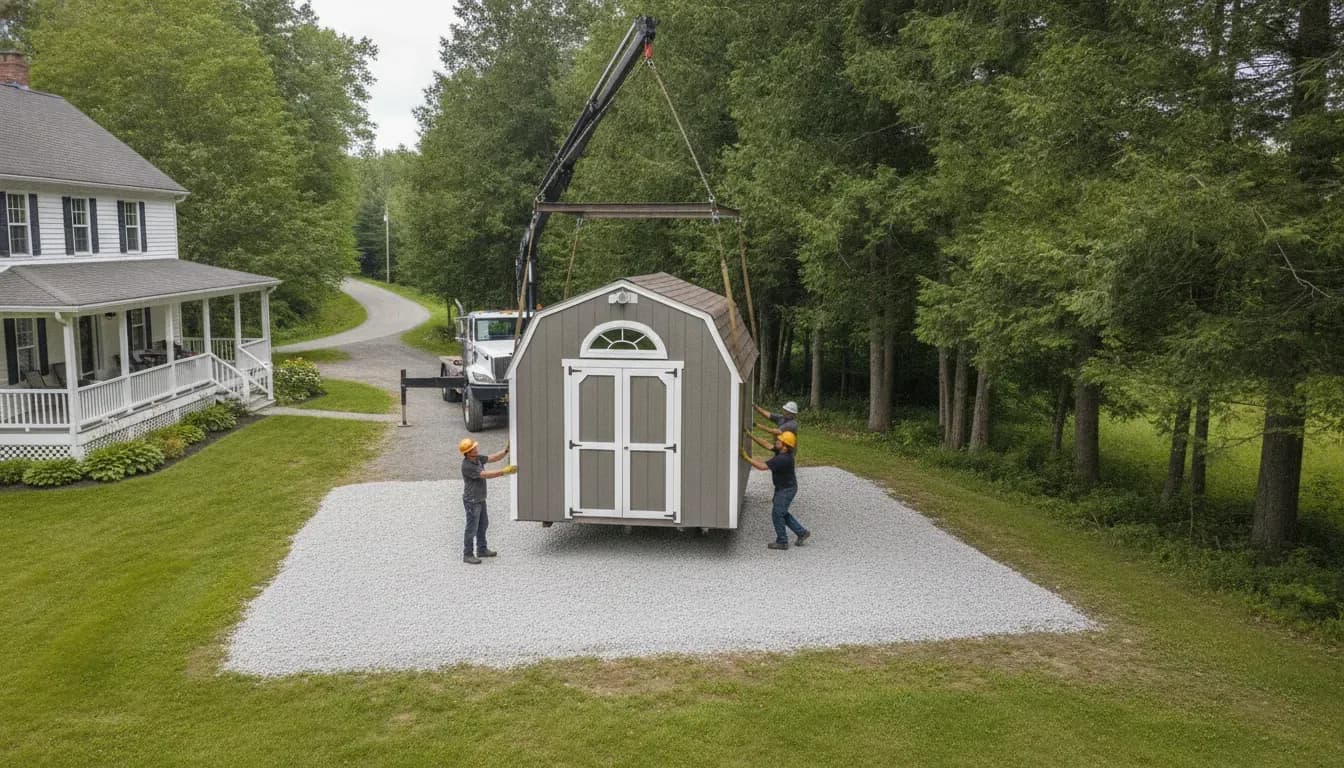
Wondering how does shed delivery and installation work once you place your order? The process is straightforward when the site, access route, and placement plan are confirmed ahead of time. Legacy Structures coordinates the delivery, positions the building, completes installation, and includes up to 2 feet of leveling so your shed is ready for its next chapter.
Talk with Legacy Structures about your shed delivery plan: 518-544-2889
This guide explains what happens before the truck arrives, how the crew evaluates access, what installation day looks like, and what you should check before the crew leaves. If you are still comparing styles, sizes, and site requirements, start with the storage shed buying guide for Hudson Falls homeowners, then use this article to plan the final delivery details.
What Happens Before Delivery Day?
Before delivery day, Legacy Structures confirms the building, destination, access route, placement area, and site readiness with the homeowner. The customer prepares a clear, stable location and checks local requirements, while the delivery team uses those details to plan a safe and efficient placement.
A smooth installation begins with a short conversation, not with the truck pulling into the driveway. Before your scheduled date, confirm:
- Final placement: Identify the exact spot and make sure it leaves enough room to open doors, maintain the building, and move equipment in and out.
- Ground condition: The pad should be firm, well drained, and reasonably level. Gravel, blocks, or another suitable site solution can help keep the building above wet ground and support a stable placement.
- Route clearance: Remove vehicles, toys, branches, brush, and other obstacles from the driveway and the path to the placement area.
- Local requirements: Check with your town or county office about permits, setbacks, and other rules that may apply to your property. Requirements can vary by location and building type.
- Weather and ground conditions: Upstate New York rain, thaw cycles, and hard freezes can change how easily equipment crosses a yard. Tell the team about soft areas or seasonal concerns before delivery.
For a more detailed preparation checklist, read how to prepare your property for shed delivery. That guide focuses on choosing and preparing the site. This article picks up where that planning leaves off, explaining what happens when the delivery and installation crew arrives.
How Does the Shed Delivery Truck Access Your Property?
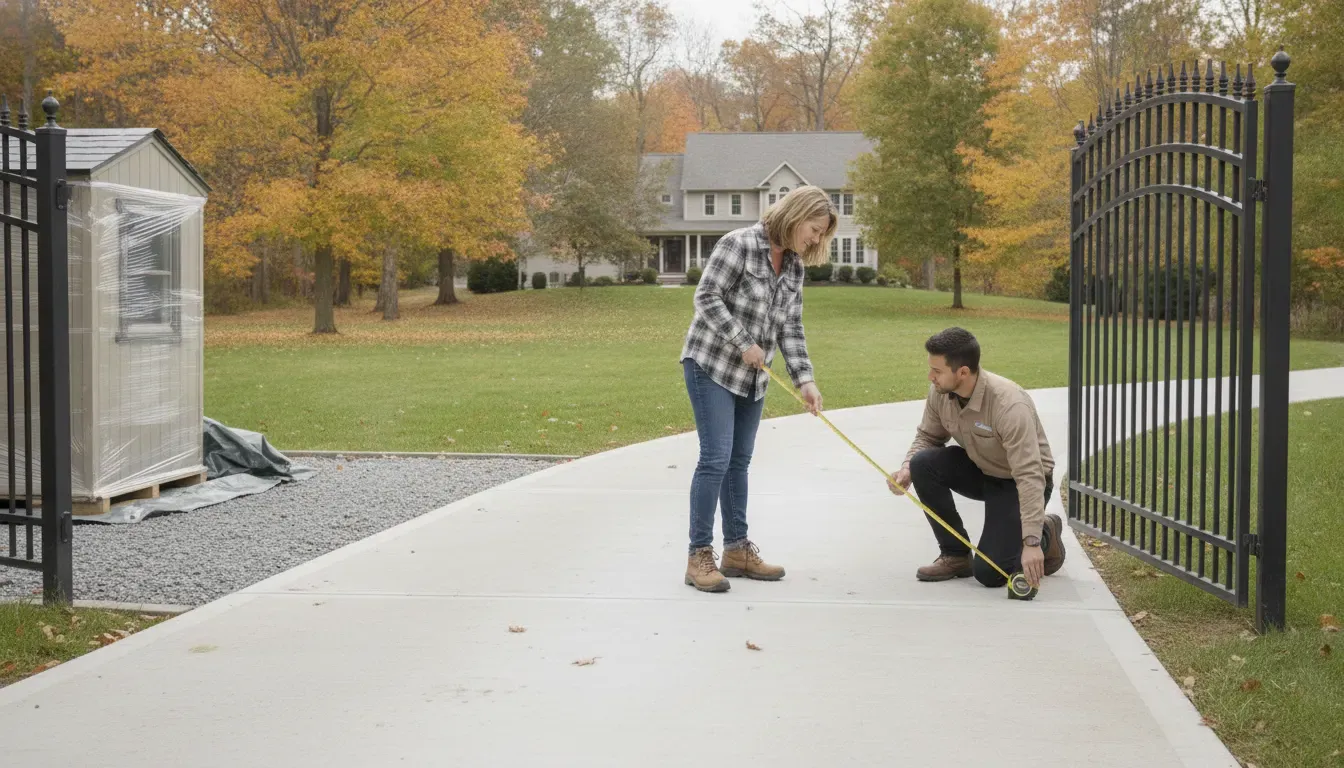
The shed delivery truck accesses your property by following the route confirmed before delivery, with the crew checking width, turns, overhead clearance, surface condition, and the final approach. A route that works for a car may still be difficult for a delivery vehicle, so the narrowest point matters most.
Walk the route from the public road or driveway entrance to the shed pad. Look at more than the straight-line distance. Pay attention to:
- Gate openings and fence posts at the narrowest points
- Sharp turns, steep grades, and areas where a trailer or equipment may need room to maneuver
- Low branches, wires, roof overhangs, and other overhead obstacles
- Soft ground, wet grass, ditches, or surfaces that may become unstable after rain
- Sprinkler lines, invisible fences, septic features, and other items that could be hidden below or beside the route
Do not assume that a route is ready because the truck can reach the driveway. The crew also needs a practical approach to the prepared pad and enough working room to position the building safely. If access is tight, contact Legacy Structures before delivery day. An early conversation gives the team time to discuss the location, the building size, or a different route instead of discovering the problem after equipment arrives.
What Does Shed Installation Look Like Step by Step?
Shed installation usually follows a clear sequence: the crew reviews the site, brings the building to the prepared location, positions it, levels it, completes the installation work, and checks the finished placement. The exact sequence can vary with the building style, site conditions, and access.
- Site review: The crew confirms the planned placement, looks over the pad and access route, and identifies anything that could affect the setup.
- Delivery and positioning: The building is moved into the property and guided toward the agreed location. The crew takes care around the driveway, landscaping, fences, and other property features.
- Initial placement: The shed is set on its prepared support surface and aligned to the planned orientation. Door access and clearance are checked as the building is positioned.
- Leveling: The crew adjusts the building as needed within the included leveling allowance, helping the floor and doors sit correctly on the site.
- Installation and adjustment: The crew completes the required setup for the building, checks doors and other moving parts, and makes appropriate final adjustments.
- Cleanup and walkthrough: The work area is left orderly, and the homeowner can review the placement and ask questions before signing off.
Professional installation is about more than setting a building in the yard. Correct placement supports comfortable everyday use, helps doors operate as intended, and gives the structure a better starting point for the wet seasons, snow, and freeze-thaw cycles common in the Adirondack region.
See Legacy Structures storage sheds and plan your delivery conversationWhat Does 2-Foot Leveling Mean and Why Does It Matter?
Two-foot leveling means Legacy Structures can accommodate up to 2 feet of elevation difference during installation, when the site and building are suitable for that service. Leveling helps the shed sit correctly on its prepared support surface, but it does not replace site preparation or make every steep, wet, or unstable location ready.
That distinction matters. The customer is responsible for providing a suitable site, and the crew works within the conditions and leveling range that the installation allows. A stable pad with good drainage is still the best starting point. If a property has a pronounced slope, soft soil, standing water, or difficult access, discuss it before delivery so expectations are clear.
For portable buildings, the goal is a secure, usable placement that can be serviced or re-sited when needed. The shed should not be described as frozen, buried, or permanently embedded into the ground. A properly prepared gravel pad, pressure-treated support surface, blocks, or another appropriate above-ground solution can provide the base needed for delivery and installation.
How Long Does Shed Installation Take?
Shed installation time depends on the building size, the distance from the road to the placement area, site access, ground conditions, and the amount of leveling needed. A clear, prepared site usually moves faster than a location with tight turns, soft ground, obstacles, or significant elevation changes.
To help the day stay on schedule, have the route and placement area ready before the crew arrives. Keep vehicles and stored items out of the path, unlock gates, secure pets, and make sure the person responsible for the property is available for the final walkthrough. If the weather has changed the site, tell the team rather than waiting until the truck is on the property.
Legacy Structures can give you the most useful timing guidance after reviewing the building and property details. The same delivery plan that works for a compact utility shed may need more coordination for a larger barn, garage, or cabin.
What Should You Do After Your Shed Is Installed?
After installation, walk around the building with the crew and confirm that the placement, orientation, doors, and surrounding area match the plan. This final review gives you a chance to ask about normal care, identify anything that needs adjustment, and understand what to do before the first major rain or snowfall.
Use this simple post-installation checklist:
- Open and close the doors to confirm that they move as expected.
- Walk the perimeter and look for obvious gaps, debris, or damage from the delivery route.
- Confirm that the building is oriented correctly and that the planned access path remains usable.
- Keep water moving away from the building and avoid piling wet leaves, snow, or soil against the walls.
- Store frequently used tools where they can be reached without blocking doors or ventilation.
- Ask the crew about any care or warranty questions before they leave.
Planning for winter is especially important in Upstate New York. Keep the approach clear after heavy snow, watch for runoff during spring thaw, and check the site after periods of wet weather. Small maintenance habits help protect the building and make it easier to use year after year.
Explore Legacy Structures rent-to-own options for portable buildingsFrequently Asked Questions About Shed Delivery and Installation
Does the customer prepare the shed site?
Yes. The customer is responsible for preparing a suitable, accessible placement area, while Legacy Structures provides delivery and installation guidance. Confirm the pad, route, local requirements, and any property-specific concerns before the scheduled date.
Can a shed be delivered through a gate?
A gate may be part of the delivery route if there is enough width and maneuvering room for the building and equipment. Measure the narrowest opening, turns, overhead clearance, and ground conditions, then share those details with the delivery team before installation day.
What if my property is not perfectly level?
Legacy Structures includes up to 2 feet of leveling when the site and building are suitable. A level service does not replace a stable, well-drained pad, so discuss steep slopes, wet ground, and other concerns before delivery.
Is shed delivery and installation included?
Legacy Structures provides professional delivery and installation, with free delivery within the stated 30-mile service area and additional delivery options beyond that area. Confirm the current delivery details for your address when requesting a quote.
What should I ask before scheduling delivery?
Ask where the building will be placed, what the access route requires, how the site should be prepared, what leveling is included, and what local requirements may apply. These questions help you and the delivery team work from the same plan.
When you understand how shed delivery and installation work, delivery day becomes a planned handoff instead of a mystery. Prepare the site, confirm the route, keep communication open, and let the Legacy Structures team guide the building into its final position.
Ready to plan your shed delivery and installation? Call Legacy Structures at 518-544-2889
Have questions about your property or the next step? Legacy Structures can help you talk through the building, access route, site preparation, and delivery plan before you order.