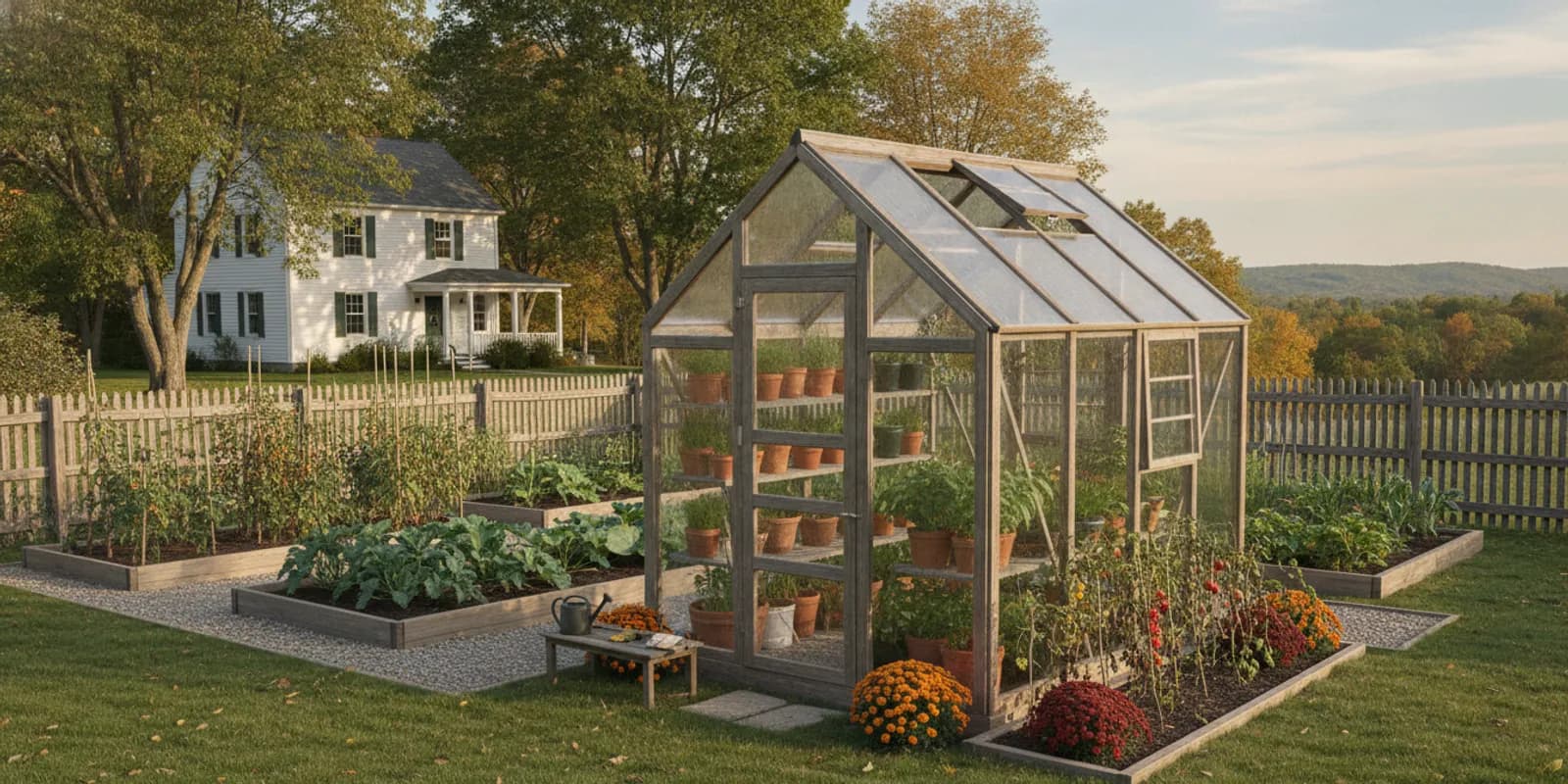
A greenhouse kit can be a good fit when you want to assemble the structure yourself and have the time, tools, and help to do it. A ready-to-use greenhouse may be a better choice when you want to spend less time assembling and more time planning how you will grow. For an Upstate New York property, compare more than the purchase price: look at the work involved, the site, the season you want to use it, and what is included.
Call Legacy Structures at 518-544-2889 to compare greenhouse options
The short answer is to choose a kit only when its assembly requirements suit your skills and schedule, and its specifications match your growing plans. Choose a ready-to-use greenhouse when convenience and a clear view of the finished structure matter more. In either case, confirm the exact model, preparation needs, delivery terms, and any options before you commit.
What is the difference between a greenhouse kit and a ready-to-use greenhouse?
A greenhouse kit is generally sold as components that the buyer assembles. A ready-to-use greenhouse is offered as a completed or substantially assembled structure, though the exact meaning varies by seller. Ask what "ready-to-use" means for the specific model. It may still require site preparation, positioning, or some final work.
The main distinction is who takes responsibility for assembly. With a kit, you take on more of the work and must follow the maker's instructions. With a ready-to-use option, more of the structural work is handled before or during delivery. That difference can affect your calendar, tools, and coordination, but it does not by itself tell you which option will grow better plants. Growing results depend on the structure, the site, the growing plan, and day-to-day care.
Legacy Structures offers greenhouses for customers comparing portable outdoor buildings. Start by reviewing the available greenhouse options, then ask which setup and specifications apply to the particular building you are considering.
Which option fits your time, skills, and budget?
Price is important, but the displayed price is only one part of the decision. A kit may have a lower initial price, while assembly adds time and may require tools, extra hands, or paid help. A ready-to-use structure can reduce assembly work, but you should confirm exactly what the quoted amount covers. Do not assume that a product description includes every delivery, placement, or site-preparation task.
Think about what your own time is worth. If you enjoy building projects and can work through detailed instructions, a kit may be satisfying. If you have a narrow planting window or would rather avoid a multi-step assembly project, paying for a more finished option may be worthwhile. Be honest about the available help, too. A large structure can be difficult to handle alone, even when the instructions appear straightforward.
- Choose a kit when: you are comfortable assembling a structure, can set aside the necessary time, and have reviewed the instructions and included components.
- Consider a ready-to-use option when: you want less assembly work, prefer to see the finished design before buying, or need to coordinate delivery and placement with fewer separate tasks.
- Pause and ask questions when: the listing is unclear about what arrives assembled, what work remains, or what you need to supply.
Make a simple total-cost worksheet before comparing two products. Include the quoted structure price, delivery or placement charges, any assembly help, tools or materials you still need, and the base or site work recommended by the seller. Mark estimates as estimates until confirmed. A lower advertised price may not be the lower-cost choice once you account for the work and materials you will provide.
How do the options compare side by side?
Use this table as a starting point, not as a promise about every product. Kit and ready-to-use labels are not standardized across sellers. Ask for written details about the particular greenhouse and your property.
| What to compare | Greenhouse kit | Ready-to-use greenhouse |
|---|---|---|
| Assembly | Buyer assembles the structure according to the supplied instructions; confirm what is included. | Some or much of the assembly may be complete; ask what work remains at delivery. |
| Your time | Plan time to check parts, follow instructions, assemble, and address any missing or unclear items. | Less assembly may be required, but site preparation and final setup can still take planning. |
| Tools and help | Check the maker's tool list and the number of people recommended for assembly. | Ask whether the seller handles placement and whether you need to provide help or equipment. |
| Cost to compare | Structure price plus delivery, assembly materials, tools, and any help you hire. | Quoted structure and delivery terms, plus any site work or final tasks not included. |
| Customization | Confirm which sizes, layouts, and options are available before ordering. | Ask whether the displayed design can be customized or whether it is offered as shown. |
| Best first question | "What exactly is in the package, and what must I do to assemble it?" | "What will be finished when it arrives, and what remains for me to do?" |
What should you check about the site before ordering?
A greenhouse needs a suitable place before it needs a growing plan. Walk the property and consider where the structure can sit without interfering with paths, doors, driveways, utilities, or the way you use the yard. Think through how you will reach it in wet or snowy weather, carry soil and supplies, and move plants in and out.
Look at sun and shade across the day and through the growing season. Nearby trees, buildings, and fences can affect the light a greenhouse receives. Consider water access and how you will manage runoff. Also check whether the chosen spot leaves enough room to open doors and work around the structure. A site that looks spacious from the house may feel tight once you account for access and maintenance.
Ask the seller what kind of base or surface the specific greenhouse needs and what preparation is your responsibility. Depending on the product and site, a level, firm surface such as a suitable gravel pad, blocks, or a deck may be considered; follow the manufacturer's requirements rather than assuming one approach fits all. A portable structure should sit on or above the ground so it can be moved or re-sited. Do not plan to bury or freeze its base into the ground.
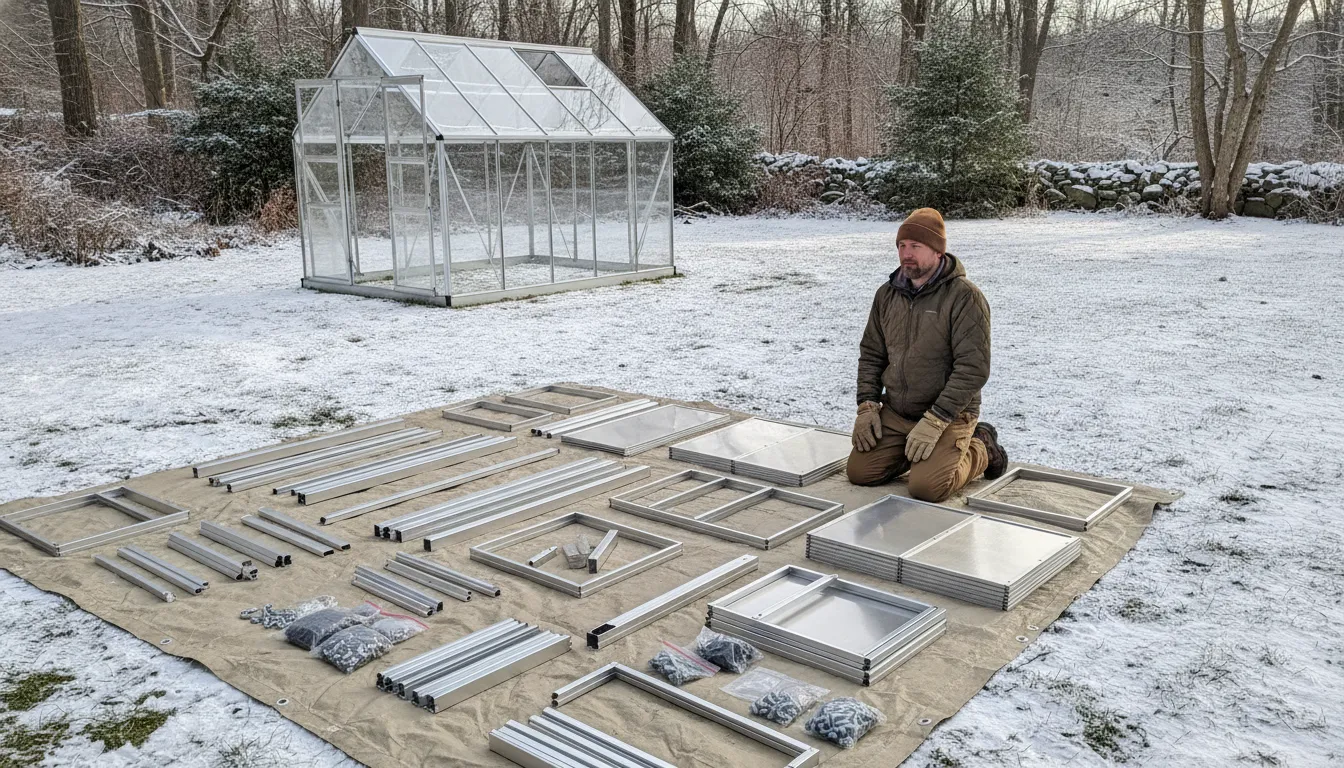
For a kit, site preparation and assembly are separate tasks. You may need to prepare the location before opening the package, then keep the parts organized as you build. For a ready-to-use building, confirm the access route and placement area before delivery. Ask whether gates, turns, slopes, overhead branches, or other obstacles could affect moving the structure to the desired spot.
How can you judge the assembly work before buying a kit?
Look beyond the phrase "easy assembly." Read the instructions or ask for them before ordering. Check whether the steps are clearly shown, whether parts are labeled, and whether the seller can explain the sequence. Note what the instructions say about organizing pieces, preparing the work area, and checking measurements. If the directions are not available until after purchase, ask what support is available if you encounter a question.
Estimate the project in stages rather than picturing one uninterrupted afternoon. You may need time to receive and inspect the package, sort the components, prepare the site, assemble the frame, fit the covering, and check the finished structure. Weather, daylight, and other commitments can stretch the schedule. A ready-to-use greenhouse reduces some of those assembly steps, but you should still ask what tasks remain and whether they must be completed immediately after delivery.
Think about where you will work while assembling. You need room to lay out parts without blocking a driveway or damaging plants, and you may need a dry place to keep components organized. If you have limited space or cannot set aside time for a long project, that practical constraint can matter more than a small difference in the advertised price. Write down the work you are willing to take on and use it as a requirement when comparing offers.
What greenhouse features matter for your growing plans?
Start with what you intend to grow. A greenhouse for starting seedlings has different day-to-day demands from one used to keep potted plants, grow vegetables, or extend a harvest. Write down the plants, approximate quantity, and growing season you have in mind. Then compare the usable floor area, door access, ventilation options, and interior space for benches or containers.
Ask for the structure's dimensions and clarify whether they describe the outside or usable interior. A floor plan can help you see whether you can reach plants without stepping around crowded pots. Consider how you will move a wheelbarrow, trays, watering equipment, or bags of growing medium through the entrance. A greenhouse that fits the yard but not the routine can become frustrating quickly.
Ask the seller or manufacturer about the covering material, frame, ventilation, and care instructions for the exact model. Do not rely on a general description of a "greenhouse kit" to answer questions about strength, insulation, light transmission, or weather performance. Product details differ, and the seller should be able to identify what is included and what is optional.
Ventilation deserves a specific conversation. Ask how air moves through the selected greenhouse and what openings or ventilation features are included. Consider how you will monitor temperature and humidity and what steps you will take on warm, sunny days. A greenhouse can heat up quickly; the structure alone does not regulate growing conditions. Plan for active management that suits the plants you want to grow.
For a commercial or crop-focused project, assess the growing method and operating costs as well as the building. University of Georgia Cooperative Extension explains that prefabricated and build-your-own hobby greenhouses can differ in materials, assembly, and climate-control needs. Use that broader guidance as a reminder to compare the structure and operating plan, not just the package price.
Read the University of Georgia Cooperative Extension hobby greenhouse guide.
How should you plan for Upstate New York weather?
Cold weather changes how you use a greenhouse, even if it does not change the basic comparison between kit and ready-to-use. Decide whether you want a seasonal structure for spring and summer, a place to extend the growing season, or a space you hope to use through winter. These goals can call for different equipment, maintenance, and attention. A greenhouse does not automatically keep plants warm through cold spells.
Before buying, ask what weather conditions the specific model is designed for and what the maker recommends for snow, wind, ventilation, and seasonal care. Request written product information rather than assuming that a neighboring greenhouse or a similar-looking model has the same specifications. Ask what actions are required when severe weather is forecast and whether the covering or other parts need seasonal attention.
Think about access in every season. A location that is easy to reach in June may be harder to reach when snow is piled nearby. Leave room to open the entrance and clear the path. Plan where snow will go so it does not block access or create a drainage problem as it melts. These practical details can make routine care easier.
Also be realistic about heating. If winter growing is part of your plan, ask a qualified supplier about the structure's suitability, ventilation, and any equipment you intend to use. Consider how you will monitor conditions and manage moisture. Do not assume that a greenhouse kit comes with a heater, insulation, or an energy plan unless the listing says so.
What should you confirm about delivery and assembly?
Delivery is part of the buying decision, not an afterthought. Confirm the delivery area, any fees, what the delivery team will do, and what must be ready before arrival. For a greenhouse kit, ask whether the shipment arrives in one package or several and how you should check it for damage or missing components. For a more assembled structure, confirm the route to the site and what equipment or clearance is needed.
Clarify the division of work in plain language. Who places the structure? Who assembles it? Who checks that doors and other moving parts operate as intended? What preparation must be complete before the scheduled date? Ask what happens if the access route or site is not ready. Written answers make it easier to compare offers and avoid surprises.
Legacy Structures serves customers from Hudson Falls and provides free delivery within a 30-mile radius, with delivery available farther away for a fee. Confirm the current delivery details and whether the location and specific greenhouse qualify. You can review the current building inventory or learn about Legacy Structures before starting a conversation.
What questions should you ask before choosing?
Bring a short, written checklist to your conversation. It helps you compare like with like rather than trying to remember product details later. These questions work for both a greenhouse kit and a ready-to-use model:
- What are the exact outside and usable interior dimensions?
- What frame, covering, doors, and ventilation features are included?
- What is optional, and how much does each option add?
- For a kit, what tools, people, and assembly steps are required?
- For a ready-to-use greenhouse, what work is complete and what remains?
- What surface or base does this model require, and who prepares it?
- What are the delivery terms, and are there charges for my location?
- What weather and seasonal-care instructions apply to this model?
- What warranty applies, and what does it cover?
- Can I see the exact model or a detailed specification sheet before deciding?
For a structured building purchase, ask for the full cash price and any available payment terms in writing. Legacy Structures has a rent-to-own program, but terms and total costs are different from a cash purchase. Review the details on the rent-to-own information page and ask questions before choosing a payment option. Do not compare monthly payments alone; compare the full amount and the terms that apply.
How do you make the final choice?
Use a simple decision process. First, describe your growing goal and season. Second, identify a practical location and ask what base preparation the particular model needs. Third, list the required assembly or final setup work. Fourth, compare the full expected cost, including delivery and any work you will arrange. Finally, check the product specifications and care requirements for the exact greenhouse.
If the kit wins on price but you cannot realistically complete the assembly, it may not be the right value for you. If the ready-to-use option saves time but its included work is unclear, get those details before you proceed. When two options seem close, compare the parts you will live with every day: access, usable space, ventilation, and how much effort it takes to maintain the growing area.
There is no single best greenhouse for every property. The right choice is the one whose size, features, setup demands, and care requirements fit your plans and your available time. Keep the product specifications and delivery answers together so you can make a clear comparison.
Call Legacy Structures at 518-544-2889 to discuss greenhouse delivery and setup
Frequently asked questions
Is a greenhouse kit cheaper than a ready-to-use greenhouse?
It may have a lower listed price, but compare the full cost. Include delivery, tools or materials, assembly help, and any work required to prepare the site. Ask what the ready-to-use price includes before comparing totals.
Can I assemble a greenhouse kit by myself?
That depends on the model, its instructions, and the tools and help it requires. Review the assembly guide before ordering. If it recommends multiple people or special equipment, plan for that rather than assuming the job can be done alone.
Does a ready-to-use greenhouse require no preparation?
Not necessarily. The site may still need to be accessible, level, and prepared according to the product requirements. Confirm what work is finished before delivery and what you must arrange at the property.
Can a greenhouse kit be used in winter in Upstate New York?
Do not assume that every model is suitable for winter growing. Ask about the specific structure's weather guidance, ventilation, seasonal care, and any equipment needed for your plans. Also consider how you will monitor and manage growing conditions.
What should I do first if I am not sure which greenhouse fits?
Write down what you want to grow, when you want to grow it, the available site dimensions, and your assembly preferences. Then compare models against those needs and ask the seller to clarify any missing specifications.
A little preparation makes it easier to choose a greenhouse that fits your property and your routine. Compare the exact setup requirements before you buy, and ask for help when a product detail or delivery term is unclear.
Call Legacy Structures at 518-544-2889 for help choosing your greenhouse.