
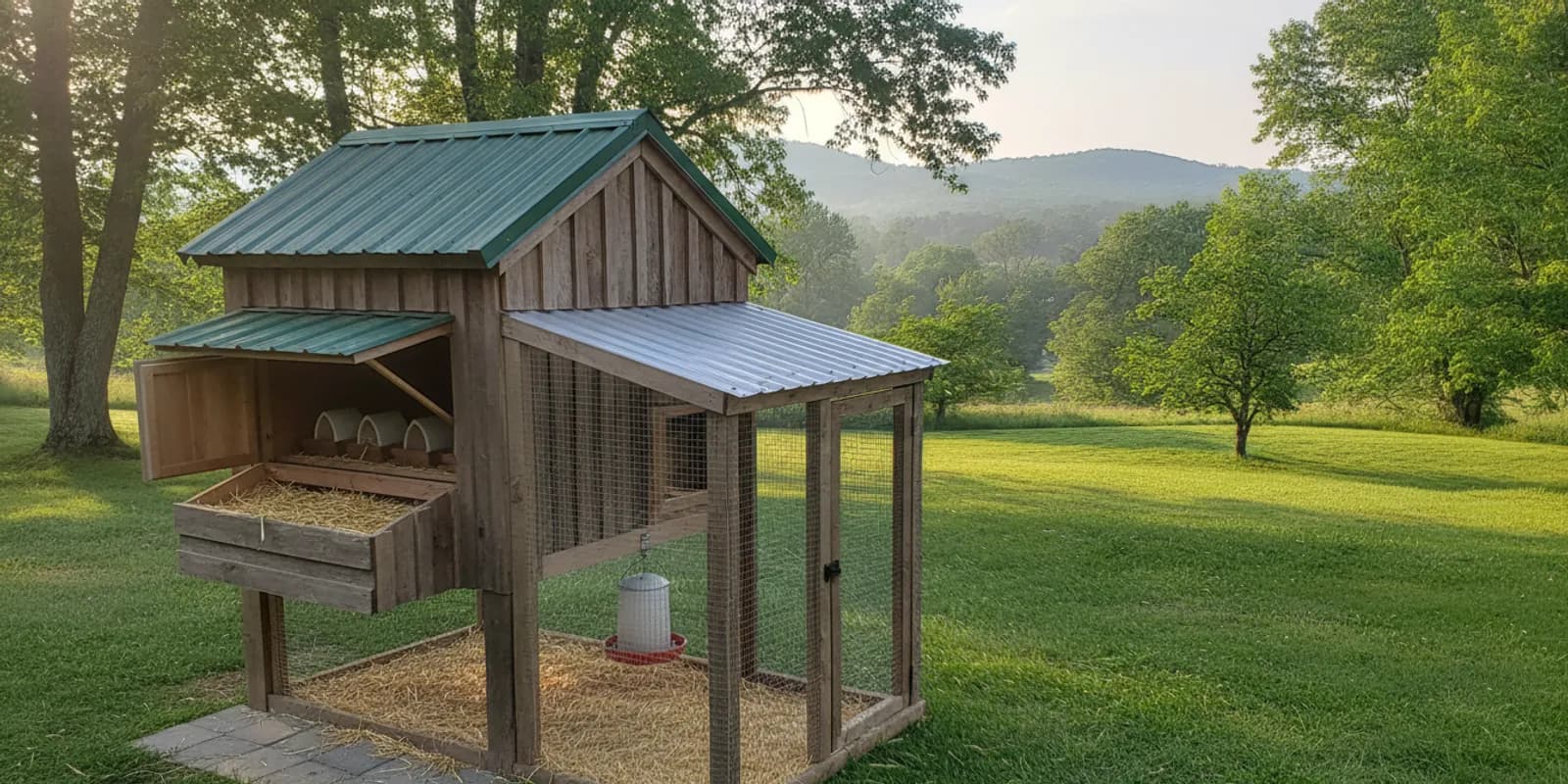
Good chicken coop ideas do more than make a backyard look charming. The right layout helps you gather eggs, refresh water, clean bedding, and close the flock in at night without turning routine care into a chore. If you are comparing a new coop for a small flock or planning a larger setup, start with how you will use it every day.
Talk with us about your coop plans
What makes a chicken coop idea practical?
A coop should fit the birds, the keeper, and the site. An attractive design can still be difficult to manage if the nest boxes are hard to reach, the door is awkward, or there is nowhere to keep feed and tools. Think through your routine before settling on a style.
Picture a normal morning. You enter the run, check water and feed, collect eggs, and look over the birds. Later, you may remove soiled bedding or close the coop for the night. Each step should have a clear place and a simple route. If two people will help, make sure the access points work for both.
- Plan for the flock you have. Consider how many birds you expect to keep, their size, and whether the flock may grow. Avoid choosing a layout based only on its exterior dimensions; usable interior floor area and the arrangement of fixtures matter.
- Make routine tasks reachable. Locate nest boxes and clean-out access where you can reach them comfortably. A walk-in layout can be easier for frequent cleaning and inspection, while a smaller coop may suit a compact flock and site.
- Keep feed and equipment organized. A dedicated shelf, bin, or nearby weather-protected storage spot can reduce clutter. Store feed in a secure container and keep tools out of the birds’ way.
- Account for weather. The coop needs airflow without a direct draft across the birds’ roosting area. Rain, snow, and seasonal mud also affect where you place entrances and how you move around the run.
- Make it straightforward to secure. Check that doors close firmly and that latches are manageable for you. The coop should be closed at night, with the flock safely inside.
Oregon State University Extension’s backyard chicken coop design guide recommends a design that closes the flock inside at night and is easy to maintain with regular cleaning. Those are useful tests for any style, whether you build a small coop or shop for a ready-made one.
Which coop layout fits your routine?
There is no single best arrangement for every flock. Compare a few common concepts by thinking about access, cleaning, and the space available on your property. The ideas below describe planning approaches, not a substitute for checking the building’s dimensions and features before purchase.
| Coop idea | Works well when | Potential advantage | What to check |
|---|---|---|---|
| Compact coop with attached run | You have a small flock and a limited footprint | Roosting, nesting, and outdoor access stay in one contained setup | Usable interior room, run access, and whether you can reach the areas that need cleaning |
| Walk-in coop | You want to step inside for regular care | Direct access can make inspection and bedding changes easier | Door clearance, headroom, path to nest boxes, and space around the structure |
| Coop with exterior-access nest boxes | You want to collect eggs without entering the main area each time | Egg collection can be quick and the box lids can be reached from outside | Secure closures, weather protection, and easy access for cleaning the boxes |
| Coop with a dedicated storage zone | You keep supplies close to the flock | Feed containers and tools can stay organized near the work area | Separation from birds, dry storage, and secure containers that discourage pests |
| Roomier coop with a planned run | You have more birds or want flexibility in how you arrange the space | More room can make it easier to separate activity zones and move around | Site dimensions, access for maintenance, drainage, and your local requirements |
Use this comparison to make a shortlist, then measure the site and the building. A photo can make a coop look spacious while hiding a narrow walkway or a hard-to-reach corner. Ask for dimensions and inspect how the doors, nest boxes, and clean-out areas work in practice.
Try a daily-task walkthrough before choosing
Take your shortlist and walk through an ordinary day in your mind, or sketch it on paper. Begin at the place where you will approach the coop. Trace the route to the run gate, waterer, feeder, nest boxes, and storage. Then reverse the trip while carrying a full water container or a bucket of used bedding. If the route requires moving a feeder every time you open a panel, that is a practical drawback worth weighing.
Also test the less frequent jobs. Can you inspect the corners, reach beneath the roosts, replace bedding, and check the roof or exterior after a storm? Will an access panel remain clear when the run is in use? Looking at the coop as a series of tasks helps reveal layout problems that a front-facing photograph cannot show.
For a household with more than one keeper, ask each person to consider the same route. One person may be comfortable reaching an elevated nest box, while another may prefer a door that allows direct entry. A workable design should not depend on one person being available for every routine chore.
How can you make daily care easier?
Small choices in the layout have a noticeable effect on how a coop feels to use. A useful setup separates the jobs that happen often from those that happen less often. Put egg collection and water checks on the easiest route. Keep the bedding, scraper, and other cleaning supplies accessible, but not where the birds can scatter or soil them.
Arrange clear work zones
Think of the coop as a few simple zones: roosting, nesting, feeding and watering, and storage. Give each zone a purpose. Avoid filling every open area with equipment. You need enough room to open doors fully, move a container, and inspect the birds and the structure.
Place feeders and waterers where you can refill and clean them without stepping over birds or moving bulky items. If you are choosing between two layouts, imagine carrying a full waterer along the route. Then imagine removing used bedding. The easier path is often the better design choice.
Pay attention to how these zones affect one another. A high-traffic path to the door should not force you through the nesting area, and storage should not block access to ventilation openings. If you use a separate run, check that the route between the coop and run is easy to monitor and that you can reach the gate without squeezing between equipment and a wall.
Make cleaning part of the design
Cleaning is easier when surfaces and corners are reachable. Consider how you will remove bedding, where it will go, and whether you can get to the area beneath roosts. A wide access door or a clean-out opening may help, but only if it can be opened safely and does not make the coop difficult to secure afterward.
Before selecting a design, decide what you will carry and where you will set it down. If you use a bucket, leave room to place it near the clean-out opening. If bedding is brought in by bag, plan a route that does not require walking through the birds’ busiest area. These small logistics can matter on a rainy day, when you want to finish the task without dragging supplies through mud.
Plan a routine you can maintain. Check the flock and water daily, gather eggs as needed, and clean the coop on a schedule that suits the number of birds and conditions. The Extension guide notes weekly cleaning as a useful maintenance consideration for a well-designed coop. The right frequency depends on your setup and how quickly bedding becomes soiled or damp.
Keep storage tidy and dry
Feed, bedding, and tools can take up more space than expected. A storage nook or a nearby weather-protected cabinet can keep your work area organized. Use containers with secure lids and store supplies in a way that keeps them dry and prevents chickens from getting into them. Do not let storage block ventilation or access to the flock.
Consider the size of the supplies you actually use. A small shelf may be enough for a scoop and gloves, but it will not hold a full bag of feed or several bedding bales. If those items stay outside the coop, choose a nearby spot that is easy to reach in bad weather and does not obstruct the approach to doors or the run. Keeping a short list of what must be stored on-site can prevent a storage feature from taking space away from the birds.
For other outdoor structures that may help organize a property, you can compare storage sheds in Washington County or browse the broader building inventory. Keep feed storage appropriate for the contents and separate from the birds’ living space.
What should you consider in Upstate New York?
In the Hudson Falls area, a coop has to work through changing seasons. Snow, rain, freeze-thaw cycles, and muddy periods can affect the route to the coop as much as the building itself. Think about where water flows, where snow may collect, and how you will reach the door after a storm.
Choose a location that is convenient to check and maintain. Consider access from the house, safe movement around the run, and the way the ground drains after rain or snowmelt. Keep the structure on a stable, prepared surface above the ground, such as a suitable gravel pad or other level support. Do not plan to bury or embed the building base. Ask about site preparation and local requirements before delivery.
Before settling on a spot, observe the area after a period of rain if possible. Look for places where water gathers or where a regular footpath becomes soft. A coop door may be easy to open in dry weather but frustrating if you have to cross a muddy low spot each morning. Think about how snow will be cleared, where you can place it, and whether a shovel can reach the path without damaging the run.
Ventilation matters in every season. The goal is fresh air without a direct draft on birds at their roosts. A coop that is too closed up can hold moisture, while poorly placed openings may expose the flock to wind and precipitation. Look at where vents are located and ask how they can be managed in changing weather.
Do not judge ventilation only by the number of openings. Consider where air enters and exits in relation to the roosts, doors, and prevailing exposure at the site. In cold weather, a draft blowing directly across a roost is different from fresh air moving above the birds. Ask how openings are intended to function and how to keep them from being blocked by stored items or bedding.
Snow and rain also make door placement important. Choose an approach that remains usable when the ground is wet or snow-covered. Keep a clear path for daily checks, and avoid positioning access where drifting snow or runoff is likely to make opening and closing difficult. For cold-weather planning, consider how the coop’s doors and vents function together rather than focusing on insulation alone.
Plan for the days when maintenance has to happen in poor weather, not only the sunny days when you first look at the site. A clear route and accessible latches make it more likely that you can complete routine checks consistently. If a door opens toward an area that is likely to be obstructed, ask whether the layout can be oriented differently. Check site access as well: the delivery route, turning area, and final placement spot should all be considered before you commit.
If you want to compare available coop styles and configurations, start with the chicken coops available from Legacy Structures. Ask which features are included in a specific building and which details should be confirmed for your site.
How do you choose a coop size and feature set?
Begin with the birds and the site, then compare specific models. Do not rely on a general rule of thumb without checking the actual usable space, your flock’s needs, and local guidance. More birds may mean more work, equipment, and space for movement. A coop that seems large enough on paper can feel cramped if feeders, nest boxes, and roosts occupy most of the interior.
- Write down the flock plan. Note your current flock size and any realistic plans to add birds. If you expect a change, ask how the candidate coop would accommodate it.
- Measure the available site. Include room for the coop, run, door swing, cleaning access, and a clear route for people. Account for slopes and areas that become wet.
- List the daily tasks. Include feeding, watering, egg collection, closing up, and cleaning. Mark the doors or access panels you would use for each task.
- Prioritize features. Decide which details are essential, such as walk-in access or exterior nest-box access, and which would simply be nice to have.
- Compare actual buildings. Review measurements, layout, included features, delivery and placement questions, and warranty information. Ask about anything not stated clearly.
Separate must-haves from nice-to-haves
A useful way to compare options is to make two lists. Put non-negotiable needs on the first: a secure nighttime closure, a location for the flock to roost and nest, enough usable room for the planned flock, and access that lets you clean and inspect the coop. Put convenience features on the second, such as a particular nest-box arrangement, extra storage, or a walk-in design. This prevents a long feature list from distracting you from the jobs the building has to support.
Then test each candidate against the same questions. Can you reach every routine access point? Is there a clear path to the run? Can doors and lids open without hitting a wall, fence, or stored item? Is ventilation located sensibly for the planned roosts? Consistent comparisons are more reliable than choosing from a single appealing photo or feature.
Think about change, but avoid buying for an imaginary future flock without checking the trade-offs. A larger building may take up more site area and require a longer path to clean. A compact layout may be easier to place but leave little room for equipment. Write down what is likely to change in the next few years, such as adding birds or changing who performs daily care, and compare options against those realistic plans.
Legacy Structures offers a range of portable buildings, including chicken coops, and provides planning guidance for customers. You can also review more about Legacy Structures before you reach out with questions about a particular option.
What should you ask before buying or building?
A short conversation before committing can clarify whether a design fits your flock and site. Bring measurements or a simple sketch, and ask for specifics rather than assuming a feature is included.
- What are the outside dimensions and the usable interior dimensions?
- Where are the roosts, nest boxes, doors, and ventilation openings located?
- Can I reach the nest boxes and areas that need routine cleaning?
- How does the coop close securely at night?
- What site surface and access conditions should be ready before delivery?
- What delivery, placement, and installation details apply to my address?
- What is included, and what should I provide separately, such as a run, feeder, or waterer?
- What maintenance and warranty information should I review?
You can make the conversation more useful by sharing the measurements you gathered and explaining your daily routine. If a particular feature is important, ask to see where it is located or how it opens. If you cannot inspect the building in person, request clear measurements and photographs of the interior, access points, and relevant details. Confirm whether the run, feeders, waterers, and storage shown in an image are part of the specific coop or separate items.
Ask about site preparation early rather than after choosing a model. Describe the route to the placement area, any tight turns, the ground surface, and seasonal access concerns. Requirements can depend on the building, site, and delivery conditions, so get the details for your address. Also confirm local rules that may apply to placement or keeping poultry; do not assume a design choice overrides them.
These questions help you compare the whole setup, not just the exterior appearance. A coop is part of a daily routine, so a design that is simple to inspect and maintain can be more useful than one with extra decorative details.
Common planning mistakes to avoid
Choosing by outside dimensions alone. Exterior measurements do not tell you how much usable floor area remains after fixtures are in place. Ask for an interior view or layout and identify where birds, people, and equipment will fit.
Forgetting access clearance. Doors and lids need room to open, and you need room to stand while using them. Include a practical working area around the coop in your site measurements, not just the footprint of the building.
Placing the coop where it is hard to reach. A quiet corner may look attractive, but a long or muddy route can make daily checks less convenient. Balance privacy and appearance with the need to get to the building throughout the year.
Assuming every pictured feature is included. Photos may show equipment or run components that are not part of the exact building. Confirm what comes with the coop and what you need to supply separately.
Overlooking future maintenance. A coop needs to be inspected and cleaned, not just assembled and filled. Check how you will reach corners, replace bedding, keep openings clear, and secure the building at night.
Focusing on cold-weather insulation alone. Winter readiness also involves airflow, door operation, snow clearance, and the route you use to reach the flock. Assess those elements together instead of expecting one feature to solve every seasonal challenge.
Skipping a site and rules check. Before purchase, confirm the delivery path, prepared placement area, and local requirements. Getting those answers early can prevent a suitable-looking coop from becoming a poor fit for the property.
Call Legacy Structures at 518-544-2889 to discuss your coop plans.
Ask about chicken coop options
Frequently asked questions
What is the most practical chicken coop layout?
The most practical layout is the one that fits your flock and lets you complete routine care safely. For many keepers, reachable nest boxes, a secure night closure, usable cleaning access, and sensible ventilation matter more than decorative features. Compare actual dimensions and access points before choosing.
Should I choose a walk-in coop?
A walk-in coop can make inspection, cleaning, and arranging equipment more convenient, especially when you want to step inside for regular care. It also needs enough site space and a door route that works in local weather. Check whether the interior layout still leaves room to move around fixtures.
How can I keep a coop manageable during winter?
Plan for reliable access, secure closures, and ventilation that provides fresh air without a direct draft over roosting birds. Consider snow accumulation and runoff around doors, and keep a route open for daily checks. Ask about the particular coop’s openings and materials rather than assuming a generic design detail applies.
What should I do to prepare the site?
Measure the space, consider drainage and access, and prepare a stable, level surface that supports the building above ground. Confirm local requirements and delivery access before ordering. Site needs can vary, so discuss the location and surface with the building provider.
How often should a chicken coop be cleaned?
Set a regular schedule and adjust it to the number of birds, bedding, and how quickly the coop becomes damp or soiled. Check the flock and water routinely, and remove dirty bedding as needed. A design that makes cleaning easy can help you keep up with the work.
Choose chicken coop ideas by starting with your daily routine, then checking the flock’s space, access, weather exposure, and site preparation. Comparing those details before you buy can help you find a coop that is easier to care for over time.