When you hear the word "shed," you might picture a simple place to store lawnmowers and garden tools. A backyard office shed is an entirely different concept. It’s a fully finished, four-season structure designed for daily use, complete with insulation, electrical wiring, and interior finishes that make it feel like a true extension of your home. This isn't about storage; it's about creating a comfortable, climate-controlled environment where you can be productive year-round. Understanding this distinction is key to making the right investment. To get a high-quality workspace that lasts, you need to work with a specialized backyard office shed builder who understands how to create a functional, beautiful, and durable structure designed for people, not just for tools.
Key Takeaways
- Plan Before You Build: Get the practical steps out of the way first by checking local permit rules and setting a realistic budget. Planning for essentials like electrical work and potential site prep from the start makes the entire process much smoother.
- Choose Your Builder Wisely: The right builder makes all the difference, so look for a local company with great reviews, transparent quotes, and a strong warranty. This partnership is your best guarantee for a high-quality shed that stands the test of time.
- Customize for Your Workflow: Make the space truly yours by focusing on details that support your workday. Prioritize features like great natural light, proper insulation for year-round comfort, and a layout that fits how you actually work.
What Is a Backyard Office Shed?
A backyard office shed is exactly what it sounds like: a standalone structure in your yard designed to be a dedicated workspace. Think of it as the ultimate solution to the work-from-home shuffle, giving you a quiet, professional space just steps from your back door. It creates a clear boundary between your home life and your work life, which can be a game-changer for focus and productivity. Instead of clearing a space at the kitchen table every morning, you get a commute that’s just a short walk across the lawn.
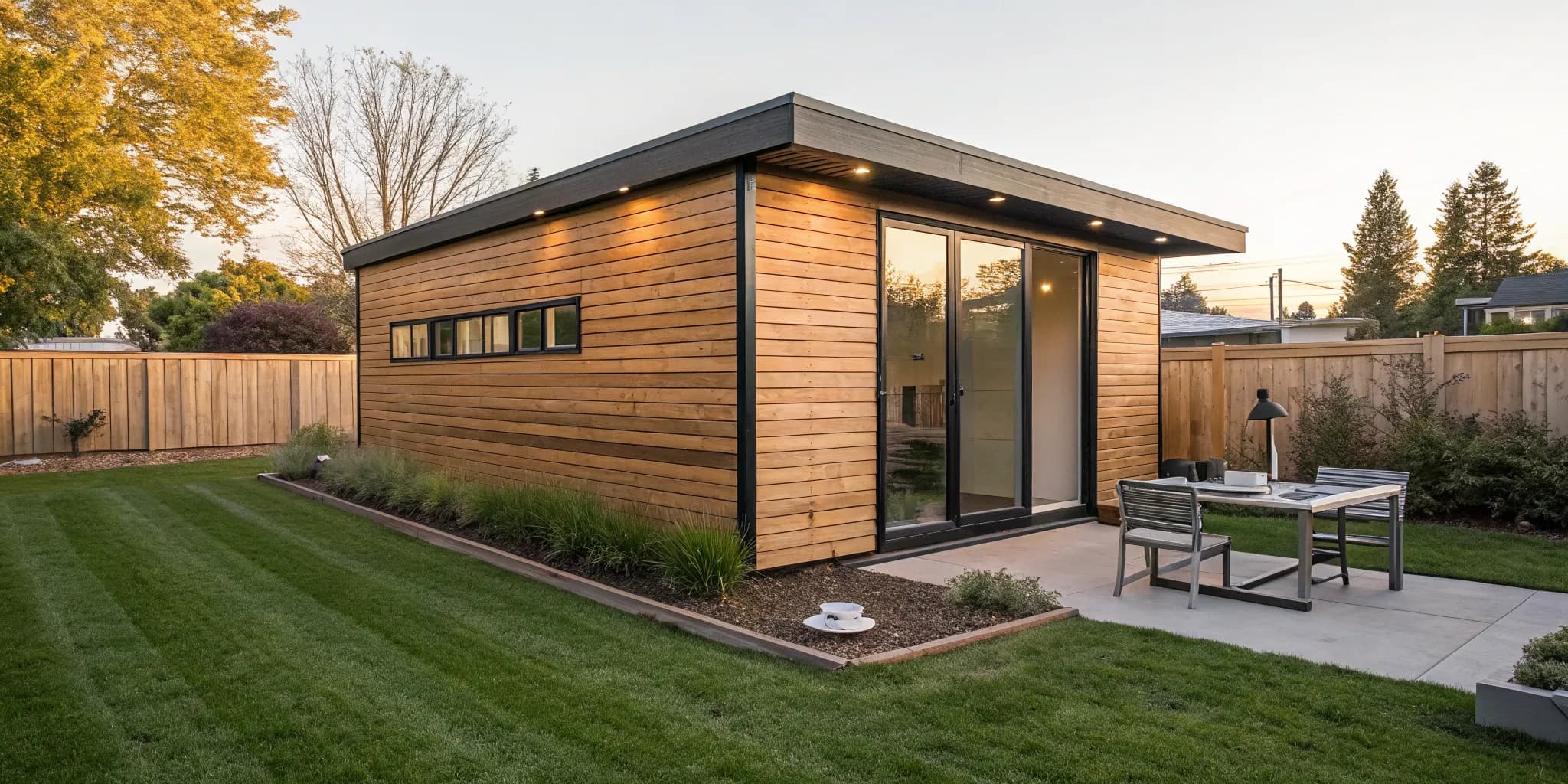
These aren't your typical garden sheds filled with rakes and lawnmowers. A true office shed is a finished, four-season structure. It’s built with the same quality materials as a house, often including insulation, electrical wiring, proper flooring, and plenty of windows for natural light. This transforms a simple outbuilding into a comfortable and functional extension of your home, tailored specifically for your professional needs. It’s your personal headquarters, free from the distractions of daily household activities.
More Than Just a Storage Space
When you picture a shed, you might think of a simple place for storage. While our storage sheds are perfect for that, an office shed is a completely different category. It’s a finished interior space designed for daily use. Imagine drywall, durable flooring, and electrical outlets for your computer and lighting, all wrapped in a weatherproof shell. This isn't about storing boxes; it's about creating a comfortable, climate-controlled environment where you can spend your workday productively. It’s a dedicated room that just happens to be in your backyard.
Popular Sizes and Layouts for Your WFH Setup
You don’t need a massive structure to create a functional office. Many people find that a 10x12 or 12x16 foot shed provides plenty of room for a desk, chair, shelving, and a bit of space to move around. The key is a smart layout. You can position windows to maximize natural light and place the door where it makes the most sense for your yard. The best part is that you can design your own layout to perfectly match your workflow, ensuring every square foot is used effectively.
Beyond the 9-to-5: Other Uses for Your Shed
Your backyard structure doesn’t have to be just an office. Its versatility is one of its biggest strengths. When you’re not working, it can easily become a quiet yoga or meditation studio, a creative space for painting or music, or a home gym. With a few additions, it can even serve as a cozy guest room for visitors, much like our portable cabins. Thinking about these other uses can help you design a more flexible space and get even more value from your investment over the years.
Do You Need a Permit for a Backyard Office?
Figuring out permits can feel like a major hurdle, but it’s usually more straightforward than you think. The short answer to whether you need one is: maybe. It all comes down to your local rules, the size of your shed, and what features you plan to include. While it’s tempting to skip this step, getting the right permits is your guarantee that your new office is safe, compliant, and built to last. Think of it less as red tape and more as a final check to make sure your investment is sound.
The process starts with a simple phone call or a visit to your local building department’s website. They’ll be your best source of truth for what’s required in your specific area. Generally, the bigger and more complex your shed, the more likely you’ll need a permit. Adding things like electricity and plumbing for a fully functional office almost always requires official approval. Don’t worry, though. A reputable builder can provide the necessary drawings and information to make the application process much smoother. Taking the time to handle permits correctly from the start saves you from potential headaches, fines, or even having to remove the structure later.
Understanding Local Zoning and Permit Rules
Every town and county has its own set of rules, so your first step should always be to check with your local government. What’s required in one area might be different just a few miles away. Start by contacting your city or town’s building or planning department. You can usually find their contact information on your local government’s website.
When you reach out, explain that you’re planning to install a backyard office shed and ask about the specific requirements. It’s helpful to know that you might need building permits for backyard barns and sheds, so it's good to check with your local city rules. This simple conversation will clarify everything you need to know about size limits, placement rules (called setbacks), and what kind of paperwork is involved.
How Size and Placement Impact Requirements
Size is one of the biggest factors in determining if you need a permit. In many areas, sheds under a certain square footage don’t require one, as long as they don’t have utilities. A common threshold is 120 square feet, which is the size of a 10x12 shed. Many of our storage sheds are available in sizes that fit within these smaller dimensions.
However, the moment you plan to add features to make it a true office, the rules often change. You will likely need a permit if you add plumbing, electricity, or if the structure’s roof is taller than 12 feet. Placement matters, too. Zoning laws dictate how far your shed must be from property lines, your house, and other structures, so be sure to ask about these setback requirements.
Who's Responsible for the Paperwork?
As the homeowner, you are ultimately responsible for making sure your new office shed is compliant with local regulations. But you don’t have to go it alone. While some builders leave the permitting process entirely up to you, a good partner will provide the drawings, plans, and specifications you need to complete your application.
Permit costs can vary widely. For a simple shed that’s just over the size limit, a permit might only be a couple of hundred dollars. If you’re building a larger, more complex office with electricity and plumbing, the cost could be higher. Factoring this into your budget is important. Our rent-to-own program can help make the initial purchase more manageable, freeing up funds for these essential finishing steps.
Prefab Kits vs. Custom-Built: Which Is for You?
Deciding between a DIY shed kit and a custom-built structure is one of the first major choices you'll make when planning your backyard office. One path offers a hands-on project with a lower initial price tag, while the other provides a tailored, professionally crafted solution built exactly to your specifications. There’s no single right answer; the best choice depends entirely on your budget, timeline, skill level, and how you envision using the space for years to come.
Think of it this way: a prefab kit is like buying furniture you assemble yourself, while a custom build is like hiring a cabinet maker. The kit gets the job done and can be a great, cost-effective option if your needs are straightforward. A custom-built shed, on the other hand, is an investment in quality, longevity, and perfect functionality. It becomes a true extension of your home. Before you decide, it’s helpful to weigh the specific advantages and disadvantages of each approach, from the initial cost to the final, finished product.
The Pros and Cons of DIY Shed Kits
The biggest draw of a DIY shed kit is the potential for cost savings. With kits often priced between $1,500 and $4,000, you can get a basic structure for a fraction of the cost of a full home addition. By taking on the labor yourself, you avoid that expense entirely. However, this assumes you have the time, skills, and tools for the job. A weekend project can easily turn into a month-long headache if you’re not an experienced builder.
While kits are great for creating a separate workspace, they come with limitations. You’re stuck with the predetermined sizes, materials, and layouts offered by the manufacturer. The quality can also be a mixed bag compared to a professionally constructed building, and you'll be responsible for building a proper foundation and handling any issues that come up during assembly.
When to Go with a Custom Builder
A custom builder is your best bet when a one-size-fits-all kit just won’t work. If you need your office shed to fit into a specific corner of your yard, match your home’s siding, or include extra windows for natural light, a custom build is the way to go. You get complete control over the final product. With a tool like a 3D shed builder, you can design every detail, from the dimensions and door placement to the roofing and trim colors.
This route is less about just getting a shed and more about creating a lasting, high-quality structure. Professional builders use premium materials and expert craftsmanship to deliver a building that can serve as a beautiful office, studio, or workshop for decades. It’s the ideal choice for anyone who values durability and a personalized design.
Choosing the Right Path for Your Budget
On the surface, a DIY kit seems like the clear budget-friendly winner. However, it’s important to consider the total cost. After you factor in the foundation, any necessary tool rentals, and potential mistakes, the final price might be higher than you expect. Custom-built sheds typically start around $2,000 and can go up to $10,000 or more, especially for a fully finished office with insulation and electrical wiring.
While the upfront cost of a custom build is higher, you get a firm price for a completed, delivered, and installed structure with no surprises. Plus, many builders offer flexible payment solutions. Programs like rent-to-own can make a high-quality, custom shed accessible without a large initial investment, allowing you to get the perfect office now and pay for it over time.
What to Look for in a Backyard Office Shed Builder
Choosing the right builder is just as important as designing the shed itself. You're not just buying a product; you're investing in a new part of your home and trusting a team to bring your vision to life. A great builder makes the process smooth, transparent, and even enjoyable. They’ll guide you through decisions, stand behind their work, and deliver a structure that lasts. Taking the time to find a partner who checks all the right boxes will pay off for years to come.
Finding a Local, Reputable Builder
Start your search by looking for local companies that specialize in high-quality outdoor structures. A local builder understands regional weather conditions and building codes, which is a huge plus. It’s also easier to visit their showroom, see their work firsthand, and have a direct line of communication. Look for a builder with a solid reputation in your community and a portfolio that includes more than just basic storage. Companies that offer finished interiors for offices or studios are often a great choice, as they have the experience to create a comfortable and functional workspace. You can check out a builder's inventory to get a feel for their quality and style.
The Benefits of a Custom Design Process
Your backyard office should work for you, not the other way around. That’s why a custom design process is so valuable. A reputable builder won’t just offer a few standard models; they’ll work with you to create a shed that fits your exact needs. This means you get to choose the size, layout, materials, and placement of features like windows and doors. Using a 3D shed builder can help you visualize different options and make confident decisions. This level of personalization ensures your new office has enough natural light, practical storage, and a look that complements your home and yard.
Why a Strong Warranty Matters
A warranty is more than just a piece of paper; it’s a builder’s promise that they stand behind their materials and craftsmanship. When a company offers a strong warranty, it shows they are confident in the quality and durability of their product. Before you commit, make sure you understand what the warranty covers and for how long. A comprehensive 5 year warranty on craftsmanship, for example, gives you peace of mind that your investment is protected against defects. Don't overlook this detail, as it speaks volumes about the builder's commitment to quality and customer satisfaction long after the installation is complete.
Key Customizations for Your Perfect Office Shed
The real magic of a backyard office happens in the details. A basic shed provides shelter, but a customized shed becomes a true extension of your home and a productive workspace. This is where you get to move beyond the four walls and a roof and start creating a space that’s truly yours. From the moment you start designing, you have the power to choose features that will make your workday more comfortable and efficient. A great builder will walk you through these options, helping you transform a simple structure into your ideal office. Let’s look at the key customizations that make all the difference.
Flexible Sizing and Layouts
Before you think about paint colors, you need to nail down the foundation: the size and layout. Your office needs to be more than just a box; it needs to fit how you work. Think about the space you need for your desk, a comfortable chair, and maybe a small seating area for when you need a break from the screen. Do you need built-in shelving for books and supplies? A good builder offers a range of sizes and layouts, from compact storage sheds that are perfect for solo work to larger portable cabins that can accommodate more. Don't settle for a one-size-fits-all solution. Your productivity depends on having a layout that supports your unique workflow.
Maximizing Natural Light with Windows and Doors
Never underestimate the power of good lighting. Natural light can make your office feel more spacious and keep your energy levels up throughout the day. When planning your shed, think strategically about window placement. You might want a large window facing the garden for an inspiring view or smaller, higher windows for privacy. The style of your doors also plays a role. A set of French doors or a single door with a large glass panel can flood the space with light. You can experiment with different window and door configurations using a 3D shed builder to see what works best for your vision before you commit. This simple step ensures your office is a bright, welcoming place to spend your day.
Creating a Comfortable Climate: Electrical and Insulation
To make your office usable year-round, especially here in New York, you need to control the climate. Proper insulation in the walls, floor, and ceiling is non-negotiable. It keeps the space warm in the winter and cool in the summer, making it a comfortable retreat no matter the weather. You’ll also need a reliable electrical package to power your computer, lights, and a small heater or air conditioner. While you can add electricity to any shed, it’s a job best left to a licensed electrician for safety. A quality shed builder will offer insulation and electrical packages as part of the customization process, ensuring your office is ready for work from day one.
Smart Interior Finishes and Storage
The interior finishes are what will make your shed feel less like a shed and more like an office. You can choose from finishes like drywall for a traditional room feel or warm wood paneling for a more rustic, cozy vibe. Flooring is another important choice, with options ranging from durable laminate to comfortable carpeting. To keep your small space from feeling cluttered, think about vertical storage. Many backyard barns come with lofts that are perfect for stowing away items you don’t need every day. Adding built-in shelves or a workbench can also help you stay organized and make the most of every square foot.
Matching Your Home's Style: Exterior Options
Your backyard office should feel like a natural part of your property, not an afterthought. Customizing the exterior is key to creating a cohesive look that complements your home. You can choose from different siding materials, like classic wood or low-maintenance vinyl, and pick colors that match your house’s trim or primary color. The same goes for the roof; you can often select shingles that match your home’s roofing material and color. Take a look at a builder’s current inventory to see real-world examples of different color and material combinations. A well-designed exterior ensures your new office adds to your home’s overall curb appeal and value.
Budgeting for Your Backyard Office Shed
Creating a budget is the first practical step toward making your backyard office a reality. The final cost can vary quite a bit, depending on the size, style, and features you choose. Think of it like buying a car; there's a base model, but the custom features are what make it uniquely yours. The good news is that there are options for almost every budget, from simple, pre-built structures to fully customized spaces. It's all about understanding the key cost factors and finding a payment solution that works for you. Let's break down what you can expect to invest in your new commute-free workspace.
What's the Price Range?
The cost of a backyard office shed can range from a few thousand dollars for a basic model to over ten thousand for a large, custom-designed structure. A simple, smaller shed gives you a solid, weatherproof shell to start with. As you add square footage, premium materials, and more complex designs, the price will naturally go up. The best way to get a feel for real-world costs is to check out the current inventory of available buildings. This will give you a concrete starting point and help you see what different price points can get you.
Planning for Additional Costs
The base price of the shed is just one part of the equation. The features that transform it from a storage space into a comfortable office will add to the total cost. Think about essentials like an electrical package for your computer and lighting, insulation for year-round comfort, and extra windows to bring in natural light. You’ll also want to consider interior finishes like flooring and wall panels. Using a tool like our 3D Shed Builder is a fantastic way to experiment with different options and see how they impact the price in real-time, ensuring there are no surprises down the road.
Exploring Rent-to-Own Options
If a large upfront payment isn't ideal for your budget, don't worry. A rent-to-own plan can make getting your dream office shed much more accessible. Instead of paying the full cost at once, you make manageable monthly payments over a set term. At the end of the term, you own the shed outright. What’s great about this approach is that it often doesn't require a credit check, making it a straightforward path to ownership. You can learn more about how our rent-to-own program works and see if it’s the right fit for your financial situation. It’s a flexible solution that gets your office in your backyard sooner.
How to Choose the Right Shed Builder
Finding the right builder is the most important step in bringing your backyard office to life. You're not just buying a product; you're investing in a structure that needs to be safe, durable, and perfectly suited to your needs. A great builder will guide you through the process with transparency and expertise, while the wrong one can lead to headaches and a shed that doesn't last. To make sure you partner with a pro, focus on a few key areas: their reputation, their pricing, the support they offer, and any potential red flags.
Vetting Your Builder: Reviews, Licensing, and Insurance
Start your search by acting like a detective. Look for local builders with a strong track record in your area. Dive into online reviews and testimonials to see what past customers are saying. Are they happy with the final product? Was the delivery and installation process smooth? Positive feedback is a great sign, but also look for how a company handles criticism. A professional builder should also be fully licensed and insured. This protects you from liability and shows they run a legitimate, professional operation. A quick look at a builder's current inventory can also give you a real-world sense of their craftsmanship and quality.
Comparing Quotes Like a Pro
When you start getting quotes, remember that the lowest price isn't always the best deal. A cheap shed might be built with subpar materials that won't stand up to New York winters. Ask for a detailed, itemized quote that breaks down the cost of materials, labor, delivery, and any add-ons. This helps you compare apples to apples. A transparent builder will be happy to explain what goes into their pricing. You can even use a 3D shed builder to experiment with different features and see how they affect the final cost, giving you a clear understanding of where your money is going.
Understanding the Warranty and Support
A warranty is more than just a piece of paper; it’s a builder’s promise that they stand behind their work. A company that is confident in its materials and construction will offer a solid warranty to protect your investment. Look for coverage that lasts several years and clearly states what is included, from structural integrity to paint and roofing. For example, our 5-year warranty ensures that your shed is covered against defects in workmanship and materials. This long-term support gives you peace of mind, knowing that your builder will be there to help if any issues arise down the road.
Red Flags to Avoid
As you talk to builders, keep an eye out for warning signs. Be cautious of anyone who uses high-pressure sales tactics or demands a very large cash deposit upfront. Vague contracts or an unwillingness to provide references are also major red flags. Another thing to watch for is a builder who dismisses local permit requirements. A professional will know the local rules or help you find the information you need. If a builder’s financing options seem confusing or predatory, it’s best to walk away. Look for clear, straightforward programs like rent-to-own that offer flexibility without the pressure.
Start Designing Your Custom Office Shed
This is where the fun begins. Once you’ve chosen a builder, you can start turning your vision for a backyard office into a concrete plan. The design phase is a creative process where you get to decide exactly how your new workspace will look, feel, and function. With a custom builder, you’re in the driver’s seat, ensuring the final structure is a perfect fit for your work style and your property. The goal is to create a space that’s not just a building, but an extension of your home and a dedicated sanctuary for productivity. Let's walk through the steps to design an office shed you'll love working in for years to come.
Map Out Your Ideal Workspace
Before you jump into picking colors and materials, take a moment to think about how you’ll actually use the space day-to-day. Consider your workflow. Where will your desk go to get the best view or the least glare? How much shelving or storage do you need for files, books, and supplies? You might even want to sketch a simple floor plan on paper. Thinking through these functional details first helps ensure your final design is practical and supports your productivity. This simple exercise can make a huge difference in creating a truly efficient and comfortable home office.
Explore Your Customization Options
Now it’s time to explore all the ways you can personalize your shed. You have control over nearly every element. Start by thinking about size. A cozy 10x12 shed might be perfect for a solo setup, while a larger portable cabin could accommodate a meeting area. Consider window placement to maximize natural light and door styles for easy access. You can also select exterior siding and colors to match your home’s aesthetic. The best part about a custom build is that you don’t have to settle for a one-size-fits-all solution; you can tailor every choice to your specific needs and taste.
Bring Your Vision to Life with a 3D Builder
Visualizing how all your choices will come together can be tricky, but that’s where technology can help. Many builders offer online design tools that let you experiment with different options in real time. Using a 3D Shed Builder, you can easily swap out siding colors, add or move windows, and try different roof styles until you land on the perfect combination. This interactive process removes the guesswork, allowing you to see a digital model of your office shed before you commit. It’s a powerful and enjoyable way to fine-tune your design and feel confident in your decisions.
Finalize the Details with an Expert
After you’ve created a design you love, the final step is to review it with a professional. A consultation with your builder is the perfect time to ask questions and iron out the last few details. You can discuss site preparation, delivery logistics, and the best approach for adding electrical and insulation. An expert can offer valuable suggestions you might not have considered and ensure your plan is structurally sound and practical. This is also a great opportunity to confirm the scope of the project and understand the 5-year warranty that protects your investment, giving you peace of mind as you move forward.
Related Articles
- Utility Shed | Legacy Structures
- Utility Shed | Legacy Structures
- Utility Shed | Legacy Structures
- Utility Shed | Legacy Structures
- Utility Shed | Legacy Structures
Frequently Asked Questions
How much should I budget for a backyard office shed? The total investment can vary quite a bit, so it helps to think in two parts: the structure itself and the office finishes. A basic, high-quality shed might start in the low thousands, but turning it into a fully functional office with insulation, an electrical package, and interior finishes will add to that cost. The final price depends on the size you choose and how many custom features you add. A great way to get a clear number is to use an online design tool to build your ideal shed and see the price update in real time.
Can I use my office shed all year, even during New York winters? Yes, absolutely. A true backyard office is designed to be a four-season structure, not just a fair-weather space. The key is customizing it with a full insulation package for the walls, floor, and ceiling, along with an electrical package. This allows you to safely run a small heater in the winter and an air conditioner in the summer, keeping your workspace comfortable no matter what the weather is doing outside.
Do I have to handle the building permit process myself? While the homeowner is ultimately responsible for securing any necessary permits, a good builder will be your partner in the process. They should be able to provide you with the professional drawings and structural specifications that your local building department will need for the application. This support makes the paperwork much more straightforward, so you don't have to feel like you're going it alone.
What's the real difference between a DIY kit and a custom-built shed? The main difference comes down to quality, longevity, and personalization. A DIY kit from a big-box store might have a lower price tag, but you are limited to their designs and materials, which can be of lower quality. A custom-built shed is an investment in a durable structure crafted to your exact specifications. You get to choose the size, layout, and materials, resulting in a building that perfectly fits your property and is built to last for decades.
How does the rent-to-own option work? Rent-to-own is a straightforward way to get the office shed you need now without paying the full cost upfront. Instead of a large initial payment, you make manageable monthly payments over a set period. A portion of each payment goes toward the final purchase, and at the end of the term, you own the shed completely. It’s a popular option because it often doesn’t require a credit check, making it an accessible path to owning a high-quality, custom building.