You may have heard whispers about robotic coops that do all the work for you. The automated chicken tractor is a real, and often expensive, piece of technology that promises a hands-off approach to raising poultry. But is it a practical tool for the modern homesteader, or just a pricey gadget? This guide cuts through the hype. We'll look at the real costs, the practical benefits, and the potential drawbacks of investing in a fully automated system. We'll also compare it to more traditional, budget-friendly options, helping you decide if this high-tech solution is the right fit for your flock and your farm.
Key Takeaways
- Automation is a trade-off: Automated tractors save a significant amount of time by moving your flock to fresh pasture daily, but they require a large financial investment and specific land conditions to work properly.
- A stationary coop offers flexibility: You can create a semi-automated system by starting with a durable, traditional chicken coop and adding features like automatic doors and waterers. This approach is more budget-friendly and allows for customization.
- Your land is the deciding factor: Automated tractors need flat, open space to function and can be stopped by hills, trees, or heavy snow. For most backyards and varied terrains, a stationary coop provides a more practical and reliable year-round solution.
What Is an Automated Chicken Tractor?
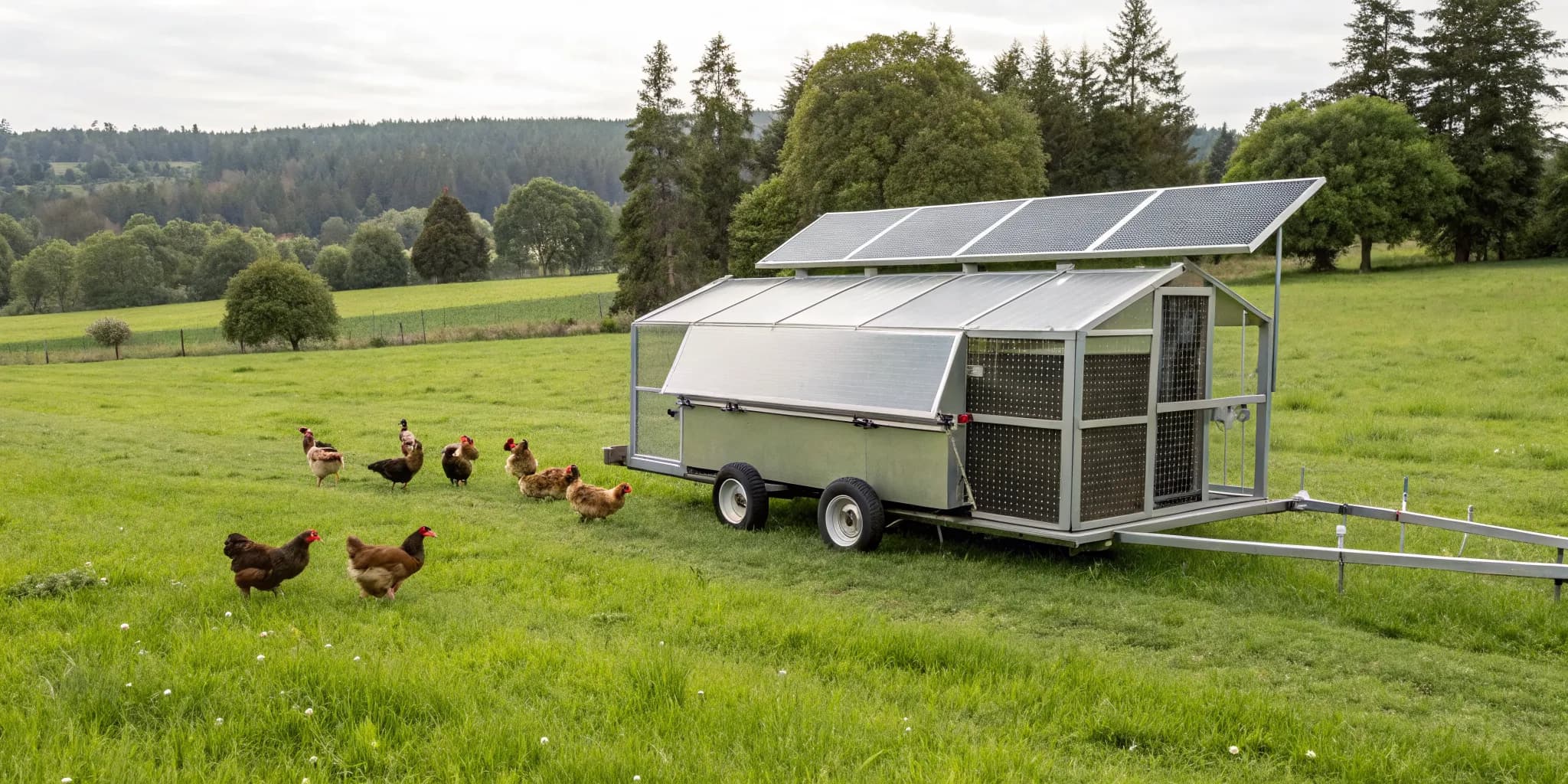
If you've ever dreamed of raising chickens without the daily grind of chores, the automated chicken tractor might be your answer. Think of it as a smart, mobile chicken coop on wheels. An automated chicken tractor is a self-contained, enclosed structure that handles many of the daily tasks of chicken care for you. It’s designed to move across your pasture, giving your flock constant access to fresh grass and bugs while keeping them safe.
These systems are often solar-powered and can manage everything from moving the coop to a new spot each day to opening and closing the door at sunrise and sunset. The goal is to create a pasture-raised environment that is healthier for your chickens and better for your land, all while saving you a significant amount of time and effort. Instead of a stationary building, like one of our sturdy chicken coops, a tractor is built for movement. It combines the safety of a coop with the benefits of free-ranging, making it an innovative solution for modern homesteaders.
How Do They Work?
The magic of an automated tractor lies in its integrated systems that handle the chores for you. Some of the most advanced models have motorized wheels that are programmed to move the coop a set distance each day, ensuring your chickens always have a fresh patch of grass to forage on. This eliminates the need for you to manually pull a heavy tractor across the field.
For security, many systems use solar-powered doors that operate on a timer or light sensor. They automatically open in the morning to let your flock out and close securely at night to protect them from predators. Water is also managed automatically, with systems that use nipples or cups connected to a reservoir. This provides a continuous supply of clean water, which is a huge step up from constantly cleaning and refilling traditional waterers.
The Essential Parts
At its core, an automated chicken tractor is built for mobility and efficiency. Most are constructed with lightweight materials and have wheels to make movement easier. Many have a "floorless" design, which allows chicken droppings to fall directly onto the pasture, fertilizing the soil as the coop moves along. This also makes cleaning much simpler since there's no bedding to scoop out.
To keep the system running for days or even weeks without your help, these tractors include large-capacity or automated feeders. These protect the feed from pests and moisture while dispensing it as needed. Likewise, the automatic poultry waterers are designed to hold a large volume of water, ensuring your flock stays hydrated. All these parts work together to create a self-sufficient home for your chickens.
Automated vs. Traditional Tractors
The biggest difference between an automated and a traditional chicken tractor is the level of hands-on work required. With a traditional tractor, you are still responsible for moving it every day, opening and closing the doors, and refilling food and water. An automated tractor, on the other hand, can operate for weeks with minimal human intervention. This is a game-changer for anyone with a busy schedule or who wants to take a vacation without hiring a chicken-sitter.
However, this convenience comes at a price. Fully automated, commercial-grade tractors can be a significant investment, often costing thousands of dollars. A traditional tractor or a high-quality stationary coop is much more budget-friendly. The right choice depends on your priorities: are you looking to save time at any cost, or do you prefer a more hands-on, affordable approach?
Why Go Automated? The Benefits for You and Your Flock
Thinking about an automated chicken tractor might bring to mind futuristic farms, but the truth is, the benefits are incredibly down-to-earth. Going automated isn't about adding a complicated gadget to your life; it's about creating a healthier, more efficient system for you and your flock. From saving you precious time on daily chores to giving your chickens a better quality of life, the advantages are practical and significant. Let's break down exactly what you stand to gain.
Save Time and Effort
Imagine turning your daily chicken chores into a weekly check-in. That’s the reality an automated tractor offers. Instead of moving a heavy coop every morning and evening, the system does it for you. This automation allows you to manage your flock with minimal daily effort, freeing up your schedule without compromising their care. It’s a game-changer for busy homesteaders or anyone who wants to raise chickens more efficiently. A well-designed system, paired with one of our sturdy chicken coops, creates a low-maintenance setup that lets you focus on the enjoyable parts of raising poultry.
Support Happier, Healthier Chickens
A moving coop is a happy coop. When chickens are moved to a fresh patch of grass every day, they get to do what they do best: forage. They have constant access to new plants, tasty insects, and fresh ground to scratch in. This natural behavior is not only great for their mental stimulation, but it also leads to healthier birds with a more diverse diet. Instead of being confined to a static, muddy run, they live a more dynamic life, which often results in stronger birds and better-quality eggs. It’s a simple way to drastically improve their daily well-being.
Lower Your Feed Bill with Natural Foraging
One of the most immediate financial benefits of an automated tractor is the reduction in your feed bill. When your flock forages for a significant portion of its food, you'll find yourself buying less commercial feed. Chickens are excellent at finding their own protein in the form of bugs and worms, and they’ll happily munch on fresh greens. This not only saves you money but also contributes to a more natural and varied diet for your birds. It’s a win-win: your chickens get a five-star meal courtesy of your lawn, and you keep more money in your pocket.
Improve Your Soil Naturally
Your flock can be your best gardening assistant. As the automated tractor moves across your pasture or yard, the chickens leave behind a valuable gift: nitrogen-rich manure. This daily movement ensures the manure is distributed evenly, acting as a natural fertilizer for the ground below. Instead of having a concentrated, smelly mess in one spot, you get gentle, consistent soil enrichment. Over time, this process can significantly improve soil health, making your grass greener and your garden more productive. It’s a perfect example of a closed-loop system right in your backyard.
Protect Your Flock from Disease
Keeping your chickens on the move is one of the best ways to protect them from illness. When a flock stays in one place, the ground can become a breeding ground for parasites and diseases. An automated tractor prevents this buildup by constantly moving them to clean, fresh turf. Furthermore, a well-built tractor provides essential protection from predators like hawks, raccoons, and foxes. The secure design keeps your birds safe while they graze. Investing in a quality structure, backed by a solid 5-year warranty, gives you peace of mind that your flock is both healthy and secure.
Comparing Automated Tractor Options
Once you start looking into automated chicken tractors, you’ll find a few different paths you can take. The options range from fully robotic, all-in-one systems to sturdy, traditional coops that you can outfit with automated accessories. Deciding which is right for you comes down to your budget, the size of your flock, and how much hands-on work you want to do. For some, investing in a completely hands-off system that manages every aspect of the flock’s daily life is the ultimate goal. These high-tech solutions are perfect for larger-scale operations or for anyone who wants to reclaim as much time as possible.
On the other end of the spectrum is the DIY approach. This involves starting with a well-built, traditional coop and adding automated components piece by piece. This path offers incredible flexibility, allowing you to customize your setup to your exact needs and spread the cost out over time. You might start with an automatic door and add a self-filling waterer later. This method is ideal for homesteaders who enjoy a bit of tinkering and want complete control over their system. Let’s walk through some of the main players and what they offer so you can find the perfect fit for your homestead.
ROVA BARN
Think of the ROVA|BARN as the high-tech, all-in-one solution for raising chickens on pasture. It’s an automated, robotic barn that handles the daily chores for you. Designed for farmers who want to manage their animals with maximum efficiency, this machine is built to be a complete system. It moves the flock to fresh grass, provides food and water, and keeps them safe without you needing to lift a finger. It’s a serious piece of equipment for those who are scaling up their pasture-raised operation and want to invest in top-of-the-line automation from the get-go.
UKKÖ Robotics
The technology behind the ROVA|BARN comes from UKKÖ Robotics, a company focused on automated farming solutions for pasture-raised livestock. Their systems are designed to cut farm work by as much as 90%, which is a game-changer for anyone managing a large flock. The main appeal is its simplicity and low-maintenance design. The system offers automated care by moving to fresh pasture daily, dispensing food and water, and even managing ventilation to keep your chickens comfortable. This is an excellent choice for farmers who want to reclaim their time and focus on other aspects of their business.
Legacy Structures Chicken Coops
If a fully robotic system feels like overkill, starting with a high-quality traditional coop is a fantastic and practical alternative. Our chicken coops are built with superior materials and craftsmanship, giving you a secure and durable home for your flock that’s made to last. While they don’t come with built-in robotics, their solid construction provides the perfect foundation for adding your own automated features. You can easily install automatic doors, waterers, and feeders to create a semi-automated system that fits your specific needs and budget. This approach gives you control, reliability, and the flexibility to upgrade over time.
Key Features to Look For
As you compare options, it helps to know what features are available. Some advanced systems have motorized wheels that move the tractor to fresh grass every day without any manual effort. Automatic doors, often solar-powered, are another popular feature that can close your flock in safely at night and let them out in the morning. For feeding and watering, look for large-capacity feeders that protect food from pests and automated watering systems that provide a continuous supply of clean water. Above all, a secure design with strong predator protection is non-negotiable, ensuring your chickens are safe while they graze.
Understanding the Cost of an Automated Tractor
An automated chicken tractor is a significant purchase, so it’s smart to get a clear picture of the costs before you commit. The price tag can seem high at first, but it helps to think of it as a long-term investment in your farm's efficiency and your flock's health. The final cost depends on the size of the tractor, the technology it includes, and the manufacturer. While these advanced systems are one option, it's also worth comparing them to high-quality traditional chicken coops that can offer excellent value and durability. Let's break down what you can expect to pay for an automated model and what factors drive the price.
Typical Price Ranges by Model and Size
The price of an automated tractor is closely tied to its size and capacity. Smaller models designed for backyard flocks are the most affordable, while large, commercial-scale tractors come with a much higher price. For example, a micro-tractor that holds around 12 to 15 chickens can cost about $8,150. As you scale up, so does the price. A model for 150 broilers might be in the $22,000 to $24,000 range, while a tractor that can house up to 300 chickens could cost between $33,000 and $37,500. For large-scale poultry operations, the biggest models can run from $57,000 to over $67,000.
What Influences the Final Price?
Several key factors determine the final cost of an automated chicken tractor. The level of automation is the biggest driver; systems with advanced features for movement, feeding, and watering will naturally cost more than simpler designs. Size and capacity are also major considerations, as larger tractors require more materials and more powerful mechanics. The quality of the materials used, from the frame to the roofing and fencing, also plays a role. Finally, any customizations you request, such as specific feeder types or enhanced security features, will add to the total price. These tractors are complex machines, and their cost reflects the advanced engineering involved.
Exploring Purchase and Rent-to-Own Options
Paying for an automated tractor upfront can be a challenge, but many buyers find ways to make it work. Some manufacturers may offer special pricing if you are purchasing multiple units for a larger farm. Beyond a direct purchase, it's worth exploring other financing paths. For many types of farm structures, flexible payment plans can make a big purchase more manageable. For instance, some companies offer rent-to-own programs that allow you to make monthly payments and eventually own the structure outright. This can be a great way to get the equipment you need now without draining your capital.
Is an Automated Tractor the Right Fit for You?
An automated chicken tractor sounds like a dream for many flock owners, but it’s a big investment. Before you make a decision, it’s important to weigh the benefits against the practical realities of your space, budget, and lifestyle. Thinking through these key points will help you figure out if an automated system is the right move for your farm or if a traditional coop is a better fit. Let's walk through what you need to consider.
A Quick Look at Pros and Cons
The biggest advantage of an automated tractor is the time you get back. These systems are designed for pasture-raised chickens with minimal daily effort from you, often turning daily chores into a weekly check-in. This means less time spent on feeding and moving the coop and more time enjoying your flock. The constant rotation onto fresh ground reduces feed waste and gives your chickens a varied diet. Plus, a well-designed tractor offers excellent protection from predators while allowing your birds to roam. The main downside is the significant upfront cost and the reliance on technology, which isn't for everyone.
Potential Drawbacks to Consider
While the benefits are compelling, there are a few drawbacks to keep in mind. The initial cost is the most obvious one; high-end automated tractors can be a major investment, often costing thousands of dollars. These systems also depend on a reliable power source, like solar panels and battery storage, for consistent operation. If you live in an area with limited sun, you might face challenges. Finally, the tractor's design is a balancing act. It needs to be light enough for the automated system to move it daily but also sturdy enough to protect your flock from predators and the elements.
What to Expect for Maintenance
Switching to an automated system can dramatically reduce your daily workload, with some systems cutting farm labor by as much as 90%. However, it’s not entirely hands-off. The initial setup can take anywhere from half a day to a full day, and you’ll need a few days to get comfortable with the system’s operation. Regular maintenance involves checking the power system, ensuring the mechanics are working correctly, and keeping the internal components clean. Think of it as trading daily manual labor for periodic technical check-ups and a short learning curve at the start.
Factoring in Your Land and Climate
Your property is a huge factor in whether an automated tractor will work for you. These systems are designed for relatively flat, open pastures where they can move without obstruction. The daily movement is fantastic for soil health, as it evenly distributes chicken manure and acts as a natural fertilizer. Your chickens will also love having access to fresh plants and insects every day. However, you need to consider your local climate. Heavy snow, thick mud, or extremely uneven terrain can stop a tractor in its tracks, potentially making it more of a hassle than a help during certain seasons.
When a Stationary Coop Is the Better Choice
An automated tractor isn't the right solution for every situation. If your land is hilly, wooded, or you have a smaller backyard, a stationary coop is likely a more practical and reliable choice. A fixed coop also makes sense if your main priority is absolute security in a specific location or if the high cost and technical upkeep of an automated system feel overwhelming. A well-built stationary structure provides excellent predator protection and a dependable shelter for your flock year-round. If you decide a stationary model is the best fit, our high-quality chicken coops are designed for durability, security, and the long-term health of your birds.
Frequently Asked Questions
Is an automated tractor really "set it and forget it"? While these systems dramatically cut down on daily chores, they aren't completely hands-off. Think of it as trading daily manual labor for periodic technical check-ups. You'll still need to refill the large-capacity feed and water systems every week or so and perform regular maintenance to ensure the solar panels, batteries, and motors are all working correctly. It frees you from the daily grind, but you are still the manager of the system.
Can I just add automated parts to a regular chicken coop instead of buying a whole system? Yes, and this is a fantastic, budget-friendly approach for many people. You can start with a solid, well-built stationary coop and then add automated components as your time and budget allow. Installing an automatic, solar-powered door is a great first step for security and convenience. From there, you can add large-capacity or automated watering systems. This method gives you the flexibility to create a semi-automated setup that is perfectly tailored to your flock and property.
My yard isn't perfectly flat. Will an automated tractor still work? This is a crucial point to consider. Most automated tractors are designed to operate on relatively flat, even ground. Significant slopes, ditches, or very bumpy terrain can stop the machine from moving correctly or cause it to get stuck. Before you invest in a fully automated system, you should honestly assess your land. If your property is hilly or has many obstacles, a high-quality stationary coop is often a more practical and reliable choice.
How is using a tractor different from just letting my chickens free-range? A chicken tractor provides controlled foraging. While free-ranging gives your flock total freedom, it also exposes them to a much higher risk from predators like hawks and foxes. A tractor acts as a secure, mobile fortress, giving your chickens all the benefits of fresh pasture, bugs, and greens without the danger. It also helps manage your land by concentrating their manure in a specific path, which is great for targeted soil fertilization.
What happens to the tractor in bad weather like heavy snow or mud? Extreme weather can definitely be a challenge for an automated tractor. Deep snow, thick mud, or frozen ground can easily prevent the wheels from moving, stopping the system's daily rotation. In climates with harsh winters, you will likely need a plan for keeping the tractor in one place for the season, which defeats some of its purpose. This is another situation where a durable, all-season stationary coop provides a more dependable year-round solution.